Last Updated: October 18, 2026
Last Updated: October 18, 2026





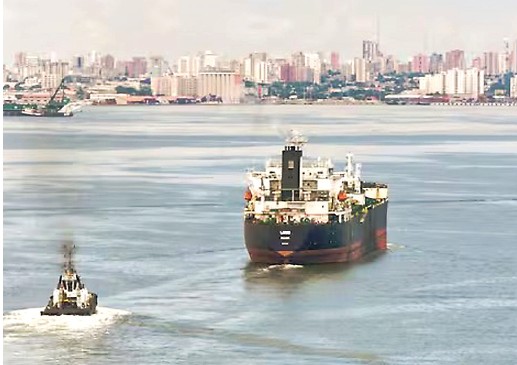
While the White House has publicly justified its pressure campaign against Venezuelan President Nicolás Maduro as part of a broader effort to combat drug trafficking, terrorism and human trafficking, recent developments suggest that Venezuela’s vast oil wealth lies at the heart of US President Donald Trump’s strategy. Over the past few weeks, Washington’s actions have increasingly targeted Caracas’ oil exports, the country’s primary source of revenue and economic survival.
The most dramatic escalation came with Trump’s announcement of what he termed a “total and complete blockade” on sanctioned oil tankers entering or leaving Venezuela. The declaration marks the clearest signal yet that the United States is prepared to directly disrupt Venezuela’s ability to sell crude on the global market, intensifying economic pressure on the Maduro government.
In a post on his social media platform, Truth Social, Trump accused the Venezuelan regime of multiple crimes, including the “theft of our assets,” terrorism, drug smuggling and human trafficking. He went on to declare that Venezuela had been designated a “foreign terrorist organization,” a move that significantly raises the stakes. “Therefore, today, I am ordering a total and complete blockade of all sanctioned oil tankers going into, and out of, Venezuela,” Trump wrote.
Although the president did not provide detailed operational guidance on how the blockade would be enforced, the announcement followed a recent US seizure of a sanctioned oil tanker off Venezuela’s coast. That incident alone has already had a substantial chilling effect on maritime activity in the region. Several oil tankers carrying millions of barrels of Venezuelan crude have reportedly remained in local waters rather than risk interception by US forces. As a result, analysts say a de facto embargo may already be taking shape, even before any formal blockade mechanism is fully implemented.
Washington has also significantly expanded its military presence in the Caribbean and surrounding waters. Thousands of US troops have been deployed to the region, along with nearly a dozen naval vessels, including an aircraft carrier. This buildup has fuelled speculation about how the blockade might be enforced and which branches of the US military would be involved. It remains unclear whether the US Navy, the Coast Guard, or a combination of both would be tasked with interdicting vessels suspected of violating sanctions.
Last week, Trump authorised maritime actions aimed at sanctioned shipping, further reinforcing the perception that Washington is willing to escalate from financial and diplomatic pressure to direct physical enforcement at sea. Such a move would represent a major shift in US policy towards Venezuela, potentially placing American forces on a collision course with foreign-flagged vessels and the countries that operate them.
Caracas has reacted angrily to the announcement. In an official statement, the Venezuelan government rejected what it described as Trump’s “grotesque threat,” accusing the United States of aggression and of attempting to destabilise the country through economic warfare. Venezuelan officials have long argued that US sanctions amount to collective punishment and have blamed them for the country’s economic collapse, shortages and humanitarian crisis.
Despite Washington’s stated focus on crime and security, energy analysts say oil is the real prize. Venezuela possesses the world’s largest proven oil reserves, and crude exports remain the backbone of its economy, even after years of mismanagement, sanctions and declining production. By targeting oil tankers directly, the Trump administration appears intent on cutting off the regime’s most critical source of hard currency.
Global oil markets have already begun to react to the prospect of a sharp reduction in Venezuelan supply. In Asian trading, Brent crude futures rose by more than one per cent, gaining around 70 cents to trade at $59.62 a barrel. US benchmark West Texas Intermediate also climbed, rising 73 cents to reach $56.00 a barrel. US crude futures advanced over one per cent as well, reversing losses from the previous trading session, when prices had fallen to their lowest levels since February 2021.
Traders and analysts attributed the price increases to concerns that Venezuelan exports could be significantly curtailed if the blockade is enforced. Even relatively modest supply disruptions can have an outsized impact on prices in a market already sensitive to geopolitical risk, production cuts by major exporters and shifting demand expectations.
Beyond immediate price movements, the situation has raised broader questions about the stability of global energy supply and the potential for escalation in the region. A sustained blockade could push Venezuela to seek alternative, riskier methods of exporting crude, deepen its reliance on a small number of buyers, or provoke retaliatory measures. It could also draw in other global powers with interests in Venezuelan oil, further complicating an already volatile geopolitical landscape.
As the Trump administration sharpens its focus on Venezuela’s oil lifeline, the coming weeks are likely to test both the resolve of Washington and the resilience of Caracas. Whether the blockade becomes a fully enforced reality or remains a powerful deterrent, its impact is already being felt — not just in Venezuelan waters, but across global energy markets.
Increasing Houthi attacks on Saudi Arabia are testing Pakistan’s ability to defend Riyadh without affecting its ties with...
Nepal is seeking substantial financial assistance from India ahead of Prime Minister Balendra Shah’s proposed visit to New...

The race to succeed Antonio Guterres remains uncertain after three leading candidates faced opposition from two permanent members...

Democratic lawmakers have criticised Donald Trump for waiving key sanctions and tariff provisions under the Graham Act, citing...
Shipping Minister Sarbananda Sonowal confirmed that all 24 Indian seafarers aboard two vessels struck in separate incidents in...
Katie Zacharia has left her role as White House press secretary less than a week after her appointment....
Aries: The day will be auspicious...