Last Updated: September 30, 2026
Last Updated: September 30, 2026





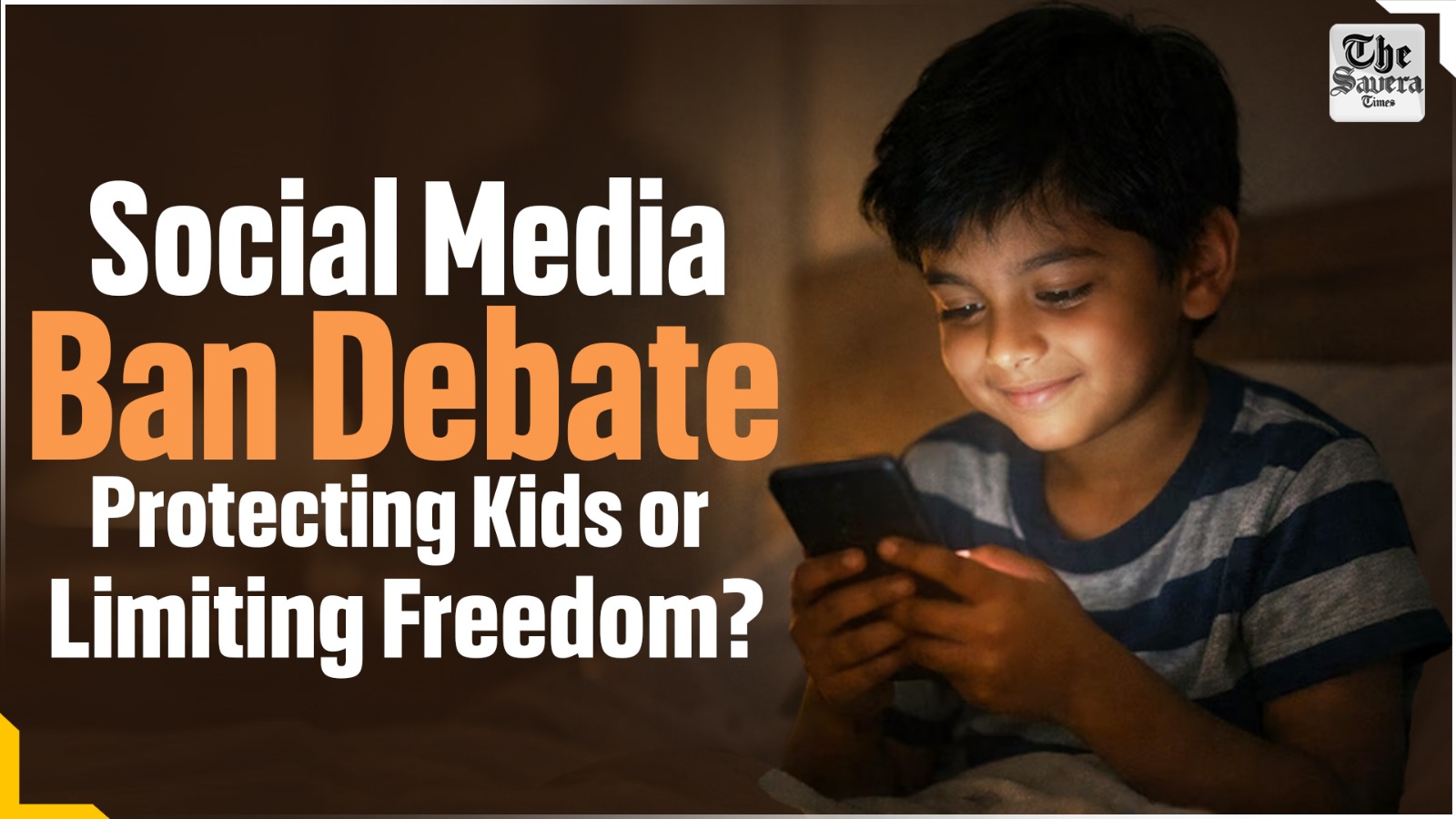
A fresh debate on children’s online safety has emerged in India after the governments of Karnataka and Andhra Pradesh proposed restrictions on social media access for minors.
The issue gained momentum after Karnataka Chief Minister Siddaramaiah announced during the 2026–27 state budget that social media would be banned for children under the age of 16 to protect them from the adverse effects of excessive mobile usage.
Soon after, Andhra Pradesh Chief Minister N. Chandrababu Naidu said his government plans to ban social media use for children below 13 within 90 days, while a decision on the 13–16 age group will be taken after consultations.
Growing Concern Over Children’s Digital Exposure
The proposed restrictions come amid increasing global concerns about the impact of social media on young users. Governments and experts warn that prolonged exposure to online platforms can harm children’s mental health, attention spans and academic performance.
Karnataka’s move followed discussions within the state government and inputs from educators and ministers. Health Minister Dinesh Gundu Rao and IT and Biotechnology Minister Priyank Kharge had earlier raised concerns about excessive screen time and irresponsible use of digital platforms.
Similarly, in Andhra Pradesh, a Group of Ministers led by IT Minister Nara Lokesh has been studying legal frameworks and international models to regulate children’s access to social media. The group is examining cases of online abuse involving minors and exploring age-appropriate digital access rules.
A Global Trend in Regulation
India’s debate mirrors a growing international trend. In December, Australia became the first country to ban social media for children under 16. Other countries, including the United Kingdom, Greece and Denmark, are also exploring similar restrictions.
Supporters of such measures argue that many social media platforms rely on addictive algorithms, endless scrolling and constant notifications that can negatively affect young minds.
At the same time, the issue has become more visible due to viral online controversies — such as the recent debate involving luxury brand Prada and the alleged inspiration drawn from India’s traditional Kolhapuri Chappal. The controversy spread rapidly across social media platforms, highlighting both the power and influence of digital networks in shaping narratives and public opinion.
Legal and Constitutional Challenges
Despite the growing support for regulation, implementing such a ban is legally complex. The Supreme Court of India has previously recognised internet access as an important component of fundamental rights.
In the landmark Anuradha Bhasin v Union of India judgment, the court held that access to the internet is closely linked to freedom of speech and expression under Article 19 of the Constitution. Additionally, the Kerala High Court ruled in 2019 that internet access forms part of the right to education under Article 21A.
Because of these rulings, any blanket ban on minors using social media could face constitutional scrutiny.
Enforcement: The Biggest Challenge
Even if such policies are approved, enforcing them may prove difficult. Technology experts point out that children can bypass age restrictions through fake accounts, VPN services or by using devices registered under parents’ names.
Moreover, many educators argue that the focus should be on digital literacy rather than outright bans. In today’s technology-driven world, the internet is also a major learning resource for students.
India, which has nearly one billion internet users and over 750 million smartphones, faces a delicate balancing act — protecting children from harmful online exposure while preserving digital rights and access to information.
Whether these proposed bans evolve into enforceable policies will depend on legal clarity, technological safeguards and coordination between state governments and the Centre.
Imagine the world’s biggest diesel exporter turning off its export taps. That is the concern after US President...
One handshake, two superpowers and a long list of disagreements. US President Donald Trump and Chinese President Xi...
A river does not understand borders. But when two countries sharing that river are locked in a long-running...

A voter list revision — and now a software controversy A voter may have the right to vote,...

A conflict already threatening the Strait of Hormuz is now putting another crucial waterway in the spotlight —...

Petrol pump dealers across India are threatening a sweeping “cash-only” strike for high-value fuel purchases, alongside multi-party-political protests,...

Aries: The day will be auspicious...