Last Updated: October 21, 2026
Last Updated: October 21, 2026





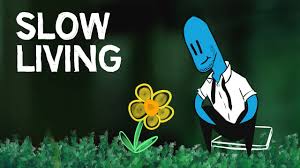
Modern life celebrates speed. Faster communication, faster transportation, faster results. Productivity is often measured by how much can be accomplished in the shortest possible time. Yet, amid this obsession with acceleration, a growing number of people are consciously choosing a different path—slow living.
Slow living is not about laziness or withdrawal from ambition. Rather, it is a deliberate approach to life that prioritizes quality over quantity, presence over pressure, and meaning over constant motion. As burnout, anxiety, and lifestyle-related illnesses increase globally, slow living is emerging as a practical response rather than a philosophical luxury.
At its core, slow living encourages individuals to be intentional with their time. Instead of filling every moment with tasks and notifications, people practicing slow living create space for reflection, rest, and connection. This shift often begins with small changes—unplugging from devices for a few hours, eating meals without distractions, or choosing walking over rushing whenever possible.
The workplace has become one of the main arenas where slow living is gaining relevance. Long hours, unrealistic deadlines, and constant availability have blurred the boundary between professional and personal life. Studies increasingly show that overworked employees are not more productive; they are more exhausted. Slow living challenges the assumption that constant urgency leads to better outcomes, emphasizing sustainable productivity instead.
Mental health is another major driver behind this movement. Fast-paced lifestyles leave little room for emotional processing. Stress accumulates silently until it manifests as anxiety or physical illness. Slow living promotes mindfulness—being fully present in daily activities—which has been shown to reduce stress and improve overall well-being.
Consumer culture also comes under scrutiny through the lens of slow living. Instead of frequent impulse purchases, the philosophy encourages mindful consumption. People are choosing fewer but higher-quality items, repairing rather than replacing, and supporting local producers. This not only reduces financial pressure but also contributes to environmental sustainability.
Relationships, too, benefit from a slower pace. Meaningful connections require time and attention—two things often sacrificed in busy schedules. Slow living encourages deeper conversations, shared experiences, and emotional availability. These relationships, in turn, provide a sense of belonging that no achievement metric can replace.
Importantly, slow living is not about rejecting modern life or technology. It is about redefining their role. Technology becomes a tool rather than a master. Social media is used intentionally rather than compulsively. Work is structured to support life, not consume it entirely.
Critics sometimes argue that slow living is a privilege unavailable to those struggling to meet basic needs. This concern is valid, but the principles of slow living—rest, balance, and intention—can still be adapted in modest ways. Even brief moments of pause and self-care can create meaningful change.
As societies confront climate change, mental health crises, and economic uncertainty, slow living offers a counter-narrative to relentless acceleration. It reminds us that progress does not always mean moving faster. Sometimes, it means moving thoughtfully.
Start your day with The Savera Morning Brief, bringing you the latest news from India and around the...

Union Home Minister Amit Shah will pay tribute to police martyrs at the National Police Memorial in New...
Four more people, including two women, have been arrested in the Tiger Shroff firing case. Delhi Police are...
We are very proud that at present India is the number one country in the world by surpassing...
Every investor wants the wealth-creating power of equity and the reassuring stability of debt. Balanced Advantage Funds attempt...

Tourism is a major source of government revenue in our country. There are different types of tourism. Scenic...
Aries: The day will be auspicious...