Last Updated: October 15, 2026
Last Updated: October 15, 2026





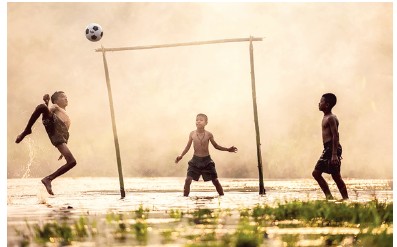
Every Olympic cycle, India celebrates its medal winners as national heroes. Streets fill with congratulatory banners, and governments announce cash rewards. Yet beyond the spotlight, India’s sporting ecosystem remains fragile, particularly at the grassroots.
For every athlete who reaches the podium, thousands drop out long before reaching professional levels not due to lack of talent, but because of inadequate infrastructure, financial insecurity, and institutional neglect.
Across small towns and villages, children train on uneven grounds with limited equipment. Coaches are often untrained or overstretched, and access to nutrition, physiotherapy, and sports science is rare. Parents, wary of uncertain careers, frequently push children toward academics once school ends. Without scholarships or assured pathways, sport remains a gamble few families can afford. “Athletes don’t quit sports,” said a former national coach. “They quit systems that don’t support them.” Opportunities in sports are unevenly distributed. Urban centres with private academies dominate selections, while rural talent struggles for visibility.
Women athletes face additional challenges safety concerns, lack of facilities, early marriage, and social stigma. While success stories inspire, they remain exceptions rather than the norm. Sports federations often function with limited transparency. Selection disputes, inconsistent funding, and administrative control by non-specialists undermine athlete development. While recent reforms aim to improve governance, implementation remains patchy. Athletes frequently lack grievance redress mechanisms, forcing them to rely on media attention to be heard. India’s education system still treats sport as extracurricular rather than integral.
Schools prioritise board results, leaving little time or space for training. Countries with strong sporting cultures invest heavily in school-level competition and coaching. In India, physical education periods are often theoretical or sacrificed entirely. There are positive developments. Government schemes, corporate sponsorships, and improved training centres have expanded opportunities. Professional leagues have raised visibility and interest.However, these benefits remain uneven, concentrated in a few disciplines and regions.Experts argue that India must move beyond medal-count nationalism toward long-term investment. Grassroots facilities, trained coaches, sports science, and athlete welfare must be prioritised. Sport thrives not on celebration alone, but on systems that allow talent to survive setbacks.Until India builds such systems, its sporting success will remain episodic brilliant in moments, fragile in foundation
Patna: An Excise Department constable was killed after suspected liquor smugglers and an alleged accomplice opened fire on...

New Delhi: Amid the ongoing protests, investigators have found that certain elements backed by Pakistan launched a multi-layered...
Good Afternoon Viewers! Stay updated with The Savera Times Afternoon Bulletin, bringing you the latest news from Punjab,...

New Delhi: Heavy rain and thunderstorms swept parts of Delhi-NCR on Thursday as dark clouds covered the national...
A street vendor has approached the Delhi High Court seeking to stop the Cockroach Janata Party (CJP)'s protest...
Suva: India and Fiji on Thursday held discussions focused on deepening bilateral ties and reaffirmed their shared commitment...
Aries: The day will be auspicious...