Last Updated: November 2, 2026
Last Updated: November 2, 2026





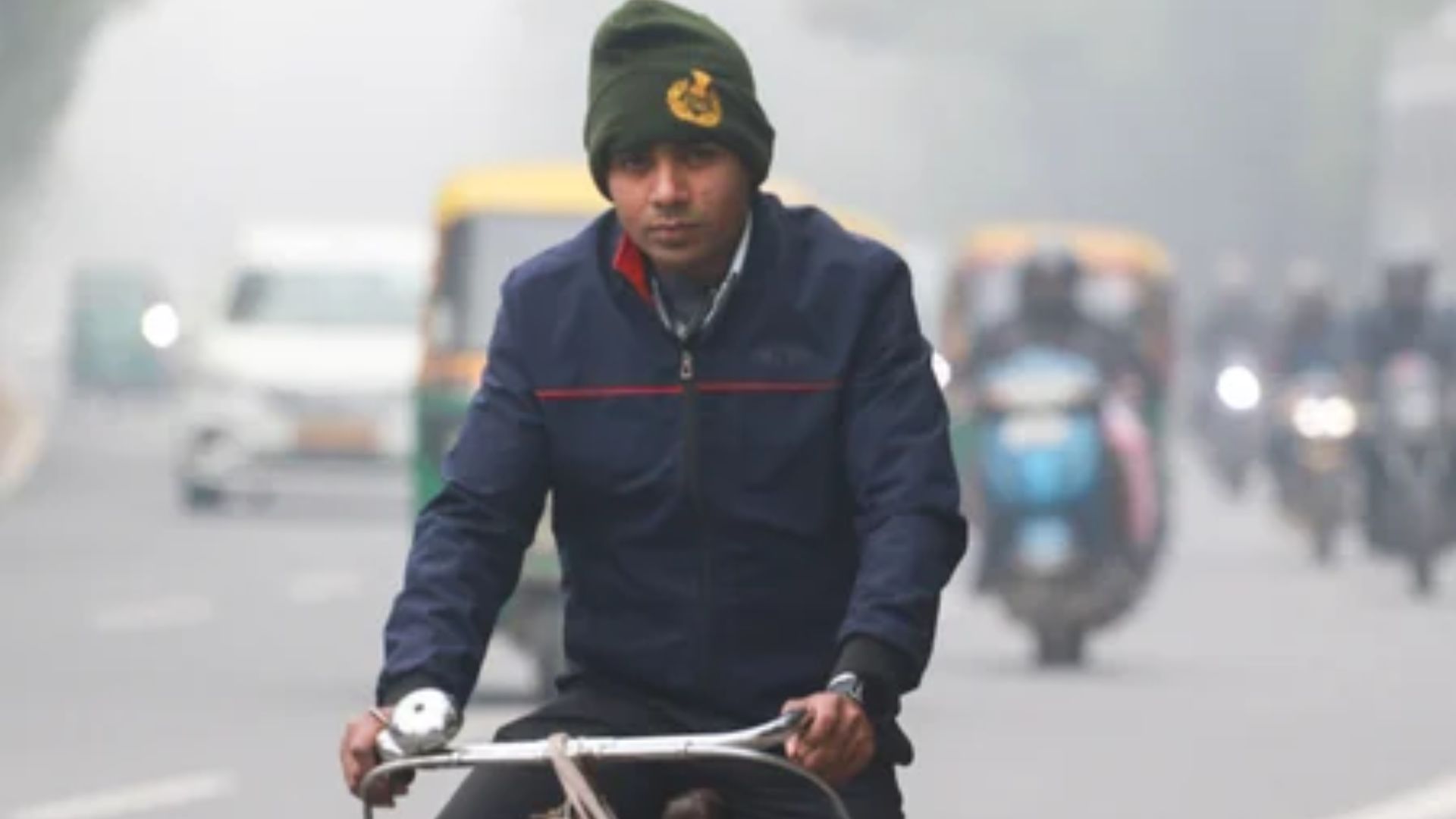
New Delhi: The national capital Delhi and NCR experienced a chilly feeling on Monday morning. The effects of winter are gradually becoming visible in the region. Meanwhile, after a few days of relief following rain, air quality has deteriorated once again. Delhi’s average Air Quality Index (AQI) was recorded at 310, which falls in the ‘very poor’ category.
Air quality in several areas in and around the capital was recorded in the ‘poor’ to ‘very poor’ category. The AQI was 313 in Burari, 258 in Badarpur, 213 in Chhawla, 237 in Jharoda Kalan, 273 in Vasundhara Enclave, 256 in Karala, and 310 in Uttam Nagar.
Additionally, the AQI was recorded at 274 in Ghogha, 319 in Nangloi, 353 in NIH Narela, 340 in Mandir Marg, 288 in Aya Nagar, 334 in CRRI Mathura Road, and 340 in Pusa. Safdarjung? No—Siri Fort recorded 354, Chandni Chowk 361, and Burari Crossing 354.
The AQI at JNU was 319, Alipur 382, Delhi University’s North Campus 359, Talkatora Garden 322, and Dwarka Sector 8 357.
Cold in North India, Rain Expected in South and East
With the onset of winter in North India, mixed weather conditions are being observed in different parts of the country. While temperatures are dropping in northern states, bringing pleasant and cool weather, heavy rain is expected in the southern and eastern regions. Cyclone Murasu, active in the Bay of Bengal, is moving towards the Andhra Pradesh coast.
According to the India Meteorological Department (IMD), Delhi is expected to experience clear skies on Monday, with daytime temperatures ranging from 17 to 29 degrees Celsius. No rain alert has been issued for the capital. Mainly dry weather is also expected in Punjab and Haryana.
Meanwhile, weather activity is intensifying in the Bay of Bengal. Cyclone Murasu is expected to intensify before reaching the Andhra Pradesh coast. Meanwhile, the effects of winter are also increasing in Himalayan regions like Spiti, Ladakh, and Kedarnath.
Winter Action Plan Implemented in Delhi
To control the rising pollution during winter, the Delhi government has started implementing fixed-term restrictions under the Winter Action Plan from November 1. These measures will remain in effect until February 28, with varying timeframes.
Under the plan, construction and demolition activities will be completely banned from December 10 to January 20. However, activities with specified exemptions will be excluded. The plan aims to reduce vehicle emissions, control dust, and ease winter traffic congestion.
Government office timings have also been changed to reduce traffic congestion. Delhi government offices will operate from 10:00 AM to 6:30 PM, while Municipal Corporation of Delhi (MCD) offices will operate from 8:30 AM to 5:00 PM. This arrangement will remain in effect until February 28.
Furthermore, parking fees at authorized municipal parking lots have been doubled to discourage the use of private vehicles.
₹6.84 million in fines on the first day
On the first day of the Winter Action Plan, officials imposed a total of ₹6.84 million in fines and environmental compensation for violations. Enforcement teams inspected approximately 15,000 vehicles. Of these, 1,539 vehicles were turned back from border points, while 566 challans were issued for violation of Pollution Under Control Certificate (PUCC) norms.
According to official data available till 5 pm on Sunday, environmental compensation of Rs 56.6 lakh was imposed for violation of PUCC norms, Rs 2 lakh for violation of vehicle entry restrictions and Rs 9.8 lakh for not following dust control norms at construction and demolition sites.
Eight labourers died of electrocution at a road construction site in Chhapoli village, Jhunjhunu, after a gravel-mixing machine...

Amidst concerns over rising air ticket prices, the Central Government has notified new rules. Under these rules, the...

A tragic road accident occurred late last night in Kushinagar district of Uttar Pradesh. An Omni van collided...

Cyclone 'Murasu', active over the Bay of Bengal, has now intensified into a severe cyclonic storm.

An encounter broke out between police and suspected criminals in Noida's Sector 63 area late Sunday night. Two...

Good Morning Viewers! Stay updated with The Savera Times Morning Bulletin, bringing you the latest news and top...

Aries: The day will be auspicious...