Last Updated: October 22, 2026
Last Updated: October 22, 2026





Written by Parneet Sachdev
The chanting of sutras in a temple, with the smell of incense, stirs reverence without requiring doctrinal explanation. In the Gurudwara, I encountered a prakash of the Guru Granth Sahib. Around that were tens of people sitting quietly, some reading portions of the scripture, while others just sat in Divine silence. The depth of that experience still lingers.
In the nuanced realm of Japanese aesthetics, few concepts are as profound and elusive as yūgen—an embodiment of spiritual perception of beauty that transcends words, forms, and appearances. It points toward a reality that cannot be grasped by intellect alone.
Yugen (hidden or obscure) is the reality behind appearances
The essence of yūgen can be glimpsed in images that speak far beyond appearances. The sight of a snowy heron, barely discernible under the soft brilliance of moonlight, evokes a deeper mystery. The sight of mist drifting over mountains at dawn, when the contours of the landscape are only faintly visible, evokes a sense of timelessness and mystery. The mountains are present, yet partly hidden, suggesting both grandeur and quiet impermanence.
In such moments, perception is sharpened not by what is revealed but by what remains concealed. The observer is drawn inward and this inward turn forms the spiritual core of yūgen—an awareness of beauty that hints at the boundlessness of existence.
Yūgen, therefore, asks us to discern the source behind everything. Not through conscious thought, rather through a profound inner discernment. Because that is where the real beauty of impermanence can be comprehended.
Japanese literary tradition, particularly in the works of The Tale of Genji and classical waka poetry, is steeped in this sensibility. Written in the early 11th century by the noblewoman Murasaki Shikibu during Japan’s Heian period, The Tale of Genji (Genji Monogatari) spans over a thousand pages. The narrative centers on Hikaru Genji, the “Shining Prince,” the son of an emperor and a low-ranking concubine. The tale’s significance lies in its refined depiction of psychological depth and the fleeting nature of beauty. Scenes are often imbued with hallmarks of Japanese aesthetics such as mono no aware (the pathos of things) and yūgen (subtle profundity). The story reflects themes of transience, longing, and spiritual insight.
In later Zen teachings, the cultivation of yūgenis intertwined with the realization of mu—the void or emptiness—and the impermanence of all forms.
YŪGEN IN INDIAN AND OTHER TRADITIONS
Spiritual traditions beyond Japan offer resonances with this sensibility. The Bhagavad Gita speaks of the Divine as
“unseen, inconceivable, and abiding in the heart of all beings”
Bhagavad Gita 13.17
This suggests a reality that transcends form and requires inner stillness to perceive. Similarly, the Buddha’s exhortation in the Dhammapada to
“walk softly on the earth”
reflects the subtle attentiveness that yūgen demands. The Sufi mystic Rumi also captures this spirit when he writes,
“Silence is the language of God, all else is poor translation.”
Across traditions, spiritual seekers are urged to turn inward, to listen beyond words, and to experience the profound awakening.
This inward attunement is a path toward awakening. In Zen monasteries, practitioners are encouraged to sit in quiet reflection. It is in this space—between form and formlessness known as Nirgun (formlessness) and Sargun (manifest form) in Sikhism;that yūgen reveals itself as a spiritual discipline, offering profound solace amid the flux of life.
SCIENCE AND YŪGEN
Neuroscientific studies on mindfulness and attention reveal that when individuals engage in quiet observation without immediate interpretation, neural pathways associated with emotional regulation are activated. In this sense, yūgenis entwined in meditative practices that promote resilience, empathy, and psychological well-being.
Quantum mechanics proposes that observation is not a passive act but an interaction that influences outcomes, blurring the line between observer and observed. The famed uncertainty principle suggests that reality at its deepest level cannot be pinned down with absolute precision—a truth that resonates with yūgen’s embrace of ambiguity and suggestion rather than certainty.
In a world often obsessed with spectacle and speed, yūgen offers a reprieve—a way to reconnect with the sacredness that lingers deep inside each one of us.A connectedness to the One Source.
CULTIVATING YŪGEN IN DAILY LIFE: A PRACTICE OF SUBTLE AWARENESS
To practice yūgen is to train oneself to perceive beauty, oneness, and meaning in what is not immediately visible or fully explained. It is a way of living attentively, allowing space for silence, suggestion, and the ephemeral rather than rushing toward clarity or control. This practice is not about adopting rituals or adhering to rigid rules but about refining one’s perception, softening the grasping impulse of the mind, and opening oneself to wonder, impermanence, and depth. Below are ways to consciously invite yūgen into daily living.
ATTUNING TO THE PRESENT MOMENT
The practice of yūgen begins with mindfulness—being fully present without trying to dissect, categorize, or interpret every sensation or experience. One way to start is by observing nature daily: the play of shadows, the shifting colors of the sky at dusk, or the sound of distant rainfall. Rather than identifying or judging what is seen, allow the senses to quietly register the moment. This soft, patient attention is the gateway to perceiving beauty that is hidden or understated.
EMBRACING IMPERMANENCE AND WONDER
Yūgen thrives in spaces where permanence is not assumed. Consciously reflecting on the transience of life—watching how flowers bloom and wither, or how relationships evolve over time—helps cultivate reverence rather than attachment. These reflections invite gratitude for what passes rather than clinging to what is lost.
Wonder is an essential element of yūgen. Observing how dew gathers on a leaf at sunrise evokes awe and humility. Wonder softens the mind’s defenses and invites openness to mystery.
CREATING SPACES FOR MEDITATION
A room arranged with simplicity—a tatami mat or just a comfortable chair, a single flower in a vase, soft lighting—encourages a slower rhythm of life and invites contemplation. It is not the material abundance that creates yūgen but the intentional quietness that allows subtle perceptions to surface. One may set aside time each day to sit in deep surrender to the Divinity within. To be the recipient, not the doer.
Scriptures such as the Bhagavad Gita, the Dhammapada, or Zen koans encourage reflection on the unseen and the profound. Read the verse
“He who sees the eternal in the transient,
and the transient in the eternal, he sees truly”
As we sit and let go, the awakening of the super-consciousness will allow us to sense the sacred in everyday experience.
PRACTICING COMPASSIONATE PRESENCE
Yūgen is not limited to nature or art—it also applies to human interaction. Being present with another person, especially in times of grief, uncertainty, or silence, is a deeply yūgen experience. Rather than rushing to offer solutions, one can sit quietly with another’s pain, allowing empathy to arise without needing to fix or explain it.
Moments of stillness, pausing before responding, simply breathing deeply, create space for insight and connection.
To practice yūgen is to embrace a way of being that honors subtlety, impermanence, and spiritual depth. It calls for humility before the mysteries of existence. One learns to live with grace, compassion, and attentiveness—qualities that enrich both inner life and outward relationships.
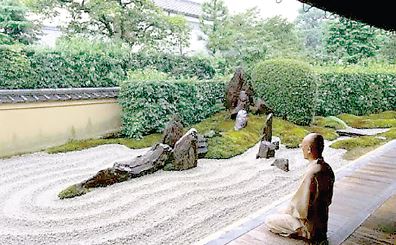
A Zen monk sitting in meditation, eyes half-closed, breathing softly as shadows shift across the tatami mat, embodies yūgen by creating a space where presence, impermanence, and emptiness merge into deep awareness.
Ultimately, yūgen is not an escape from reality but a deeper engagement with it. By embracing what is obscure and incomplete, lies grace, and in that grace, a profound spiritual awakening that transcends boundaries of culture, language, and creed.
Yūgen is an experience of Super-Consciousness.
(Views expressed are the author’s own).
Parneet Sachdev, IRS is the Chairman of Real Estate Regulatory Authority and a leading author.
Good Evening Viewers! Get the latest updates from India and around the world with The Savera Times Evening...

Bharatiya Janata Party (BJP) National General Secretary Smriti Zubin Irani launched a scathing attack on Congress MP and...

New Delhi: Cockroach Janata Party (CJP) leaders Saurav Das and Ashutosh Ranka will be released from judicial custody...

According to police, three suspicious young men are seen in CCTV footage. Efforts are underway to identify them....

A video has surfaced of an alleged attempted assault on Jan Suraj Party's Bihar president Manoj Bharti. The...

Two accused have been convicted and sentenced to 10 years of rigorous imprisonment in a 2017 drug trafficking...

Aries: The day will be auspicious...