Last Updated: October 13, 2026
Last Updated: October 13, 2026





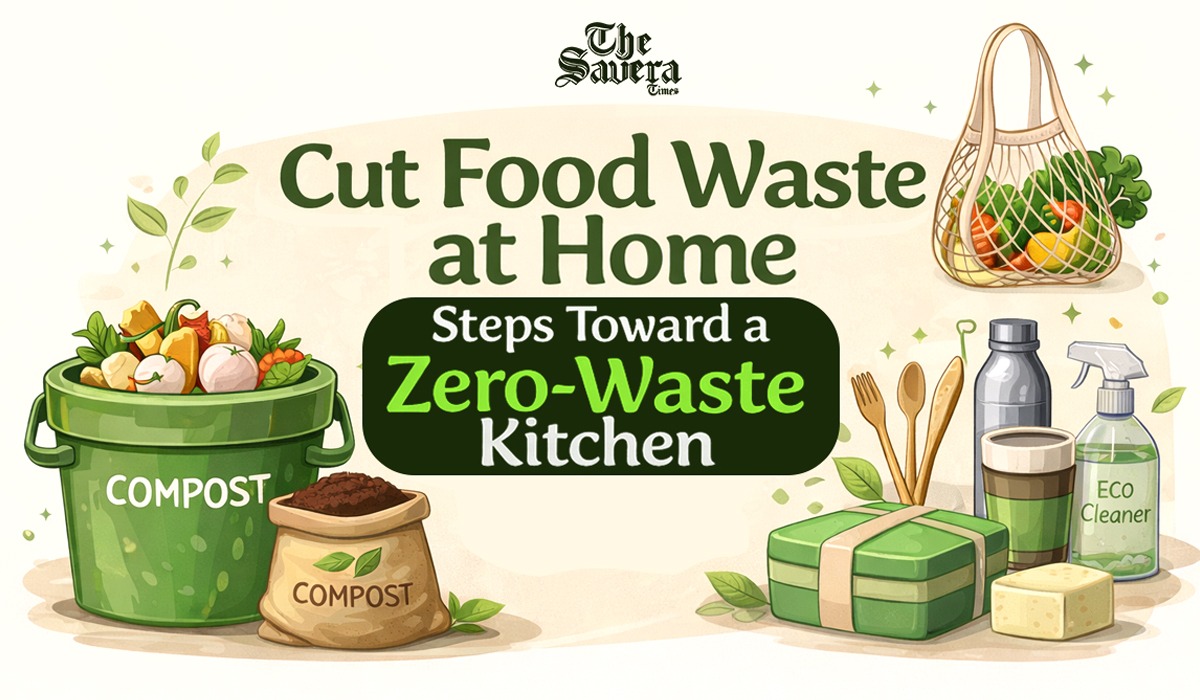
In an age of rising grocery bills and growing environmental awareness, urban households across India are rethinking what happens in their kitchens, not just what they cook, but what they throw away. The concept of the “zero-waste kitchen” is steadily moving from environmental activism circles into mainstream urban life.
According to global food studies, nearly one-third of all food produced is wasted. In Indian cities, the waste often begins at home, leftover sabzi forgotten in the fridge, wilted vegetables, stale bread, or excess rice scraped into the bin. But a new wave of conscious consumers is changing that narrative.
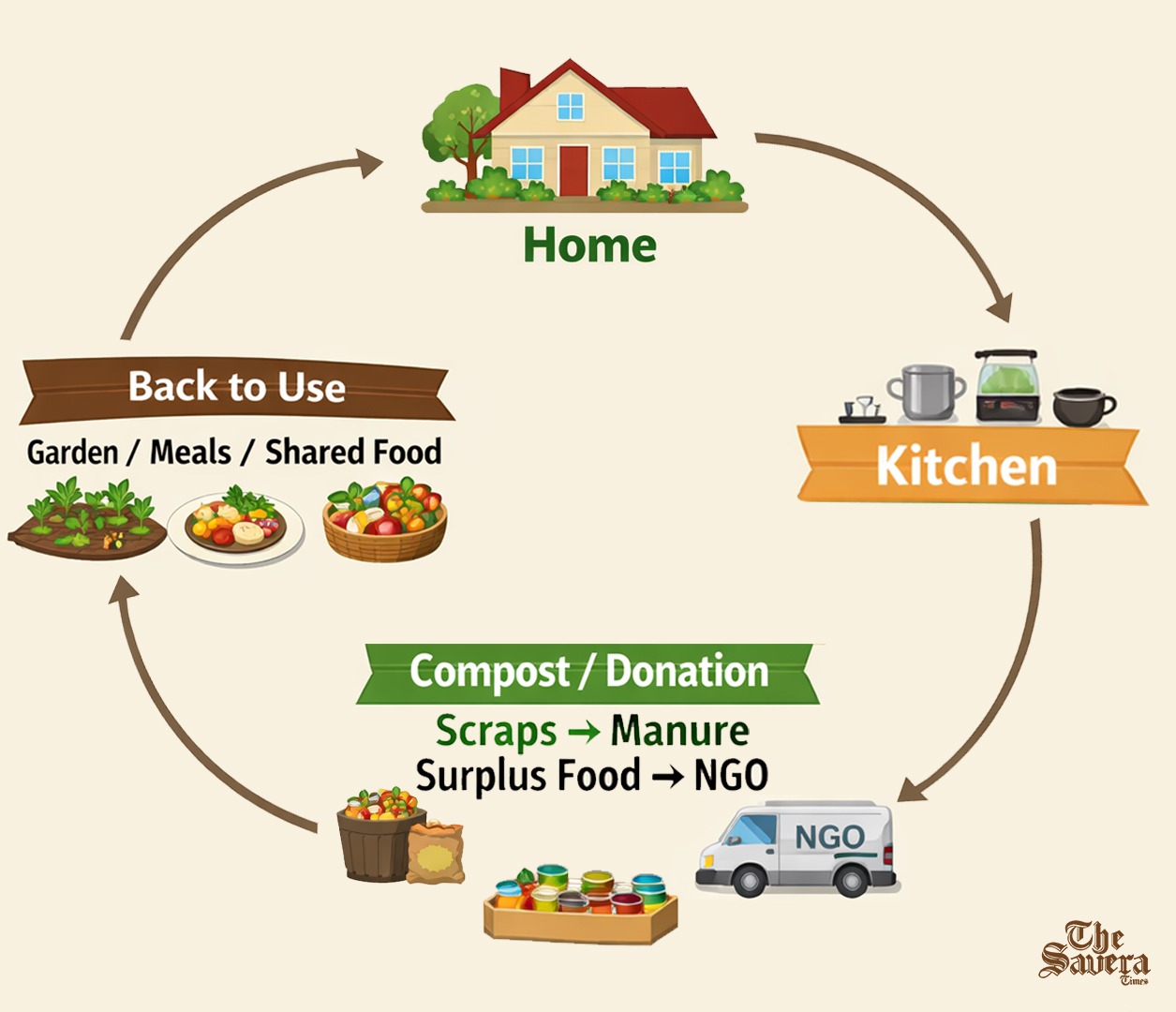
Zero-Waste Kitchen: Step-by-Step
Plan Meals → Buy only what you need
Use Leftovers Creatively
Compost Organic Waste
Smart Storage → Extend shelf life
Share Surplus Food → Apps & NGOs
Planning Before Purchasing
For many families, the journey begins at the grocery list. Weekly meal planning has become a practical tool to avoid impulse buying. By deciding menus in advance and purchasing only what is required, households are reducing spoilage.
Nutritionist-led workshops in cities like Delhi, Mumbai, and Bengaluru now encourage families to follow the “FIFO rule”, First In, First Out, ensuring older items in the refrigerator are used before newly purchased groceries.
Smaller, more frequent shopping trips are also replacing bulk buying. While supermarket discounts tempt customers to buy more than needed, urban families are learning that savings at checkout often translate into waste at home.
Creative Leftover Culture
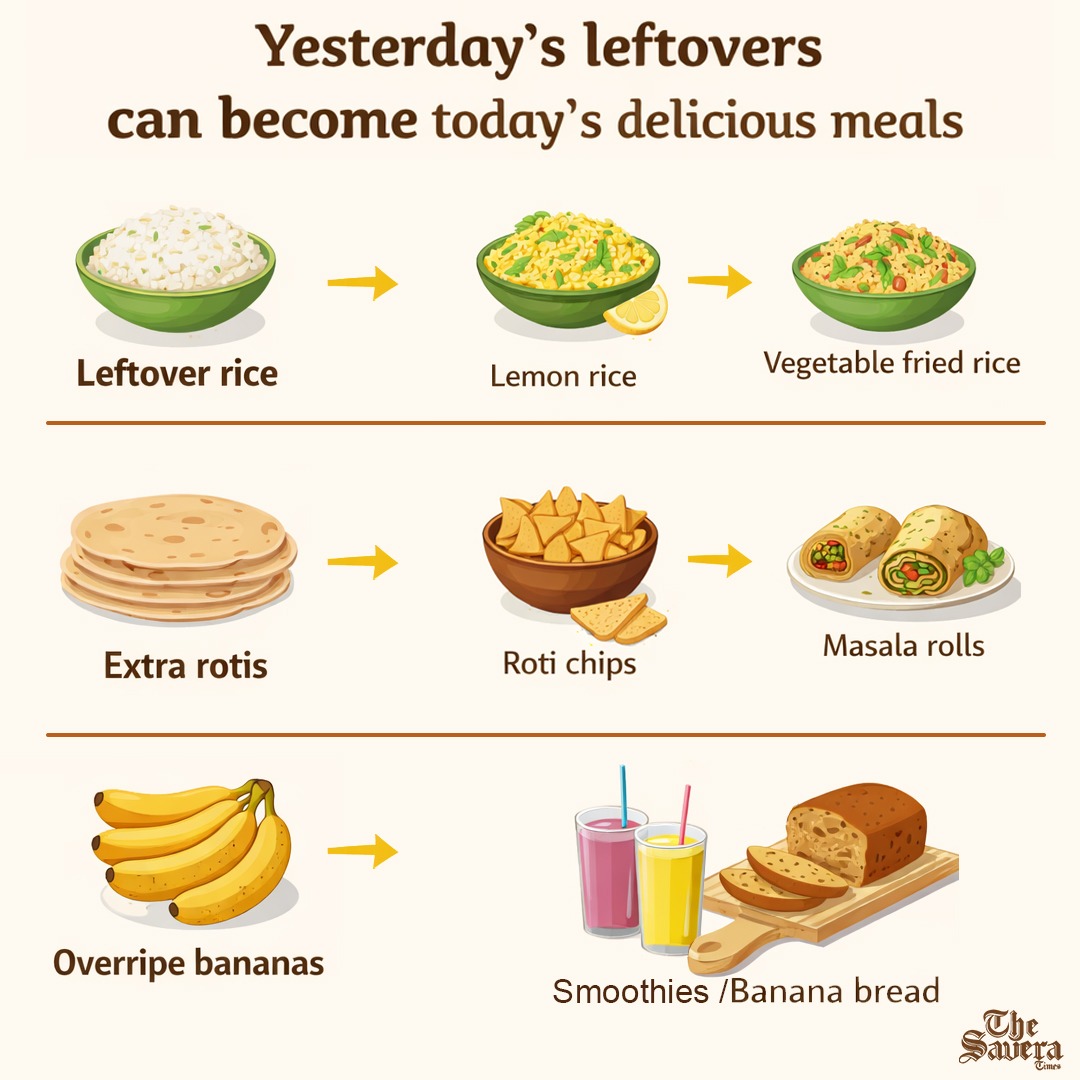
What was once seen as “yesterday’s food” is now being reinvented. Leftover rice becomes lemon rice or vegetable fried rice. Extra rotis turn into crispy roti chips or masala rolls for tiffins. Overripe bananas are transformed into smoothies or banana bread.
Social media has played a major role in popularising leftover recipes. Short cooking videos demonstrate how peels, stems, and scraps — once discarded, can be turned into chutneys, broths, or stir-fries.
Some families even designate one day a week as a “leftover day,” where creative combinations prevent perfectly edible food from going to waste.
Composting at Home
For unavoidable organic waste like vegetable peels and fruit skins, composting is gaining ground in apartment complexes. Compact compost bins, now easily available online, allow households to convert kitchen scraps into nutrient-rich manure for balcony gardens.
Resident Welfare Associations (RWAs) in several cities have begun collective composting initiatives. The compost produced is used for community parks or shared terrace gardens, closing the loop between consumption and regeneration.
Environmental experts say composting not only reduces landfill waste but also cuts methane emissions generated from decomposing organic matter.
Smart Storage and Technology
Modern storage techniques are another key element of zero-waste kitchens. Glass jars, airtight containers, and proper refrigeration practices extend shelf life. Labelling containers with purchase dates has become common in organised households.
Mobile apps are also entering the picture. Some platforms send reminders about nearing expiry dates, while others connect users to food-sharing networks where surplus food can be redistributed to those in need.
Restaurants and caterers have also joined the movement by partnering with NGOs that collect excess food from events and distribute it to shelters.
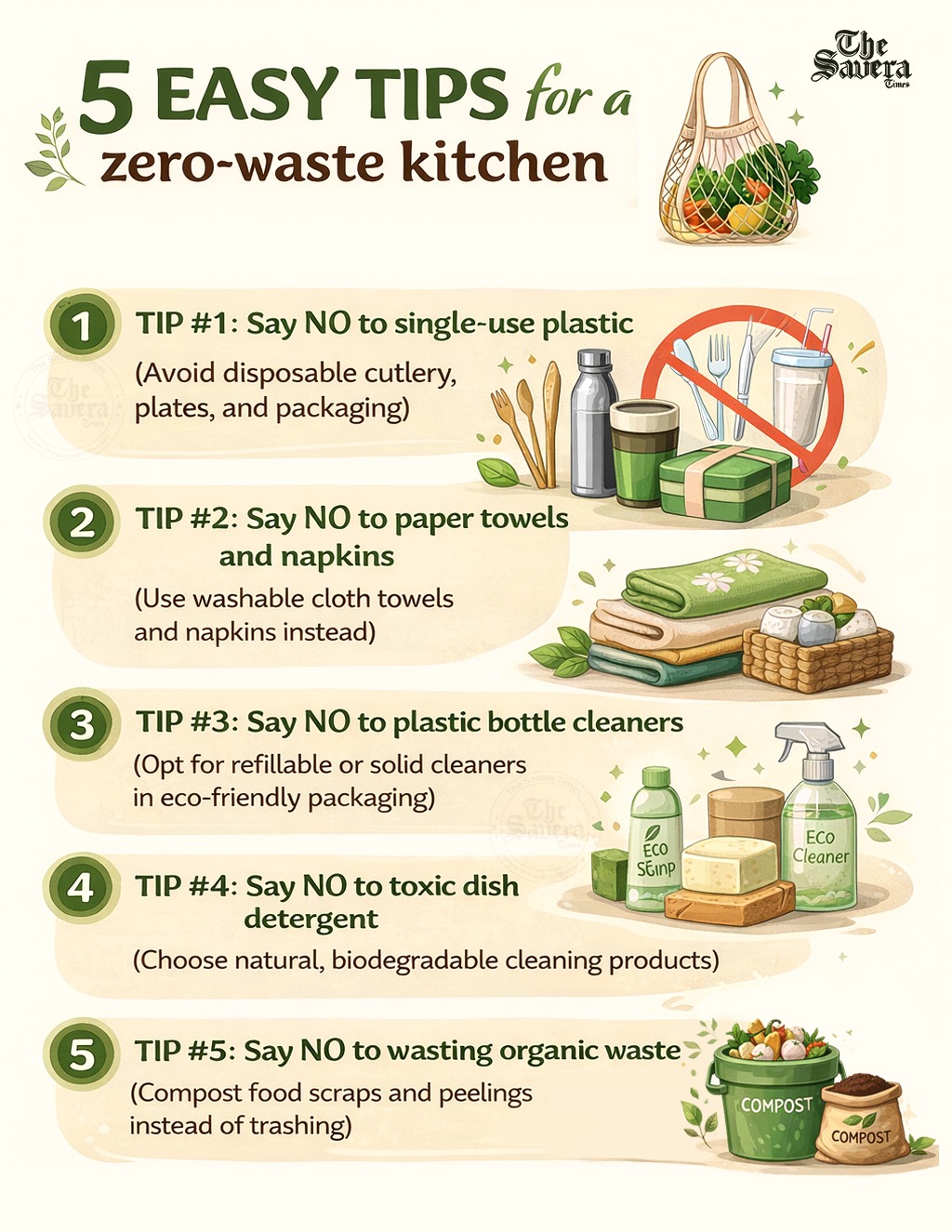
Mindset Shift: From Abundance to Awareness
At its core, the zero-waste kitchen is less about perfection and more about awareness. Many urban parents say they involve children in meal planning and composting to instil responsible habits early.
“There’s a different satisfaction in knowing nothing is wasted,” says a Bengaluru-based homemaker who has reduced her household’s wet waste by half in two years. “It’s good for the planet and good for the pocket.”
With food prices fluctuating and climate concerns intensifying, reducing food waste is emerging not just as an environmental choice but as an economic necessity.
The Way Forward
Zero-waste kitchens may not eliminate waste entirely, but they represent a significant cultural shift. From mindful buying to creative cooking and composting, urban families are proving that small changes at home can collectively make a large environmental impact.
As awareness grows, the Indian kitchen — long known for its resourcefulness — may once again lead by example, showing that sustainability often begins at the dining table.
Good Evening Viewers! Stay updated with The Savera Times Evening Bulletin for the latest news from Punjab, India...

eader of the Opposition in the Lok Sabha, Rahul Gandhi and 10 other INDIA bloc leaders have moved...

Amidst protests in central Delhi, the Delhi Metro Rail Corporation (DMRC) announced the reopening of entry and exit...

The Delhi Police has registered an FIR regarding the alleged disturbance at the Bangla Sahib Gurdwara in...

The Delhi Police on Monday removed Jantar Mantar from the list of officially designated protest sites. The police...

The Supreme Court on Monday clarified that it has not passed any judgment on the Election Commission's (ECI)...

Aries: The day will be auspicious...