Last Updated: October 21, 2026
Last Updated: October 21, 2026





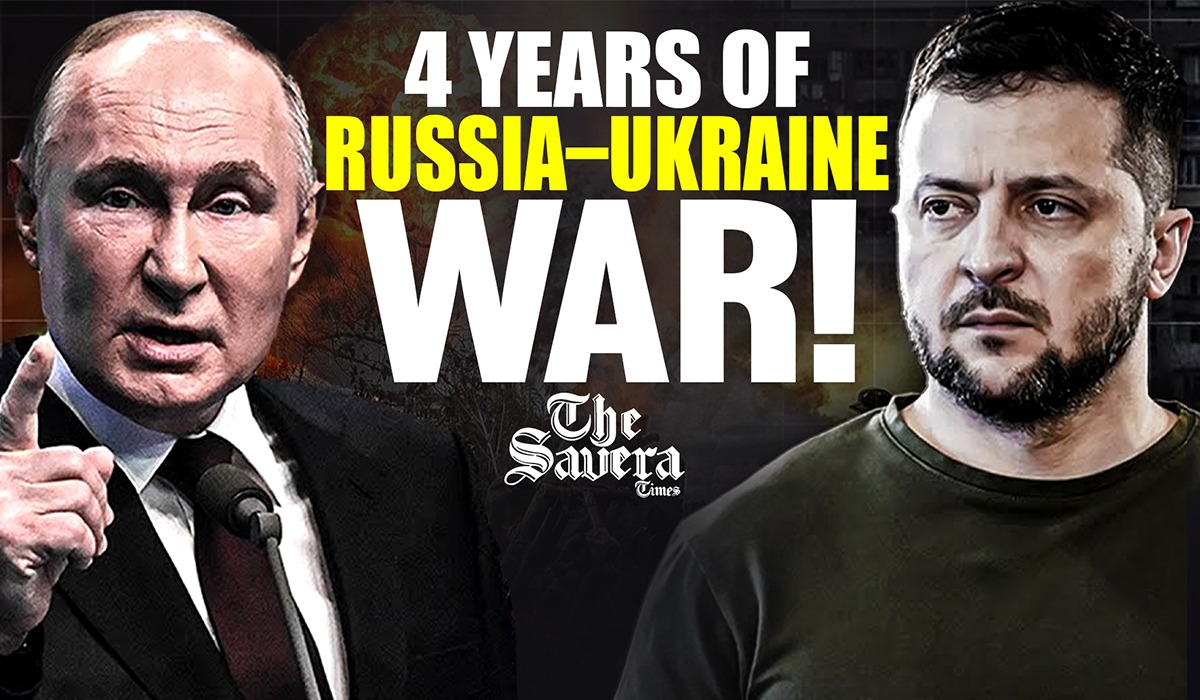
Four years ago, on February 24, 2022, Russia launched a full-scale invasion of Ukraine, triggering the deadliest war in Europe since World War II.
What began as a rapid military push has turned into a long, grinding war that has reshaped Ukraine, strained Russia, and redrawn global geopolitics.
Why the war began
The roots of the conflict lie in tensions after Ukraine moved closer to Western institutions like NATO and the European Union. In 2014, Russia annexed Crimea and backed separatists in eastern Ukraine’s Donbas region. Moscow says NATO’s expansion threatens its security. Kyiv says Russia is trying to control Ukraine’s future and deny its sovereignty.
The war on the ground: Territory and fighting
Today, Russian forces occupy close to one-fifth of Ukrainian territory. Much of the frontline runs through eastern and southern Ukraine, including parts of Donetsk and Zaporizhzhia regions. Cities such as Bakhmut and Toretsk have been reduced to ruins after months of fighting. Ukraine has slowed Russia’s advances but has not been able to push Moscow back to pre-2022 lines. The war has largely turned into trench warfare, drone strikes, and artillery battles.
Human cost: Death, displacement, and trauma
The United Nations has verified more than 15,000 civilian deaths in Ukraine, though the real toll is likely far higher. Millions of Ukrainians have been forced to flee their homes. Entire communities remain contaminated by landmines and unexploded weapons. Both sides keep military casualty numbers secret, but independent estimates suggest hundreds of thousands of soldiers have been killed or wounded. The war has also left deep psychological scars on civilians and returning fighters.
Destruction and rebuilding
Ukraine’s power stations, hospitals, and housing blocks have been repeatedly targeted. The World Bank estimates that rebuilding Ukraine could cost nearly 600 billion dollars over the next decade. Large areas of farmland are unusable due to mines, threatening food production. Even cities far from the frontline face regular missile and drone attacks, causing blackouts and shortages.
Economy: Pressure on both sides
Ukraine’s economy shrank sharply after the invasion and survives largely on foreign financial support from partners like the International Monetary Fund. Russia’s economy initially grew due to heavy military spending, but growth has slowed. Sanctions and attacks on energy facilities have cut into oil and gas revenues, a key source of income for Moscow.
Diplomacy: Why peace talks are failing
Talks hosted in Istanbul, Abu Dhabi and Geneva have failed to produce a ceasefire. Russia demands control over occupied regions and limits on Western military support to Ukraine. Kyiv says giving up land would be unconstitutional and invite future attacks. Trust between both sides is nearly nonexistent.
Global role: Allies and outside support
Ukraine relies heavily on weapons and funding from Western partners. European countries and the United States remain its main backers. Russia, meanwhile, has deepened ties with North Korea for manpower and ammunition, Iran for drone technology, and China for economic support.
Four years on, neither side is close to victory. Ukraine is fighting to survive as a state, while Russia is trying to secure territorial gains and weaken Western influence. The war has become a test of endurance—military, economic, and political—with no clear end in sight.
Ladakh is seeing two changes at once: a new district has been announced, and the Centre has proposed...

What if a decision taken in Washington could influence India’s oil bills, export earnings and trade relations with...

What happens when the world’s richest business leaders clash over one of the world’s biggest internet markets? A...

Pakistan is heading into its wheat-growing season with a serious water problem. The country is facing a projected...
Imagine a foreign national standing among Indian citizens at a political protest, raising questions about the government or...

For thousands of Indian tech workers in the United States, a job offer is only the beginning of...

Aries: The day will be auspicious...