Last Updated: October 21, 2026
Last Updated: October 21, 2026





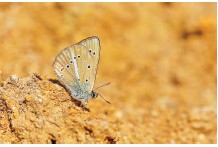
Armenia has unveiled the official logo for the 17th Conference of the Parties (COP17) to the Convention on Biological Diversity, placing a small but symbolically powerful species at the heart of a major global environmental gathering. The emblem features Polyommatus eriwanensis, commonly known as the Erivan Anomalous Blue, a butterfly found only in and around Armenia’s capital, Yerevan. Accompanied by the slogan “Taking action for nature”, the logo signals a shift in focus from pledges to real-world implementation of biodiversity commitments.
COP17, scheduled to be held in October 2026, will mark a critical moment for global biodiversity governance. It will host the first comprehensive global review of progress under the Kunming–Montreal Global Biodiversity Framework, adopted in 2022. The framework sets out 23 ambitious targets to be achieved by 2030, ranging from protecting and restoring ecosystems to reforming subsidies that damage biodiversity and mobilising financial resources for conservation. As countries prepare to assess how far they have moved from agreement to action, Armenia’s choice of symbol carries layered meaning.
The logo incorporates 23 blended colours, each representing one of the framework’s targets. Rather than using sharply divided segments, the colours merge into one another, visually reinforcing the idea that biodiversity goals are interconnected. Progress on habitat protection, for example, depends on changes in agriculture, finance, climate policy, and governance. The design suggests that no single target can succeed in isolation, and that coordinated action across sectors is essential.
At the centre of the logo, the Erivan Anomalous Blue butterfly provides a local anchor for these global ambitions. Endemic species such as this butterfly are particularly sensitive to environmental change. With limited geographic ranges, their populations can decline rapidly in response to habitat loss, climate shifts, pollution, or changes in vegetation.
Scientists often consider butterflies to be strong indicators of ecosystem health because they respond quickly to ecological stress. By foregrounding this species, Armenia connects the abstract language of international targets to a tangible, living organism whose survival depends on effective conservation. The butterfly inhabits calcareous grasslands in Armenia, ecosystems that are themselves vulnerable to land-use change and degradation. Notably, the host plant of Polyommatus eriwanensis is still unknown, underlining how much remains to be understood even about species living close to human settlements. The species is also not currently listed in global or European Red Lists, a reminder that lack of data does not equate to lack of risk.
Speaking at the logo unveiling on the sidelines of the seventh session of the United Nations Environment Assembly in Kenya, Convention on Biological Diversity Executive Secretary Astrid Schomaker described Armenia’s vision for COP17 as both inspiring and grounded. She said the emblem conveys the idea that transformation is possible, that nature is worth protecting, and that implementation is already underway, while emphasising that everyone has a role to play.
The choice follows a growing tradition of COP hosts using locally significant species to frame global discussions.COP16 in Colombia, for instance, featured the Inírida flower, endemic to the Guaviare region, highlighting a unique ecological zone while drawing attention to broader conservation priorities. Earlier COP logos have variously depicted animals, plants, landscapes, and abstract symbols. Over time, however, there has been a noticeable shift away from generic imagery towards visuals with clear ecological and political relevance.
This evolution mirrors changes in the biodiversity agenda itself. What once centred on awareness-raising has increasingly moved towards accountability and measurable outcomes.
Protests in Jakarta, Yogyakarta and Bandung brought students onto the streets over rising costs, forest fires and civil...
Organisations linked to Neville Roy Singham are under US congressional scrutiny over funding. Their coverage of protests in...
US President Donald Trump says Washington and New Delhi are close to a trade agreement that will differ...
Iran has ruled out transferring its enriched uranium stockpile outside the country, with security official Mohsen Rezaei reiterating...
Donald Trump has urged Volodymyr Zelensky to pursue a peace deal with Russia, warning that Ukraine could face...
Pakistan, battling insurgencies at home and tensions along multiple borders, is too overstretched to offer meaningful military support...
Aries: The day will be auspicious...