Last Updated: October 18, 2026
Last Updated: October 18, 2026





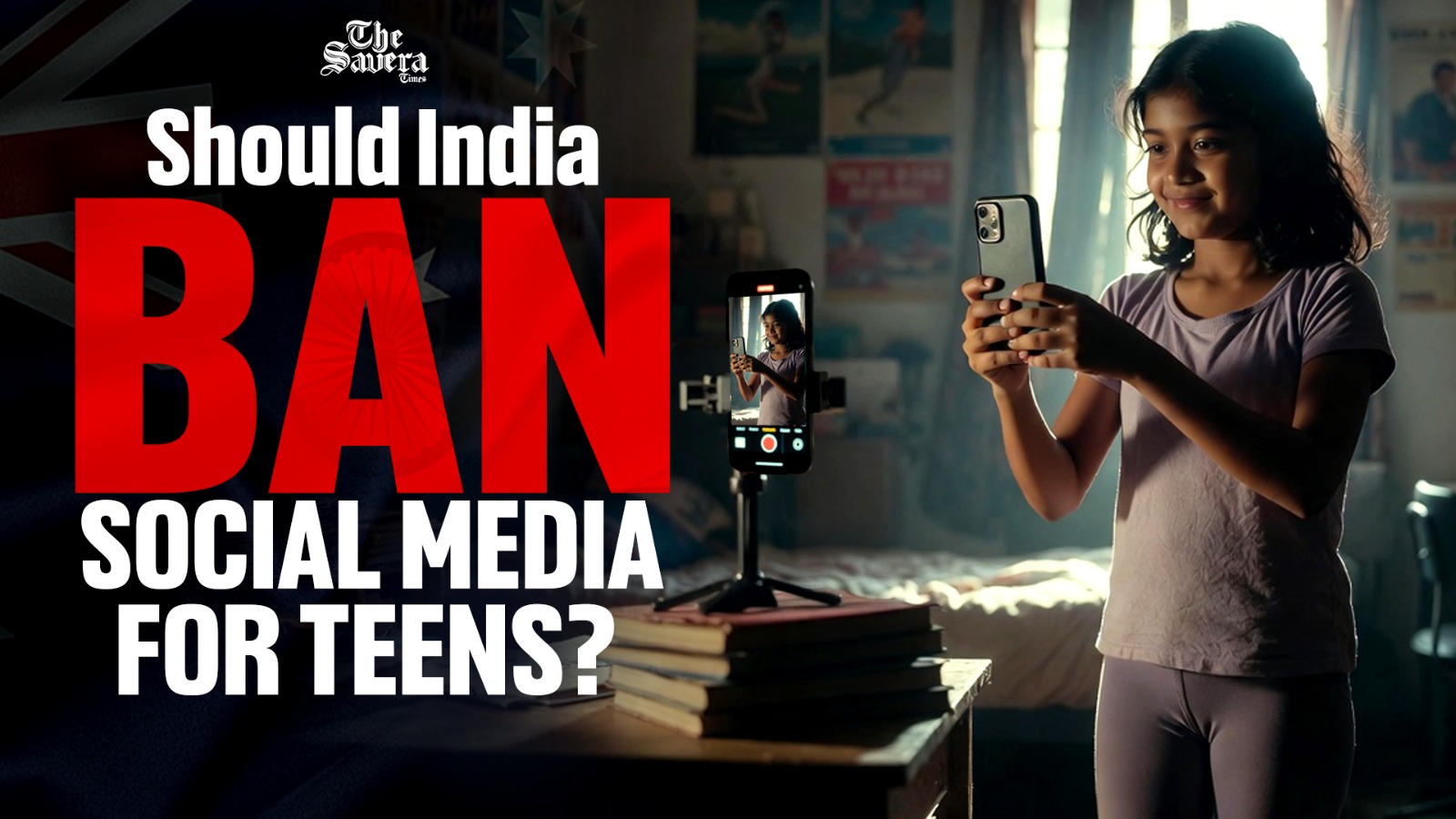
Scrolling, swiping, streaming — today’s childhood is happening on a screen. But as India’s Economic Survey sounds the alarm on rising digital addiction and mental health risks among the young, a big question is surfacing: Should India draw a legal line on teen social media use, like Australia just did? What’s at stake isn’t just screen time — it’s the future wellbeing, learning, and productivity of an entire generation.
Recent policy documents in India — especially the Economic Survey 2025-26 — have flagged a rapid rise in digital addiction and screen-related mental health challenges among children and adolescents.
The survey points out that near-universal internet access among young people means access itself is no longer the limiting factor. What matters now is how digital platforms are used and how excessive usage is affecting youth wellbeing.
It warns that compulsive social media and smartphone use can harm academic performance, mental health, sleep patterns, and long-term productivity — turning screen habits into a public health concern with real economic costs.
What the Economic Survey Actually Suggested
The Economic Survey did not mandate a ban. Rather, it recommended:
So far, this is advice from the nation’s chief economic adviser, not a legal order. It signals concern — not a finalized policy.
Australia’s World-First Under-16 Ban: What It Means
Australia became the first country to pass a law banning social media use for children under age 16.
Key features of that law:
Critics of Australia’s policy argue enforcement is very difficult, may push teens to unregulated corners of the internet, and could undermine useful safety controls on logged-out content.
Is India Likely to Copy Australia’s Ban?
Not immediately — and not at a national level yet.
Here’s why:
The Economic Survey’s call is recommendatory, not compulsory. It urges studying age limits and setting up structures for safer use, but does not order a ban.
Some Indian states — notably Goa and Andhra Pradesh — have publicly discussed studying Australia’s law and its applicability in India.
Andhra Pradesh has even formed a Group of Ministers to assess the feasibility of similar restrictions.
For a national ban, India would need central legislation drafted, debated and passed in Parliament. No such bill is currently law yet — though a private member’s bill with similar aims was introduced in Parliament by an MP recently.
Major platforms have consistently warned that bans are hard to enforce and may push children to unsafe alternatives.
Indian policy discussions are also emphasizing digital literacy, parental controls, school-based education, platform accountability, and safer online content, not just bans.
What India’s Move Could Look Like Next
If India moves forward on this issue, future policy may include one or more of the following:
At present, India has not passed a nationwide ban on social media for teens like Australia’s. What’s happening now is:
A future law could happen — but it will likely take time, debate, and careful tailoring rather than a simple copy of the Australian approach.
What if a decision taken in Washington could influence India’s oil bills, export earnings and trade relations with...

What happens when the world’s richest business leaders clash over one of the world’s biggest internet markets? A...

Pakistan is heading into its wheat-growing season with a serious water problem. The country is facing a projected...
Imagine a foreign national standing among Indian citizens at a political protest, raising questions about the government or...

For thousands of Indian tech workers in the United States, a job offer is only the beginning of...

Three years ago, on October 7, 2023, Israel woke up to one of the deadliest attacks in its...