Last Updated: October 21, 2026
Last Updated: October 21, 2026





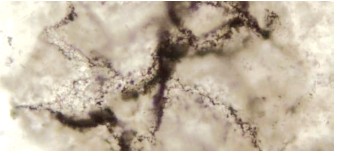
Scientists have pushed back the molecular record of life on Earth by some 800 million years, uncovering chemical traces in 3.3-billion-year-old rocks. The discovery not only rewrites Earth’s early biological history but also offers a promising method for detecting life beyond our planet.
The research, published in the *Proceedings of the National Academy of Sciences*, combined advanced chemical analysis with artificial intelligence. Scientists from the Carnegie Institution for Science and partner universities examined over 400 samples, ranging from modern plants and animals to meteorites and billion-year-old fossils. They trained a machine-learning model to detect subtle chemical patterns left by living organisms, even when traditional fossil evidence had long vanished.
Robert Hazen, senior staff scientist at Carnegie and co-lead author, explained, “Ancient life leaves more than fossils; it leaves chemical echoes. Using machine learning, we can now reliably interpret these echoes for the first time.” The team employed pyrolysis gas chromatography-mass spectrometry to break the samples into molecular fragments. Their AI model distinguished biological from non-biological material with up to 98 percent accuracy, identifying photosynthetic signatures in rocks at least 2.5 billion years old—nearly a billion years earlier than previously documented.
Until now, molecular traces of life had only been reliably found in rocks younger than 1.7 billion years. Heat and pressure over geological timescales typically degrade original biomolecules, making ancient chemical signals difficult to interpret. The new approach shows that even heavily altered organic fragments preserve unique life-associated patterns, allowing scientists to read deep-time biological records with unprecedented clarity.
Co-first author Anirudh Prabhu noted, “Even when degradation makes it difficult to spot signs of life, our machine-learning models can still detect the subtle traces left behind by ancient biological processes.” The study also revealed molecular evidence of oxygen-producing photosynthesis in rocks dating back 2.5 billion years, an early indicator of the process that eventually transformed Earth’s atmosphere and enabled complex life.
Katie Maloney of Michigan State University, who contributed billion-year-old seaweed fossils, emphasized, “Pairing chemical analysis and machine learning has revealed biological clues about ancient life that were previously invisible.”
Beyond Earth, researchers believe this technique could transform the search for extraterrestrial life. By applying the method to rocks from Mars or icy moons such as Europa, scientists may be able to detect traces of life that conventional tools cannot identify. The study illustrates how combining chemistry with AI can illuminate both our planet’s earliest life and the potential for life elsewhere in the solar system.
This breakthrough demonstrates that even the faintest chemical echoes can carry profound stories of life’s beginnings, offering a powerful new lens on the origin and evolution of biology.
Protests in Jakarta, Yogyakarta and Bandung brought students onto the streets over rising costs, forest fires and civil...

Organisations linked to Neville Roy Singham are under US congressional scrutiny over funding. Their coverage of protests in...

US President Donald Trump says Washington and New Delhi are close to a trade agreement that will differ...

Iran has ruled out transferring its enriched uranium stockpile outside the country, with security official Mohsen Rezaei reiterating...

Donald Trump has urged Volodymyr Zelensky to pursue a peace deal with Russia, warning that Ukraine could face...

Pakistan, battling insurgencies at home and tensions along multiple borders, is too overstretched to offer meaningful military support...

Aries: The day will be auspicious...