Last Updated: October 26, 2026
Last Updated: October 26, 2026





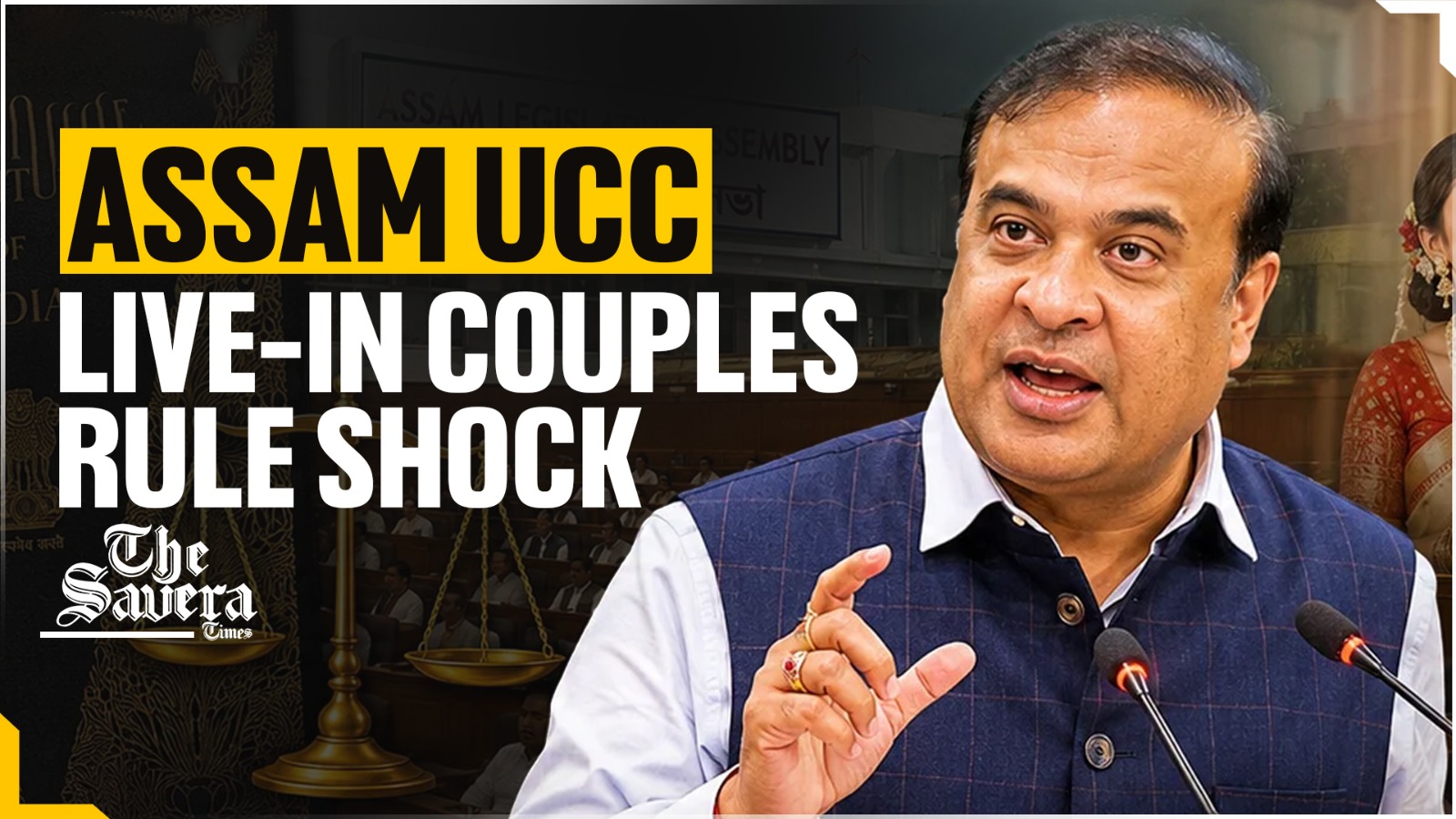
A couple living together without marriage — something that has long existed quietly in Indian society — may now come under direct legal regulation in Assam.
The Assam government has tabled a Uniform Civil Code, or UCC Bill, that proposes mandatory registration of live-in relationships, a ban on polygamy, and common rules for marriage, divorce, and inheritance.
If passed, Assam will become the third state after Uttarakhand and Gujarat to move ahead with a state-level UCC.
But the biggest talking point is this — what exactly changes for live-in couples?
What Is The Assam Ucc Bill?
The proposed law, called “The Uniform Civil Code, Assam, 2026 Bill”, aims to create a common legal framework for all citizens, regardless of religion.
The Bill covers:
The Assam government says the Bill is based on Article 44 of the Constitution, which directs the State to work toward a Uniform Civil Code.
The Bill also:
But the most discussed proposal is mandatory registration of live-in relationships.
What Does It Mean For Live-In Couples?
Under the proposed law, couples living together without marriage may have to officially register their relationship with authorities.
This means:
The Assam government says this is meant to protect:
In simple terms, registration creates legal proof that the relationship existed.
That proof could become important later in disputes involving:
Why Is This A Big Change?
Until now, live-in relationships in India were mostly recognised through Supreme Court judgments, not through a dedicated law.
Courts have repeatedly said consenting adults have the right to live together without marriage.
But Assam’s Bill moves a step further by formally regulating such relationships.
This marks a shift from informal legal recognition to direct state oversight.
Critics argue this may reduce privacy and increase government interference in personal lives.
There are also concerns that compulsory registration could discourage couples, especially in conservative societies.
What Have Other States Done?
Uttarakhand
Uttarakhand became the first Indian state to implement a UCC in 2025.
Its law:
It also recognises children born outside marriage equally.
Gujarat
Gujarat passed its UCC Bill in March 2026.
Like Uttarakhand, it:
The Bill also allows formal dissolution of live-in relationships through legal declaration.
Who Is Exempt?
Like Uttarakhand and Gujarat, Assam’s proposed law exempts Scheduled Tribes.
The government says traditional customs and practices of tribal communities will remain protected.
Why Is The Ucc Politically Sensitive?
Supporters say the UCC promotes:
Opposition parties argue:
The debate over the Uniform Civil Code has existed for decades and remains one of India’s most divisive legal issues.
Conclusion
The Assam UCC Bill could significantly change how live-in relationships are treated legally in India.
For supporters, registration means protection and accountability.
For critics, it raises concerns over privacy and state control.
But one thing is clear — live-in relationships are no longer being viewed only as private arrangements. They are increasingly becoming part of formal legal policy in India.
Imagine opening WhatsApp on your phone, but the SIM card linked to your account is not inside the...

Delhi’s air pollution is once again raising health concerns, with the Air Quality Index (AQI) entering the ‘poor’...

Ladakh is seeing two changes at once: a new district has been announced, and the Centre has proposed...

What if a decision taken in Washington could influence India’s oil bills, export earnings and trade relations with...

What happens when the world’s richest business leaders clash over one of the world’s biggest internet markets? A...

Pakistan is heading into its wheat-growing season with a serious water problem. The country is facing a projected...

Aries: The day will be auspicious...