Last Updated: October 24, 2026
Last Updated: October 24, 2026





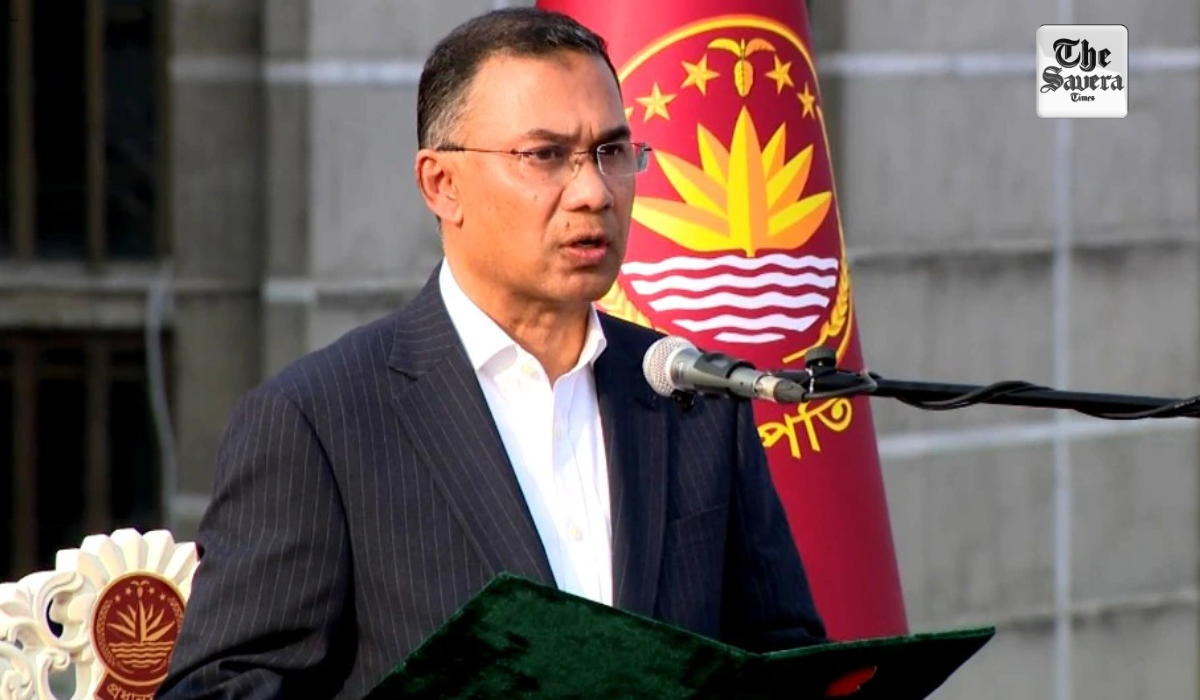
Bangladesh has entered a critical political moment after the February 12 general election. The nation’s new Prime Minister, Tarique Rahman, has taken office following a landslide victory by the Bangladesh Nationalist Party (BNP).
But rather than marking a smooth transfer of power, the transition has been overshadowed by a constitutional deadlock — the double oath crisis — that threatens to deepen political divisions and spark unrest.
Background – A Historic Election After Upheaval
The February 2026 elections were the first since the nationwide student-led uprising of July 2024 that toppled former Prime Minister Sheikh Hasina. In that uprising, millions demanded deep political reform and an end to authoritarian practices. An interim government led by Muhammad Yunus, followed by a referendum, sought to reshape Bangladesh’s governance framework.
In the general election, the BNP won a two-thirds majority in Parliament, while its allied party, Jamaat-e-Islami, also secured dozens of seats. The Awami League, Hasina’s party, was barred from contesting. International leaders, including from India, Pakistan and beyond, congratulated the new leadership, underscoring the global significance of the shift.
Yet, the celebrations have been muted by disputes over what the new government should endorse before beginning its term.
What Is the July Charter?
Central to the crisis is the July National Charter — a sweeping set of major constitutional reforms drafted after the 2024 uprising. The Charter includes 84 proposed reform measures designed to curb excessive executive power, ensure checks and balances, and prevent future autocratic rule. Its framers envisioned transforming Parliament into a Constituent Assembly empowered to rewrite large parts of the Constitution.
A referendum held alongside the general election reported over 60 % support for the Charter’s principles. But that popular endorsement does not automatically amend the constitution — instead, it creates a political expectation that lawmakers must formally ratify the Charter before enacting it into law.
The Dual Oath Requirement Explained
Under the new political framework intertwined with the July Charter, elected lawmakers are expected to take two oaths:
This dual oath was intended as a bridge between electoral legitimacy and the reform process. But now it has become the fault line of crisis.
Why the BNP Is Refusing the Second Oath
Despite its overwhelming parliamentary majority, the BNP has refused to take the second oath. Party leaders argue that the Charter’s structure grants undue and unchecked power to the Constituent Assembly, potentially limiting the authority of the executive branch before the new government can even govern. They also point out that the Council envisaged under the Charter is not yet incorporated into the constitution, making the oath legally premature.
The BNP maintains that the first oath is sufficient to form the government, and that detailed legal scrutiny should precede any endorsement of the Charter. This refusal triggered immediate controversy in Parliament.
Coalition Tensions and Political Backlash
The impasse has not only divided lawmakers but also strained relations within the BNP’s own coalition. Key allies such as Jamaat-e-Islami and the National Citizen Party (NCP) have openly criticised the BNP’s stance. Some have threatened to boycott oath-taking ceremonies, pursue street protests, and mobilise supporters nationwide unless the BNP agrees to the second oath. Jamaat leaders argued that refusing the oath disrespects the 2024 uprising and the will expressed in the referendum.
At the swearing-in ceremony where Tarique Rahman assumed the premiership, tensions were visible: several coalition partners stayed away from the cabinet oath event in protest.
The Risk of Unrest and What Comes Next
Political analysts warn that the deadlock could deepen instability across Bangladesh. If coalition partners withdraw support or take to the streets, the country could face extended upheaval, threatening economic recovery and social peace. Public anxiety is rising as citizens watch whether political actors can negotiate compromise swiftly or spiral toward confrontation.
For now, Tarique Rahman’s government has begun its tenure under the shadow of constitutional uncertainty. Whether the double oath standoff evolves into reform consensus or escalates into crisis remains the key question facing Bangladesh’s fragile democracy.
Ladakh is seeing two changes at once: a new district has been announced, and the Centre has proposed...

What if a decision taken in Washington could influence India’s oil bills, export earnings and trade relations with...

What happens when the world’s richest business leaders clash over one of the world’s biggest internet markets? A...

Pakistan is heading into its wheat-growing season with a serious water problem. The country is facing a projected...
Imagine a foreign national standing among Indian citizens at a political protest, raising questions about the government or...

For thousands of Indian tech workers in the United States, a job offer is only the beginning of...

Aries: The day will be auspicious...