Last Updated: October 21, 2026
Last Updated: October 21, 2026





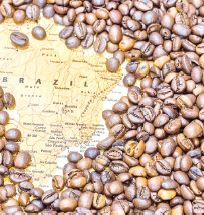
Brazil’s Atlantic Forest, one of the world’s richest yet most endangered ecosystems, is increasingly being replaced by coffee plantations. Over the past two decades, coffee cultivation has emerged as a leading driver of deforestation, directly clearing 312,803 hectares of intact forest, according to a report by non-profit Coffee Watch.
Once stretching across 1.2 million square kilometres, less than 10 per cent of the Atlantic Forest remains today. The “Wake Up and Smell the Deforestation” report, released on October 22, 2025, highlights the stark impact of coffee on Brazil’s forests. Between 2001 and 2023, municipalities with high coffee density lost over 11 million hectares of forest — an area roughly the size of Honduras. Of this, 737,000 hectares of forest loss occurred within coffee farms themselves, with 77 per cent in the Cerrado biome and 20 per cent in the Atlantic Forest.
Brazil produces around 40 per cent of the world’s coffee, but this global dominance has come at a significant ecological cost. Coffee cultivation increased by over 105 per cent between 1990 and 2023, expanding from 0.6 to 1.23 million hectares. Yet the very deforestation it drives is threatening the industry’s future. Forests play a crucial role in regulating rainfall, stabilising temperatures, and maintaining soil moisture — all essential for coffee production.
The report draws attention to rainfall deficits in major coffee-growing regions over the past decade. Eight of the last ten years since 2014 have experienced below-average rainfall, severely affecting flowering and bean development. In 2014, rainfall dropped by as much as 50 per cent in Minas Gerais, equivalent to a 300-millimetre shortfall during peak growth months. Landmark droughts in 2016-17, 2019-20, and 2023 have devastated yields, pushing global coffee prices up by over 40 per cent in 2023-24.
Soil moisture data from NASA’s Soil Moisture Active Passive (SMAP) satellite show long-term drying across Minas Gerais and other core coffee zones. Monoculture coffee farms have been particularly vulnerable, while agroforestry systems, such as those in Zona da Mata, retained more stable moisture levels even during droughts.
This situation presents a paradox: the same coffee plantations that destroy forests are undermining the climate conditions necessary for their survival. Modelling suggests that under mid-range climate change scenarios, Brazil could lose up to two-thirds of its suitable Arabica coffee-growing land by 2050.
The report underscores a critical challenge: sustaining Brazil’s coffee industry will require balancing production with forest conservation. Without urgent intervention, the pursuit of short-term gains risks erasing the very ecosystem that has supported coffee for centuries.
Protests in Jakarta, Yogyakarta and Bandung brought students onto the streets over rising costs, forest fires and civil...

Organisations linked to Neville Roy Singham are under US congressional scrutiny over funding. Their coverage of protests in...

US President Donald Trump says Washington and New Delhi are close to a trade agreement that will differ...

Iran has ruled out transferring its enriched uranium stockpile outside the country, with security official Mohsen Rezaei reiterating...

Donald Trump has urged Volodymyr Zelensky to pursue a peace deal with Russia, warning that Ukraine could face...

Pakistan, battling insurgencies at home and tensions along multiple borders, is too overstretched to offer meaningful military support...

Aries: The day will be auspicious...