Last Updated: October 21, 2026
Last Updated: October 21, 2026





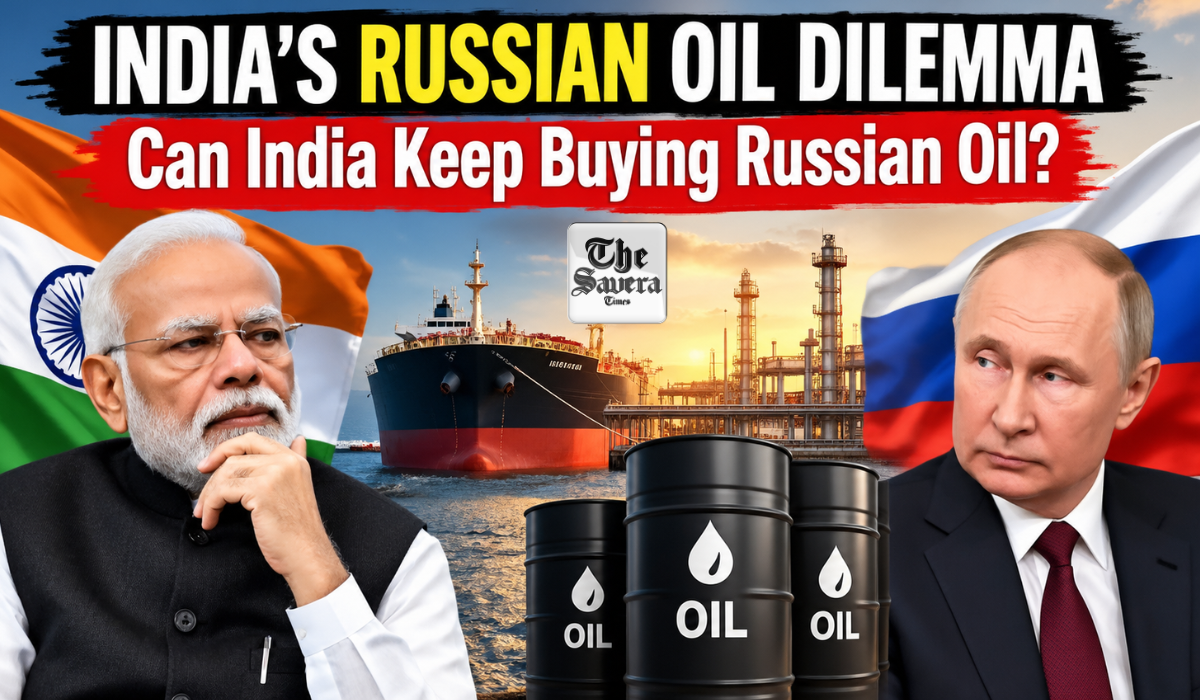
India is trying to do something increasingly difficult — keep buying Russian oil while also trying to help end the Russia-Ukraine war.
The issue came into focus again during External Affairs Minister S Jaishankar’s visit to Kyiv. Meeting Ukrainian President Volodymyr Zelenskyy and Foreign Minister Andrii Sybiha, Jaishankar defended India’s energy choices, stating that the ongoing war will not end simply because a country buys or refrains from buying Russian commodities.
So, can India actually continue buying Russian crude?
Why does India need Russian oil?
Russia was supplying less than 2 per cent of India’s crude imports before the full-scale invasion of Ukraine in 2022. But after Western countries imposed sanctions on Moscow, Russian crude became available to Indian refiners at significant discounts.
Russia quickly became India’s biggest supplier.
The dependence has remained high even in 2026. Reuters reported that Russian crude accounted for 50.83 per cent of India’s oil imports in July 2026, with imports at around 2.47 million barrels per day.
That gives India a strong economic reason to keep Russian oil in its supply mix. India imports most of the crude it consumes, so cheaper supplies can help control the cost of fuel, transport and the wider economy.
But there is a catch.
India can buy it — but sanctions create risks
India is not legally bound by US or EU sanctions in the same way that American or European companies are. However, Indian refiners, banks, shipping companies and exporters can still face consequences if they deal with sanctioned Russian entities or violate applicable sanctions rules.
The G7 and its partners also operate an oil-price-cap system. It allows certain Western shipping, insurance and financial services for Russian crude only when the oil is sold within the applicable price-cap rules.
And Washington has already shown that Russian oil purchases can become a trade issue for India. The US previously imposed an additional 25 per cent tariff on Indian goods over Russian oil purchases, taking the total tariff rate to 50 per cent at that time.
So the question is not simply “Can India buy Russian oil?”
The bigger question is: How much can India buy without increasing its financial, shipping and diplomatic risks?
What exactly did Jaishankar say?
In Kyiv, Jaishankar acknowledged Ukraine’s concerns but stressed India’s responsibility to provide energy for 1.4 billion people.
His argument was straightforward: the Russia-Ukraine conflict, now in its fifth year, will not be solved simply because another country stops buying Russian oil.
According to Jaishankar, the solution has to come through dialogue, diplomacy and negotiations.
This is important because India is not accepting the argument that its oil purchases are the main reason the war continues.
At the same time, New Delhi is not openly siding with Moscow on the war either.
So what does the Kyiv visit mean?
Jaishankar’s visit shows India’s attempt to maintain communication with both sides.
Just days earlier, Prime Minister Narendra Modi met Russian President Vladimir Putin at the SCO summit and called for an end to the prolonged conflict. In Kyiv, Jaishankar repeated the same broader message — that the war needs to move towards peace.
Zelenskyy also thanked India for its stated commitment to ending the war.
The timing is significant.
India wants to preserve its long-standing relationship with Russia, protect its energy interests and keep diplomatic channels open with Ukraine and the West.
The bottom line
India is unlikely to treat Russian oil as an issue of simply “buy or don’t buy.”
The country will have to balance cheap energy, sanctions exposure, relations with the US and Europe, and its strategic relationship with Russia.
Jaishankar’s message from Kyiv was therefore clear: India supports negotiations to end the war, but its energy policy will continue to be guided primarily by national interest and energy security.
And that is the balancing act New Delhi is now trying to maintain — talk to Ukraine, engage Russia, and keep India’s energy supply secure.
Ladakh is seeing two changes at once: a new district has been announced, and the Centre has proposed...

What if a decision taken in Washington could influence India’s oil bills, export earnings and trade relations with...
What happens when the world’s richest business leaders clash over one of the world’s biggest internet markets? A...

Pakistan is heading into its wheat-growing season with a serious water problem. The country is facing a projected...
Imagine a foreign national standing among Indian citizens at a political protest, raising questions about the government or...

For thousands of Indian tech workers in the United States, a job offer is only the beginning of...

Aries: The day will be auspicious...