Last Updated: October 16, 2026
Last Updated: October 16, 2026





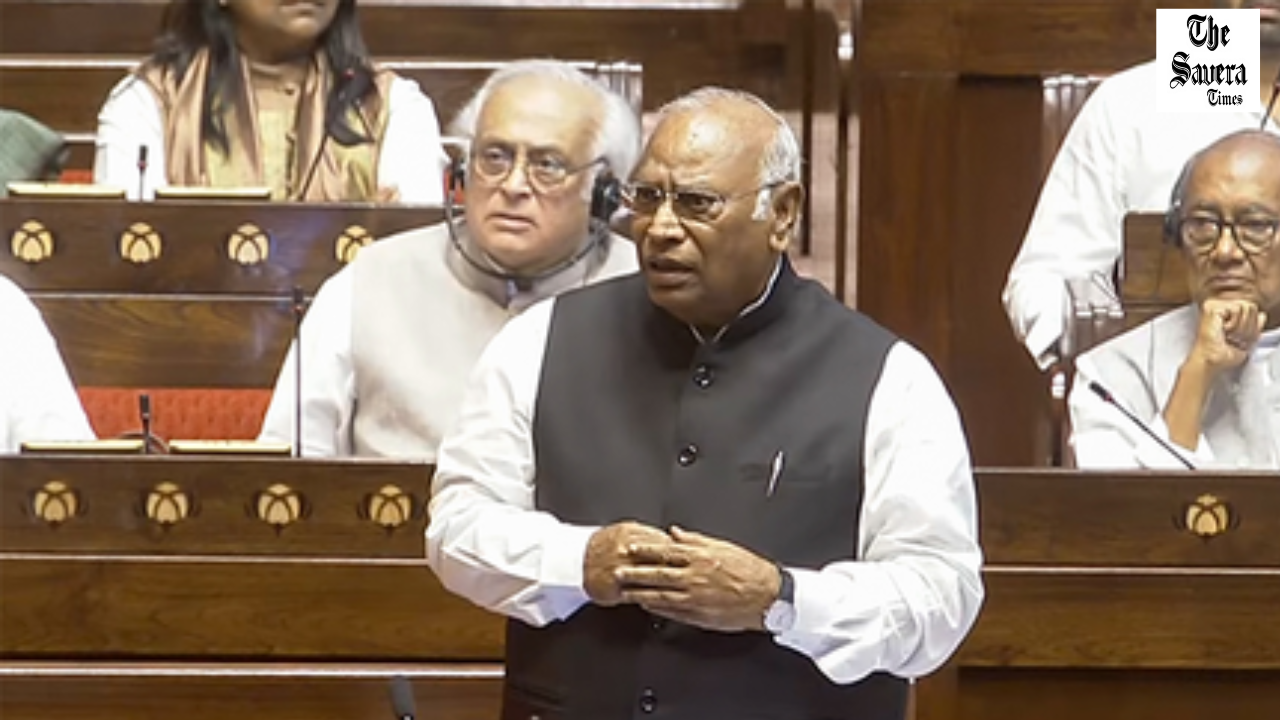
The Rajya Sabha on Wednesday passed the Central Armed Police Forces (General Administration) Bill, 2026 amid strong protests from Opposition members, who raised concerns over its provisions and demanded further scrutiny.
The passage of the Bill marks a significant step in restructuring the administrative framework governing India’s central armed police forces, but it also triggered sharp political reactions inside the Upper House.
The CAPF (General Administration) Bill, 2026 seeks to establish a unified legal framework for recruitment, deputation, promotions, and service conditions across major paramilitary forces such as CRPF, BSF, CISF, ITBP, and SSB.
A key provision of the Bill formalises the deputation of Indian Police Service (IPS) officers to senior leadership roles in these forces. It proposes that:
The government has argued that such provisions are necessary to ensure better coordination between the Centre and states and to strengthen national security.
Opposition parties strongly opposed the Bill, alleging that it undermines the rights and career progression of CAPF cadre officers. Critics argued that the legislation violates principles of equality in public employment and could demoralise thousands of serving officers.
Several members demanded that the Bill be referred to a parliamentary committee for detailed examination, but the government proceeded with its passage.
The Opposition also questioned the timing and intent of the Bill, calling it an attempt to centralise control and favour IPS officers over in-service personnel.
One of the major points of contention is the Bill’s perceived contradiction with a 2025 Supreme Court ruling, which had directed a gradual reduction in the deputation of IPS officers in CAPFs.
Critics argue that the new law effectively reverses that directive, while the government maintains that it provides a structured and legally sound framework to avoid ambiguity and litigation.
The government defended the Bill as a reform aimed at improving efficiency, coordination, and operational effectiveness of the forces. It stated that IPS officers have historically played a key role in CAPFs, and their presence ensures better integration between central and state policing systems.
Officials also emphasized that the Bill introduces clarity and uniformity, replacing a fragmented system governed by multiple laws and executive orders.
A major concern raised by critics and retired officers is the potential impact on morale within CAPFs. Many believe that reserving top posts for IPS officers could limit promotion opportunities for cadre officers who have spent decades in service.
This has sparked debate over fairness, recognition, and the long-term implications for the internal structure of the forces.
The passage of the Bill amid protests highlights ongoing tensions between the government and Opposition over key policy decisions. It also reflects a broader debate about balancing administrative efficiency with fairness and institutional autonomy.
The CAPF Bill is expected to have far-reaching implications for India’s internal security framework, shaping leadership structures and career pathways within paramilitary forces.
With the Rajya Sabha passing the Bill, it now moves closer to becoming law, pending any remaining procedural steps. The legislation is likely to continue generating debate both within political circles and among security experts.
As implementation unfolds, its impact on governance, morale, and operational efficiency of CAPFs will be closely watched.
Amid the ongoing protests, investigators have found that certain elements backed by Pakistan launched a multi-layered digital warfare...

~Dr M L Jat India has moved from food scarcity to record harvests. The next leap is from...

Smartness is the key to getting ahead in life. Whether it is the mastery of job skills or...

Varanasi: A massive explosion triggered the collapse of a two-storey building in Uttar Pradesh’s Varanasi on Thursday, leaving...

Sofia: A vessel sailing under the flag of San Marino caught fire in the Black Sea near Romania...

New Delhi: Accusing the Congress of double-speak on women dignity, the Bharatiya Janata Party (BJP) Mahila Morcha on...

Aries: The day will be auspicious...