Last Updated: October 21, 2026
Last Updated: October 21, 2026





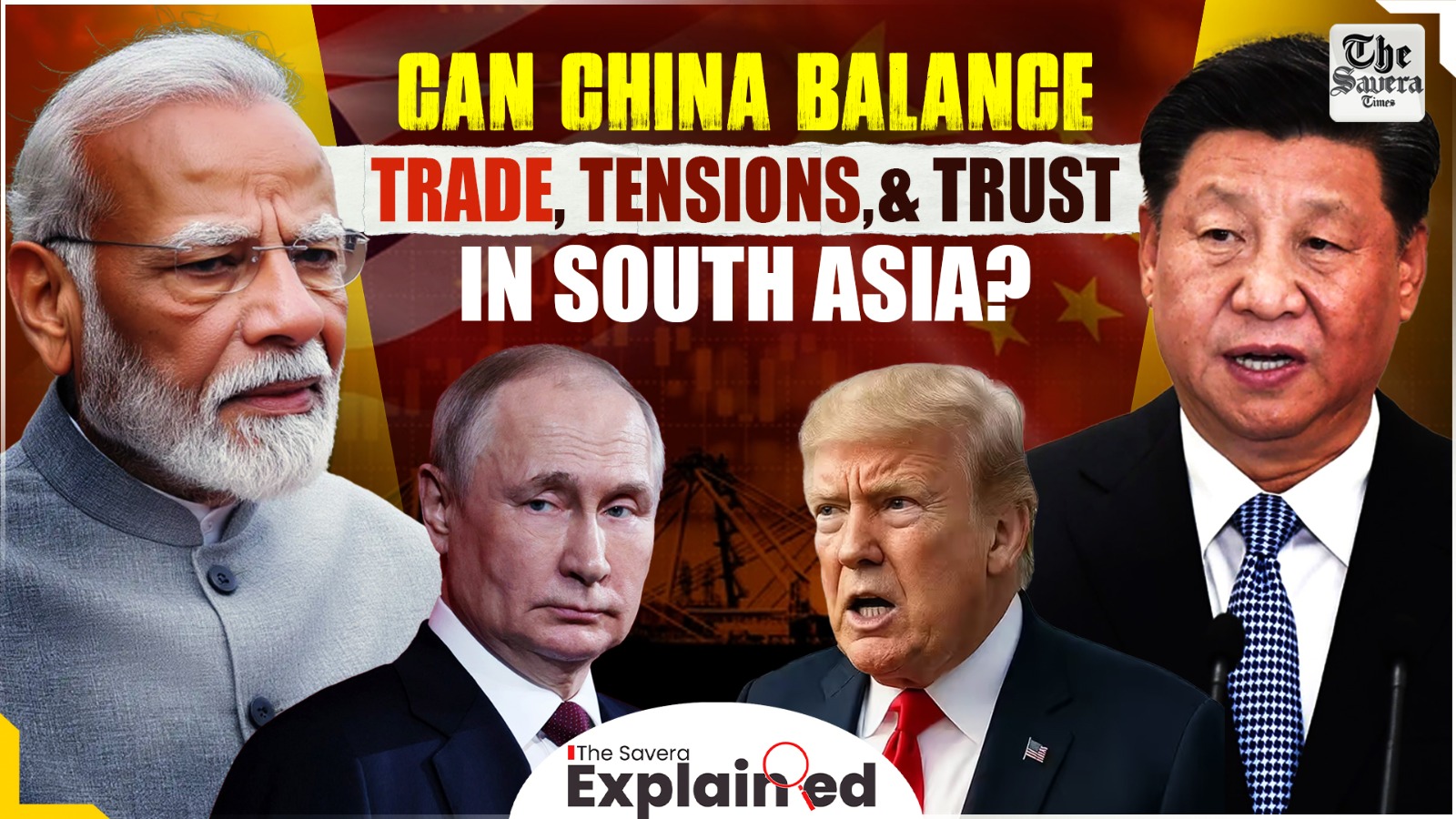
China’s Foreign Minister Wang Yi concluded a critical two-day visit to India, prompted by U.S. tariffs penalizing New Delhi, and is now headed to Pakistan for the 6th China–Pakistan Foreign Ministers’ Strategic Dialogue on August 21. The sudden India visit, despite strained ties following the 2020 Ladakh border clash, underscores Beijing’s strategic maneuvering in South Asia amid U.S. trade pressures. With India facing 50% U.S. tariffs over Russian oil imports, Wang’s diplomacy signals China’s intent to shape regional development by deepening economic ties with both nations.
In this explainer The Savera Times, we break down China’s diplomatic balancing act reviewing Wang Yi’s India visit, previewing his Pakistan agenda, and analyzing how Beijing is shaping South Asia’s fast-changing geopolitical and economic landscape.
Wang Yi’s trip to India, the first since 2022, was spurred by U.S. President Donald Trump’s August 6 executive order imposing a 25% tariff on Indian goods, doubled to 50% to penalize India’s Russian oil purchases. In New Delhi, Wang met Prime Minister Narendra Modi, who emphasized stable India–China ties as vital for regional peace. National Security Advisor Ajit Doval pushed for de-escalation along the Line of Actual Control, while External Affairs Minister S. Jaishankar stressed mutual respect. No major breakthroughs emerged, but both sides agreed to sustain military and diplomatic dialogue. The visit, prompted by U.S. tariffs, reflects China’s opportunistic outreach to a pressured India, aiming to counter Washington’s influence and foster economic cooperation to stabilize South Asia.
A key outcome of Wang’s visit was China’s pledge to supply India with rare earth materials, fertilizers, and tunneling equipment—essential for India’s infrastructure and green energy goals. China controls 60% of global rare earth production, and India, importing 90% of its supply, sees this as a lifeline amid U.S. tariffs threatening its $23 billion export market. Beijing’s offer is a strategic move to deepen economic ties, positioning China as a counterbalance to U.S. pressure. India, cautious of dependency, views this as a chance to diversify trade partners. This economic pivot, catalyzed by U.S. tariffs, could reshape South Asia’s development by boosting India–China trade, potentially offsetting losses from Western markets.
In Islamabad, Wang will meet Pakistan’s Foreign Minister Ishaq Dar to strengthen the “all-weather” partnership through the China–Pakistan Economic Corridor (CPEC), a $60 billion Belt and Road Initiative flagship. Discussions will focus on securing Chinese workers after a March 2025 CPEC attack and reassuring Pakistan amid its warming U.S. ties. By following the India visit, China aims to balance relations without alienating either nation. The U.S. tariffs on India, coupled with Trump’s engagement with Pakistan, have created an opening for China to reinforce its role as Pakistan’s primary ally, ensuring CPEC’s stability and driving regional infrastructure development
Chinese Foreign Ministry spokesperson Mao Ning stated on August 19 that China, as a neighbor, seeks friendly relations with both India29 and Pakistan, expressing willingness to play a positive role in resolving their disputes if both agree. However, India’s preference for bilateral talks on issues like Kashmir and its distrust of China’s Pakistan ties limit Beijing’s mediation role. The U.S. tariffs have accelerated India–China rapprochement, with talks on resuming border trade and direct flights signaling a thaw. This shift could redirect South Asia’s economic growth toward China-led initiatives, reducing reliance on Western markets. By leveraging economic leverage and infrastructure projects like CPEC, China aims to shape a stable, interconnected South Asia, countering U.S. influence while fostering regional development.
Wang Yi’s visits, catalyzed by U.S. tariffs, position China as a pivotal player in South Asia. For India, the economic outreach offers a buffer against trade losses, though border disputes remain a hurdle. For Pakistan, it reinforces Beijing’s support amid shifting global alignments. Mao Ning’s statement underscores China’s pragmatic approach to fostering cooperation. As India and Pakistan navigate U.S. pressures, China’s economic and diplomatic engagement could drive South Asia’s development, redirecting trade flows and strengthening regional connectivity through initiatives like the Belt and Road.
Ladakh is seeing two changes at once: a new district has been announced, and the Centre has proposed...
What if a decision taken in Washington could influence India’s oil bills, export earnings and trade relations with...
What happens when the world’s richest business leaders clash over one of the world’s biggest internet markets? A...

Pakistan is heading into its wheat-growing season with a serious water problem. The country is facing a projected...
Imagine a foreign national standing among Indian citizens at a political protest, raising questions about the government or...

For thousands of Indian tech workers in the United States, a job offer is only the beginning of...
Aries: The day will be auspicious...