Last Updated: October 21, 2026
Last Updated: October 21, 2026





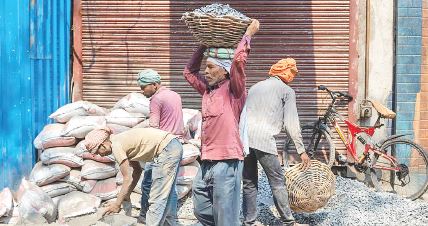
Over 80 percent of the world’s multidimensionally poor population lives in regions vulnerable to climate hazards, according to the “2025 Global Multidimensional Poverty Index” (MPI) released by the United Nations Development Programme (UNDP) and the Oxford Poverty and Human Initiative (OPHI). The report maps, for the first time, the exposure of poor populations to four major climate risks: extreme heat, drought, floods, and air pollution.
Of the 1.1 billion people living in multidimensional poverty, 887 million face at least one of these hazards. High heat affects 608 million, air pollution 577 million, floods 465 million, and drought 207 million. Many people experience multiple hazards simultaneously: 651 million face two or more, while 309 million are exposed to three or four hazards. Middle-income countries have the highest proportion of poor populations exposed to climate risks, with 72.2 percent affected. Upper-middle-income countries, though smaller in absolute numbers, have a disproportionate exposure, with 91.1 percent of their poor (93 million people) living in climate-risk areas.
South Asia emerges as the most vulnerable region. Some 380 million poor people in India, Bangladesh, and Pakistan face significant climate hazards. Almost all poor residents in the region (99.1 percent) live in hazard-prone areas, with 59 percent (226 million) exposed to three or four overlapping risks. Despite considerable progress in reducing poverty since 2005-06—from 55.1 percent to 16.4 percent by 2019-21 in India—climate vulnerability remains high, particularly in areas with intense heat, floods, and widespread air pollution. Sub-Saharan Africa also faces substantial exposure, with 344 million poor people affected.
The report highlights the growing interconnection between poverty and climate change. Poor households, often dependent on high-risk sectors such as agriculture and informal labor, are highly vulnerable to shocks, limiting their capacity to escape poverty. Climate change intensifies existing inequalities, as those contributing least to global greenhouse gas emissions bear the heaviest burdens.
Looking ahead, UNDP warns that without significant mitigation, climate impacts could exacerbate poverty. Temperature projections suggest that countries with higher current multidimensional poverty will experience the greatest increases in heat by the century’s end. “Poverty is no longer a standalone socioeconomic concern; it is inextricably linked with planetary pressures,” the report says, cautioning that the number of people living in extreme poverty could nearly double by 2050 if climate fallout is not addressed.
Protests in Jakarta, Yogyakarta and Bandung brought students onto the streets over rising costs, forest fires and civil...
Organisations linked to Neville Roy Singham are under US congressional scrutiny over funding. Their coverage of protests in...

US President Donald Trump says Washington and New Delhi are close to a trade agreement that will differ...

Iran has ruled out transferring its enriched uranium stockpile outside the country, with security official Mohsen Rezaei reiterating...

Donald Trump has urged Volodymyr Zelensky to pursue a peace deal with Russia, warning that Ukraine could face...

Pakistan, battling insurgencies at home and tensions along multiple borders, is too overstretched to offer meaningful military support...

Aries: The day will be auspicious...