Last Updated: October 19, 2026
Last Updated: October 19, 2026





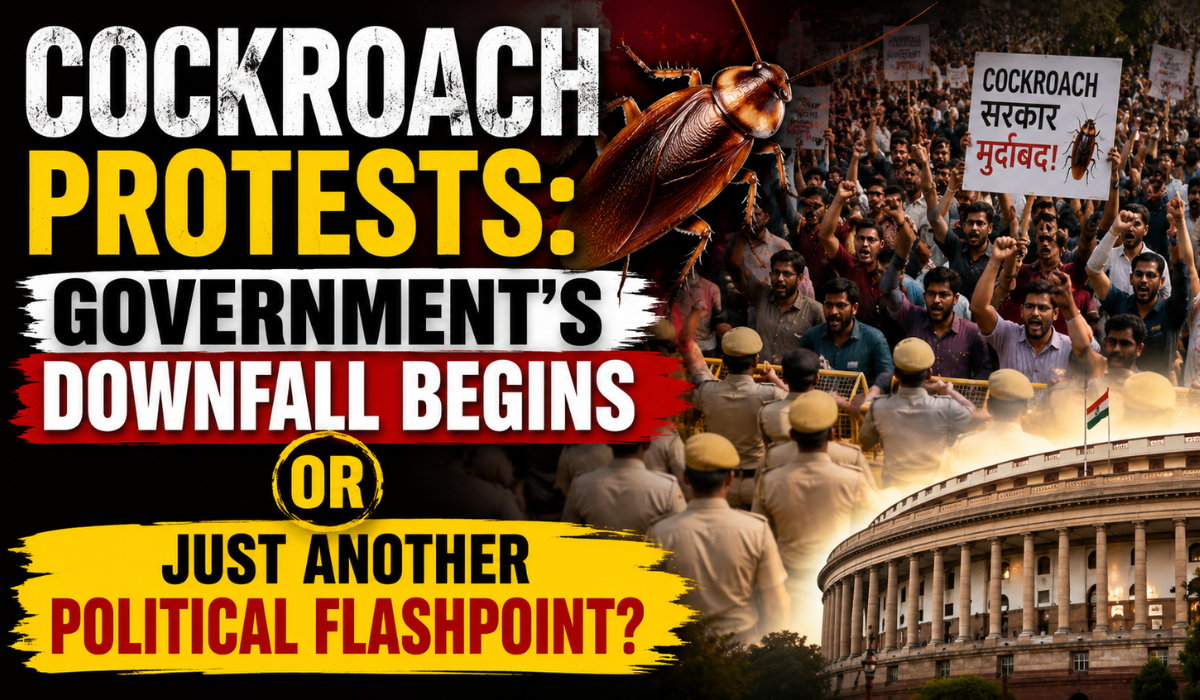
What began as an online joke has transformed into one of India’s biggest youth-led protest movements. Wearing cockroach masks and camping at Delhi’s Jantar Mantar, thousands of students have turned satire into a symbol of resistance against alleged exam irregularities, unemployment and governance issues.
As the movement grows, one question dominates the debate: Is the Cockroach Janta Party (CJP) just a protest, or could it reshape India’s political discourse?
How Did It All Begin?
The Cockroach Janta Party (CJP) emerged in May 2026 after a reported remark referring to unemployed youth as “cockroaches” sparked outrage. Instead of rejecting the label, students embraced it as a badge of resilience.
What started as a satirical social media campaign soon resonated with thousands of aspirants frustrated by repeated paper leaks, delayed recruitment and limited job opportunities.
Why Are Students Protesting?
At the heart of the movement are allegations of repeated irregularities in competitive examinations.
Protesters claim that paper leaks in exams such as NEET-UG, CUET, CBSE and several recruitment tests have disrupted the careers of lakhs of students.
Their major demands include:
How Did an Online Campaign Become a Nationwide Movement?
The movement quickly shifted from social media to the streets.
On June 6, students gathered at Jantar Mantar, carrying books, the national flag and wearing cockroach masks. As the sit-in continued, support poured in from students, professionals and volunteers across the country.
Several Gurudwaras organised langar, while people from different states sent food and essential supplies. Demonstrations and solidarity protests were later reported from multiple cities.
The ‘Sansad Chalo’ March: The Biggest Turning Point
The agitation reached a new level on July 20, when CJP called for a ‘Sansad Chalo’ march demanding action over alleged exam irregularities and the resignation of the Education Minister.
Thousands attempted to march from Jantar Mantar towards Parliament, but Delhi Police imposed restrictions and erected barricades around the Parliament area.
As protesters moved forward, clashes broke out with security personnel, making the protest one of the year’s most discussed political developments.
The Lathi Charge and Police Action
Police used baton charges (lathi charge), tear gas and barricading to stop protesters from reaching Parliament.
Several videos of the confrontation went viral on social media. Authorities later removed protest tents and the stage at Jantar Mantar and registered multiple FIRs linked to the demonstrations.
Delhi Police also rejected several viral claims circulating online and urged people to rely only on verified information. The police action intensified the debate, with critics calling it excessive while authorities defended it as necessary to maintain law and order.
Current Situation and Dynamics
Despite the crackdown, the protests continue.
Students regrouped at Jantar Mantar, resumed their sit-in and vowed to continue until their demands are addressed.
The movement also gained momentum after activist Sonam Wangchuk, who began an indefinite hunger strike in support of the protesters, emerged as one of its prominent faces. CJP leaders say talks have been held with Union ministers but insist the agitation will continue until concrete action is announced.
Political Reactions
The protests have received support from several Opposition parties, including AAP, Samajwadi Party, Trinamool Congress, Shiv Sena (UBT) and Left parties, with many leaders visiting the protest site.
The BJP, however, has alleged that the agitation is being politically motivated and has defended the government’s efforts to reform the examination system. Education Minister Dharmendra Pradhan has rejected demands for his resignation.
Could the Protests Affect the Government?
The movement has brought examination reforms, youth unemployment and accountability into the national spotlight, increasing pressure on the government.
However, protests alone do not determine the stability of a government. Their long-term political impact will depend on public support, the government’s response and whether the movement expands beyond examination-related issues into a broader youth campaign.
The Bottom Line
The Cockroach Janta Party has already succeeded in making examination reforms and youth concerns central to the national conversation.
Whether it becomes a defining political movement or remains a powerful pressure campaign is yet to be seen. For now, one thing is certain: what started as an online satire has evolved into a nationwide youth movement that refuses to be ignored.
The Directorate of Revenue Intelligence (DRI) has seized over 10 kg of narcotics and arrested three people in...
The Food Safety and Standards Authority of India (FSSAI) has issued notices to four companies, including the fast-track...

Good Afternoon Viewers! Stay updated with The Savera Times Afternoon Bulletin for the latest news from Punjab, India...

Andhra Pradesh Deputy Chief Minister and Panchayat Raj and Rural Development Minister Pawan Kalyan on Monday ordered the...
Rajasthan Police and the Anti-Gangster Task Force have detained three people, including a juvenile, at Kota railway station...

CJP leaders Saurav Das and Ashutosh Ranka are due to appear before a Special Executive Magistrate at 2...

Aries: The day will be auspicious...