Last Updated: October 26, 2026
Last Updated: October 26, 2026





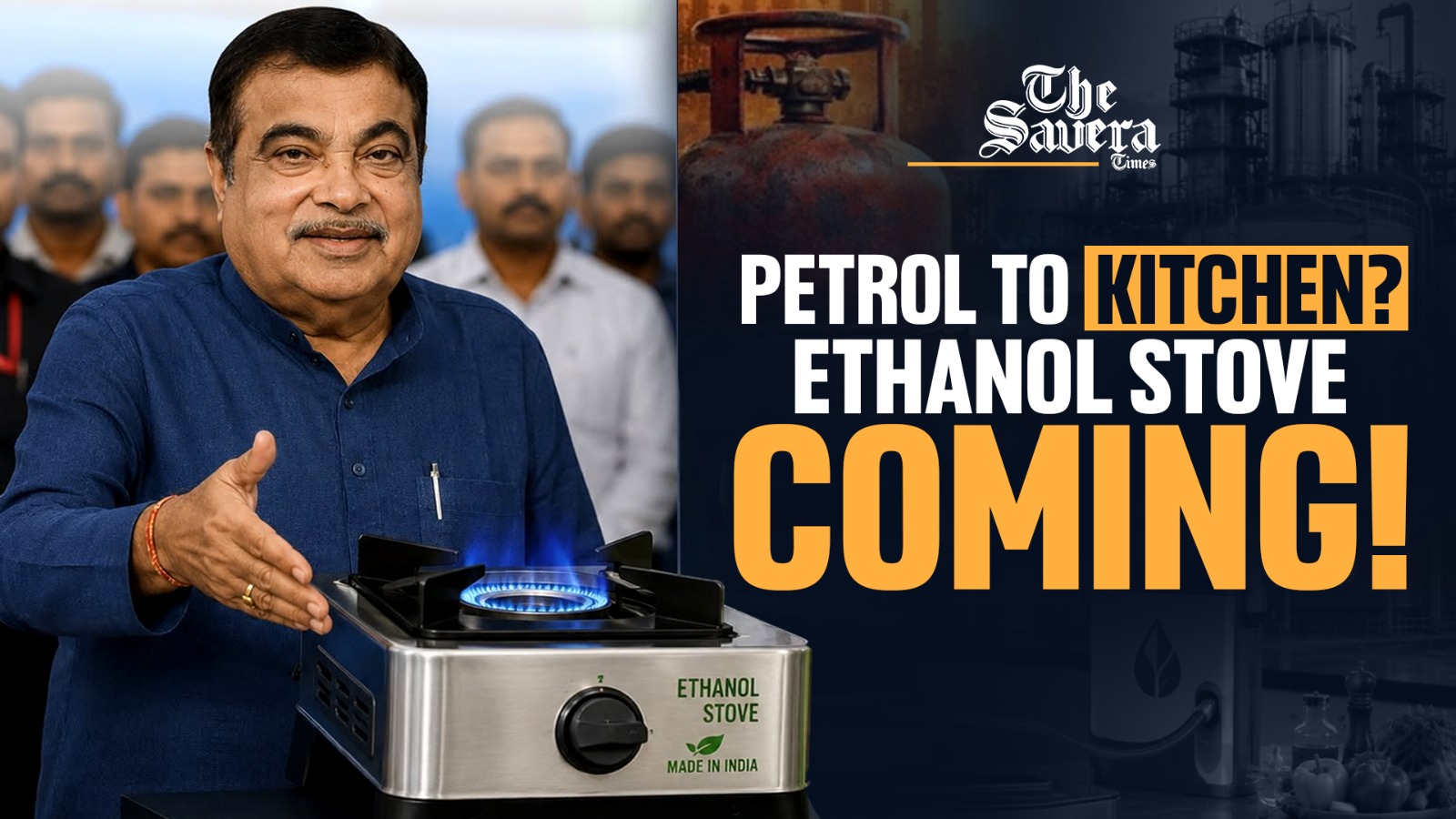
For years, ethanol has been known as a fuel mixed with petrol. But now, the government is exploring a much bigger idea—using ethanol in Indian kitchens as an alternative to LPG.
This does not mean LPG cylinders are being replaced immediately. Instead, the government is studying whether ethanol can become a safe, affordable and cleaner cooking fuel in the future. The idea comes at a time when India has successfully achieved its E20 petrol blending target and now has surplus ethanol production capacity.
So, why is the government considering this move? Let’s understand.
India’s Ethanol Story: A Journey of Two Decades
India’s ethanol mission began more than 20 years ago.
The pilot ethanol blending programme started in 2001, while E5 petrol was introduced in selected states in 2006. However, progress remained slow for several years because ethanol production mainly depended on sugarcane.
The real transformation came after the launch of the Ethanol Blended Petrol (EBP) Programme and the National Policy on Biofuels. The government expanded ethanol production by allowing feedstocks such as maize, damaged food grains and surplus rice.
As a result, India’s ethanol production capacity increased from nearly 4.2 billion litres in 2014 to almost 20 billion litres by 2026.
The biggest milestone came when India achieved 20% ethanol blending (E20) in petrol in 2025—five years ahead of the original 2030 target.
How Has India Benefited From Ethanol?
The ethanol programme has delivered significant economic and environmental gains.
Since 2014-15, India has saved more than ₹1.97 lakh crore in foreign exchange by reducing crude oil imports.
Nearly 316 lakh tonnes of crude oil imports have been avoided.
Around 952 lakh tonnes of carbon dioxide emissions have been reduced.
Most importantly, farmers have earned an additional ₹1.66 lakh crore, particularly in sugarcane and grain-producing states such as Uttar Pradesh, Maharashtra and Karnataka.
Why Is the Government Looking at Ethanol for Cooking?
The answer lies in surplus production.
India currently has ethanol production capacity exceeding 20 billion litres.
After meeting the requirement for E20 petrol blending and industrial demand, nearly 7 billion litres of ethanol capacity remains available.
At the same time, India continues to import a significant portion of its LPG requirement. Global price fluctuations often affect LPG costs, putting pressure on both consumers and government subsidies.
Instead of leaving surplus ethanol unused, the government is exploring whether it can become a clean cooking fuel for homes, restaurants and commercial kitchens.
How Will Ethanol Replace LPG?
The proposal is not to use ethanol in existing LPG stoves.
Instead, specially designed ethanol stoves are being developed.
In May 2026, Union Minister Nitin Gadkari unveiled an indigenous ethanol-based cooking stove that uses a 7% ethanol-water blend to produce a cooking flame.
According to the government, such stoves could eventually offer a cheaper alternative to commercial LPG cylinders.
A policy framework covering safety standards, subsidies, fuel distribution and supply chains is also being prepared. The government is currently consulting industry stakeholders before taking any final decision.
Initially, ethanol cooking is expected to be introduced in commercial kitchens such as hotels, restaurants and institutions before expanding to households.
What Could Be the Benefits?
If implemented successfully, ethanol cooking could offer multiple advantages.
Families may benefit from lower cooking fuel costs, especially if ethanol remains cheaper than LPG.
India’s dependence on imported LPG and crude oil could decline, improving energy security.
Ethanol burns cleaner than traditional biomass fuels, helping reduce indoor pollution.
Greater ethanol demand would create another market for farmers, strengthening rural incomes.
It would also support India’s climate goals by reducing greenhouse gas emissions through increased use of renewable fuels.
What Are the Challenges?
Despite its promise, ethanol cooking still faces several hurdles.
A nationwide supply chain has to be created.
Affordable ethanol-compatible stoves must become widely available.
Safety standards for storage, transport and household use need to be finalised.
Consumer awareness and acceptance will also play a crucial role.
This is why the government is moving cautiously through pilot projects and technical evaluations instead of announcing an immediate nationwide rollout.
What About Higher Ethanol Blends in Cars?
Recently, the government exempted 22–30% ethanol blends from central excise duty and has also recognised E85 and E100 fuels for flex-fuel vehicles.
However, the government has clarified in Parliament that there is no immediate plan to increase ethanol blending in regular petrol beyond E20.
Any future decision on E85 or E100 for wider public use will be taken only after scientific studies, technical assessments and consultations with stakeholders.
Conclusion
India’s ethanol journey is entering a new phase.
After transforming the transport sector through E20 petrol, the government is now exploring whether ethanol can also become a practical cooking fuel.
The objective is simple—reduce fuel imports, make better use of surplus ethanol, increase farmers’ income, strengthen energy security and promote cleaner fuels.
For now, ethanol cooking remains an idea under development, not a replacement for LPG. But if ongoing trials prove successful, India’s kitchens could one day become the next destination in the country’s growing biofuel revolution.
Imagine opening WhatsApp on your phone, but the SIM card linked to your account is not inside the...

Delhi’s air pollution is once again raising health concerns, with the Air Quality Index (AQI) entering the ‘poor’...
Ladakh is seeing two changes at once: a new district has been announced, and the Centre has proposed...

What if a decision taken in Washington could influence India’s oil bills, export earnings and trade relations with...

What happens when the world’s richest business leaders clash over one of the world’s biggest internet markets? A...

Pakistan is heading into its wheat-growing season with a serious water problem. The country is facing a projected...
Aries: The day will be auspicious...