Last Updated: October 26, 2026
Last Updated: October 26, 2026





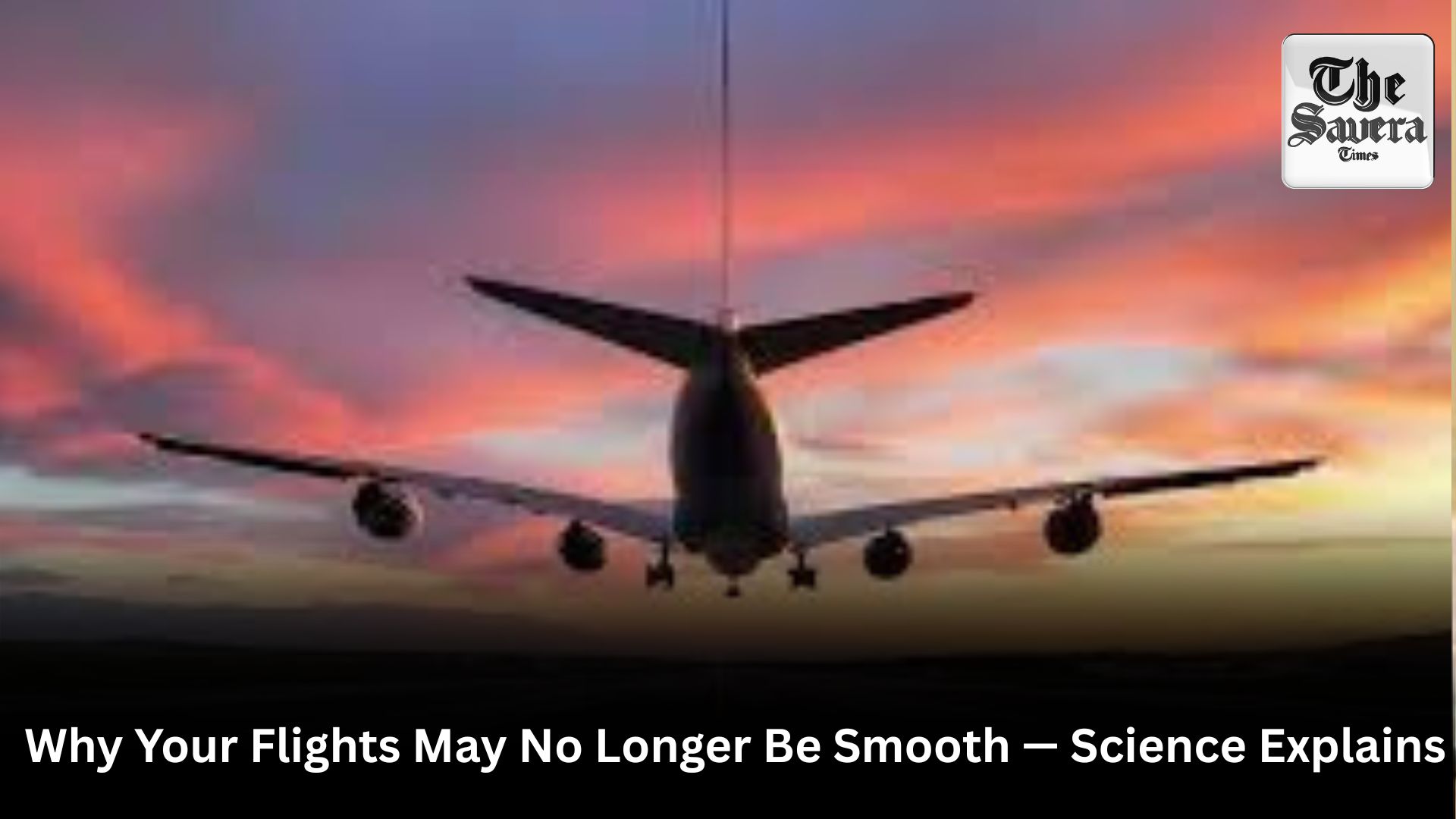
If you’ve ever sat on a plane and suddenly felt it shake, dip, or jolt like a boat in rough seas, you’ve experienced turbulence. For most passengers, it is an unsettling reminder that humans are at the mercy of the skies. Until now, turbulence has usually been treated as a passing inconvenience. But new research suggests it could soon become a far more frequent and potentially dangerous feature of air travel — thanks to climate change.
A recent study by scientists at the University of Reading in the UK, published in the Journal of the Atmospheric Sciences, warns that climate change is making the atmosphere more unstable. The reason lies in the disruption of high-altitude jet streams — fast, narrow currents of air that circle the globe at about 35,000 feet, the same cruising altitude used by commercial aircraft.
These jet streams help pilots plan routes, conserve fuel, and reduce flight times. But as the Earth warms, temperature differences between the tropics and the poles are shifting, which in turn makes these winds more erratic. The result is stronger wind shear (sudden changes in wind speed or direction) and weaker atmospheric stability. Together, these factors create ideal conditions for clear-air turbulence (CAT) — the most dangerous kind of turbulence because it strikes without warning and cannot be detected by radar.
The study builds on earlier research from the same university, which showed that between 1979 and 2020, serious turbulence incidents increased by about 55 percent. Looking ahead, the new projections estimate that by the end of this century, jet stream wind shear could rise by 16–27 percent while overall atmospheric stability could decline by 10–20 percent. That means more turbulent skies not just in one part of the world, but across both hemispheres.
Most turbulence that passengers are familiar with is caused by storms, mountains, or weather systems, which pilots can usually detect and avoid. But clear-air turbulence is different. It occurs in cloudless skies, invisible to both the human eye and aircraft radar systems. This makes it particularly hazardous because there is no advance warning.
When CAT strikes, passengers not wearing seatbelts can be thrown around the cabin, leading to injuries. In severe cases, even fatalities have been reported. Professor Paul Williams, a co-author of the study, noted that turbulence has already caused serious injuries in recent years and warned that seatbelt signs may need to stay on more often in the future.
For the average traveler, this could mean a less comfortable flying experience in the decades ahead. Airlines may have to adapt by:
Beyond comfort and cost, the safety of passengers and crew will be a growing concern. Flight attendants, who are often on their feet serving passengers, are particularly vulnerable during sudden jolts.
While turbulence may sound like a problem confined to nervous fliers, it is also a reminder of how deeply climate change can affect global systems. The atmosphere is warming unevenly, and that instability is literally shaking the skies. As Professor Williams put it, the science is clear: more warming will mean more turbulence.
For now, flying remains one of the safest modes of travel. Airplanes are built to withstand turbulence, and pilots are trained to handle it. But as the climate crisis intensifies, passengers may have to get used to bumpier skies. The next time you fasten your seatbelt on a flight, remember: it’s not just routine — it’s increasingly a necessity.
In short, the smooth skies we once expected may be a thing of the past. Air travel of the future could be safer in technology but rougher in experience, with turbulence becoming an unavoidable part of the journey.
Imagine opening WhatsApp on your phone, but the SIM card linked to your account is not inside the...

Delhi’s air pollution is once again raising health concerns, with the Air Quality Index (AQI) entering the ‘poor’...
Ladakh is seeing two changes at once: a new district has been announced, and the Centre has proposed...
What if a decision taken in Washington could influence India’s oil bills, export earnings and trade relations with...

What happens when the world’s richest business leaders clash over one of the world’s biggest internet markets? A...

Pakistan is heading into its wheat-growing season with a serious water problem. The country is facing a projected...
Aries: The day will be auspicious...