Last Updated: October 26, 2026
Last Updated: October 26, 2026





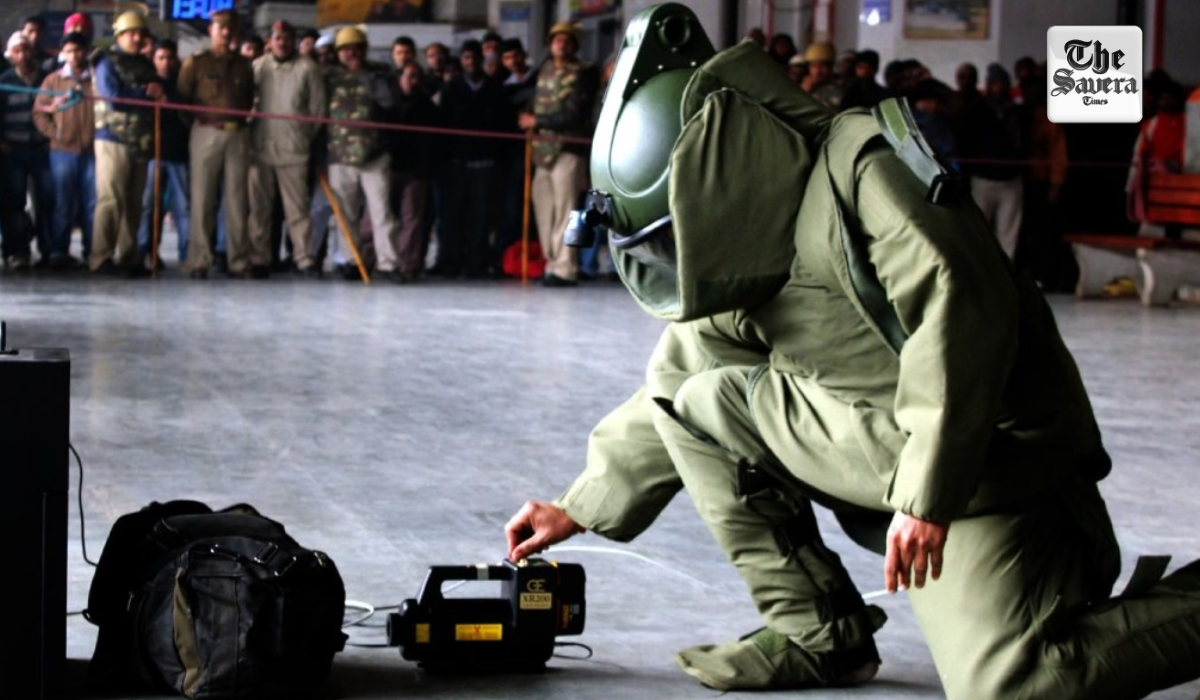
India has formally unveiled PRAHAAR, its first comprehensive national counter-terrorism doctrine. The move signals a shift from ad-hoc, incident-driven responses to a single, doctrine-led framework that guides how the state detects threats, prevents attacks, responds to incidents, and helps communities recover. The doctrine reflects India’s stated policy of zero tolerance for terrorism in all forms.
Background: Why a National Doctrine Now
For years, counter-terror efforts were spread across agencies and states, often reacting after attacks. The threat environment has changed: encrypted messaging, anonymous funding channels, online radicalisation, cross-border networks, drones, and cyber tools now shape terror planning. PRAHAAR is designed to standardise how the system works nationwide—so agencies act on the same playbook, with shared priorities and operating principles.
The doctrine has been rolled out by the Ministry of Home Affairs to bring intelligence, policing, legal tools, technology, diplomacy and community engagement under one coordinated strategy.
What Is PRAHAAR
PRAHAAR is not a new law or a new force. It is a policy framework that sets who does what, when, and how across the full counter-terror cycle: prevention, response, investigation, and recovery. The goal is early detection, swift neutralisation of threats, and fast restoration of normal life after incidents—while staying within the rule of law.
Step 1: Prevention Comes First
The doctrine prioritises stopping attacks before they happen. Intelligence collection and real-time sharing are central. Platforms like the Multi Agency Centre, run under the Intelligence Bureau, are tasked with breaking silos between agencies and states.
Law-enforcement units are directed to disrupt online propaganda, recruitment pipelines, terror financing, and over-ground worker networks that provide logistics and shelter.
Step 2: How Response Operations Work
If an attack occurs, PRAHAAR lays out a layered response. Local police are first responders. State and central forces reinforce based on the scale of the incident. For high-risk situations, elite units like the National Security Guard can be deployed.
Investigations are led by specialised agencies such as the National Investigation Agency, with an emphasis on building strong cases to secure convictions and deter future plots.
Step 3: Building Capacity
The doctrine calls for continuous modernisation—new technology, specialised training, standard operating procedures, and upgraded infrastructure. Training institutions, state police and central forces are expected to align tactics and share best practices so responses are uniform across the country.
Step 4: Tackling Radicalisation and Root Causes
PRAHAAR goes beyond policing. It promotes counter-radicalisation through partnerships with educators, community leaders, civil society and religious figures. The policy also points to social vulnerabilities—unemployment, lack of education and marginalisation—that can make individuals susceptible to extremist narratives, and calls for targeted prevention efforts.
Step 5: Legal and Human Rights Safeguards
The doctrine explicitly states that counter-terror actions must follow due process and respect fundamental rights. Judicial oversight, existing criminal law and anti-terror statutes are positioned as safeguards against misuse of power. The aim is effective security without eroding civil liberties.
Step 6: Global Cooperation
Terror networks operate across borders. PRAHAAR stresses intelligence sharing, extradition, joint investigations and cooperation in multilateral forums, including efforts at the United Nations to designate terrorist entities and disrupt global financing.
Step 7: Recovery and Resilience
After an attack, the doctrine prioritises rapid restoration of normalcy. Coordination between government agencies, medical services, psychological support teams, legal aid and civil society is meant to rebuild affected communities and reduce the long-term psychological impact of terrorism.
What Makes PRAHAAR Different
PRAHAAR frames counter-terrorism as a whole-of-government and whole-of-society effort. It integrates cyber and drone threats with traditional security challenges, fixes coordination gaps, and commits to constant adaptation as threats evolve. The real test now lies in implementation—how effectively agencies share intelligence, train together, and act as one system on the ground.
Imagine opening WhatsApp on your phone, but the SIM card linked to your account is not inside the...

Delhi’s air pollution is once again raising health concerns, with the Air Quality Index (AQI) entering the ‘poor’...
Ladakh is seeing two changes at once: a new district has been announced, and the Centre has proposed...

What if a decision taken in Washington could influence India’s oil bills, export earnings and trade relations with...

What happens when the world’s richest business leaders clash over one of the world’s biggest internet markets? A...

Pakistan is heading into its wheat-growing season with a serious water problem. The country is facing a projected...
Aries: The day will be auspicious...