Last Updated: October 16, 2026
Last Updated: October 16, 2026





Abhishek Vij
Not only Punjab, but also the hill states of Himachal Pradesh and Uttarakhand, were hoping to breathe a sigh of relief as the monsoon’s intensity slowed. However, the departing monsoon has returned once again, unleashing its ferocious might. Residents of the Himalayan states were hoping that they would finally be free from the torrential rains and life would return to normal.
Hopes of smooth road traffic and tourists returning to empty hotels were dashed. Homestays had just reopened when the floods in Himachal Pradesh and Uttarakhand brought everything to a screeching halt. Announcements were being made that the monsoon would return, bringing a boom in tourism during the festive season. But whatever happens is divinely ordained.
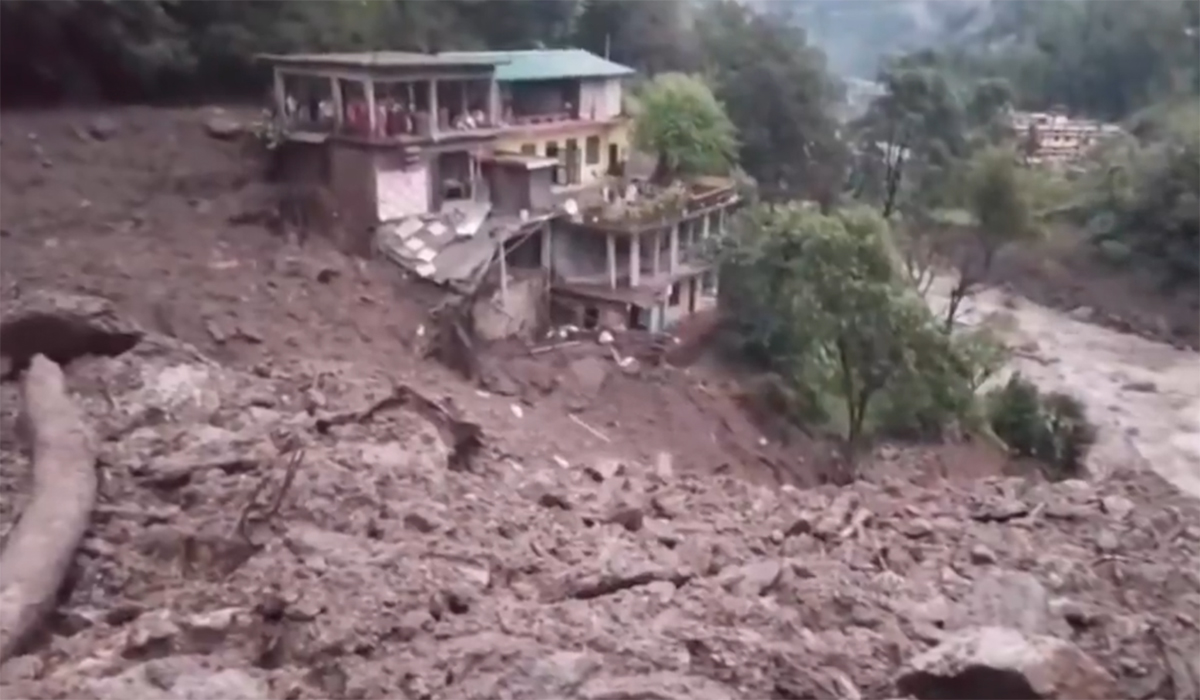
As the monsoon was departing, it turned back again. In the Mandi district of Himachal Pradesh, torrential rains lashed the Son River, causing the bus station in Dharampur to collapse. Numerous buses, workshops, petrol pumps, DSP offices, and buildings were damaged. Four people died in Mandi. Meanwhile, Uttarakhand suffered its seventh major disaster of the season. A cloudburst in Dehradun caused five hours of flooding. Outer Dehradun was devastated. Bridges collapsed, highways were washed away, and 13 people died.
More than 16 people went missing. Two thousand people were stranded in Mussoorie. Hotel owners, as a humanitarian gesture, provided their services free of charge. Meanwhile, experts in Punjab announced that the southwest monsoon was beginning to retreat from the flood-ravaged Punjab. Meanwhile, water released from Pakistan once again increased the flood risk in Fazilka. The monsoon raged in Shimla, the capital of Himachal Pradesh. Twenty vehicles were swept away in Shimla. What a play of nature, repeatedly reminding humanity of its helplessness.
People who consider themselves mountains have become helpless in the face of the mountain’s cracking. In Uttarakhand, first Dharali, then Pauri, Tharali, Bageshwar, Yamunotri, and now Dehradun, weather wreaked havoc. The story is the same everywhere: the rain isn’t as intense as the damage. The cause shouldn’t be attributed solely to nature’s wrath; we should explore how much of this devastation is man-made. In this highly sensitive Himalayan region, driven by modernity, roads have been widened over the past two decades in the wave of development.
Tunnels are being constructed at a rapid pace. Hotels, resorts, and other facilities have been built in the path of the river flow. Previously, the hills were sloped, so water would flow slowly downhill. Now, with the mountains destroyed by blasting, the water pours straight down. Therefore, this isn’t just a natural disaster, but also a flaw in our engineering. Our policies have neglected geo-structural stability. Landslides occur in vulnerable locations, and cloudbursts turn into debris flows.
Previously, such incidents claimed only a few lives, but by now, hundreds of lives have been lost in the Himalayan region. If it rains for two hours, the water turns the roads into canals. Now, as the monsoon recedes, we’ll find broken and dilapidated roads. They don’t know when they’ll be repaired, and people will be crisscrossing the streets, cursing their misfortune. So, isn’t it more appropriate that, instead of leaving everything to nature, the makers of destiny should identify the flaws in their policies and address them quickly? Degrading the environment is proving fatal for humanity itself.
Varanasi: A massive explosion triggered the collapse of a two-storey building in Uttar Pradesh’s Varanasi on Thursday, leaving...
Sofia: A vessel sailing under the flag of San Marino caught fire in the Black Sea near Romania...

New Delhi: Accusing the Congress of double-speak on women dignity, the Bharatiya Janata Party (BJP) Mahila Morcha on...

New Delhi: NITI Aayog’s Frontier Tech Hub released a Data Centre Evaluation Framework to help states plan for...
New Delhi: The Supreme Court on Thursday referred the cheque dishonour cases against actor and comedian Rajpal Yadav...

Mirzapur: Uttar Pradesh Chief Minister Yogi Adityanath on Thursday accused the Samajwadi Party (SP) and the Congress of...
Aries: The day will be auspicious...