Last Updated: October 6, 2026
Last Updated: October 6, 2026





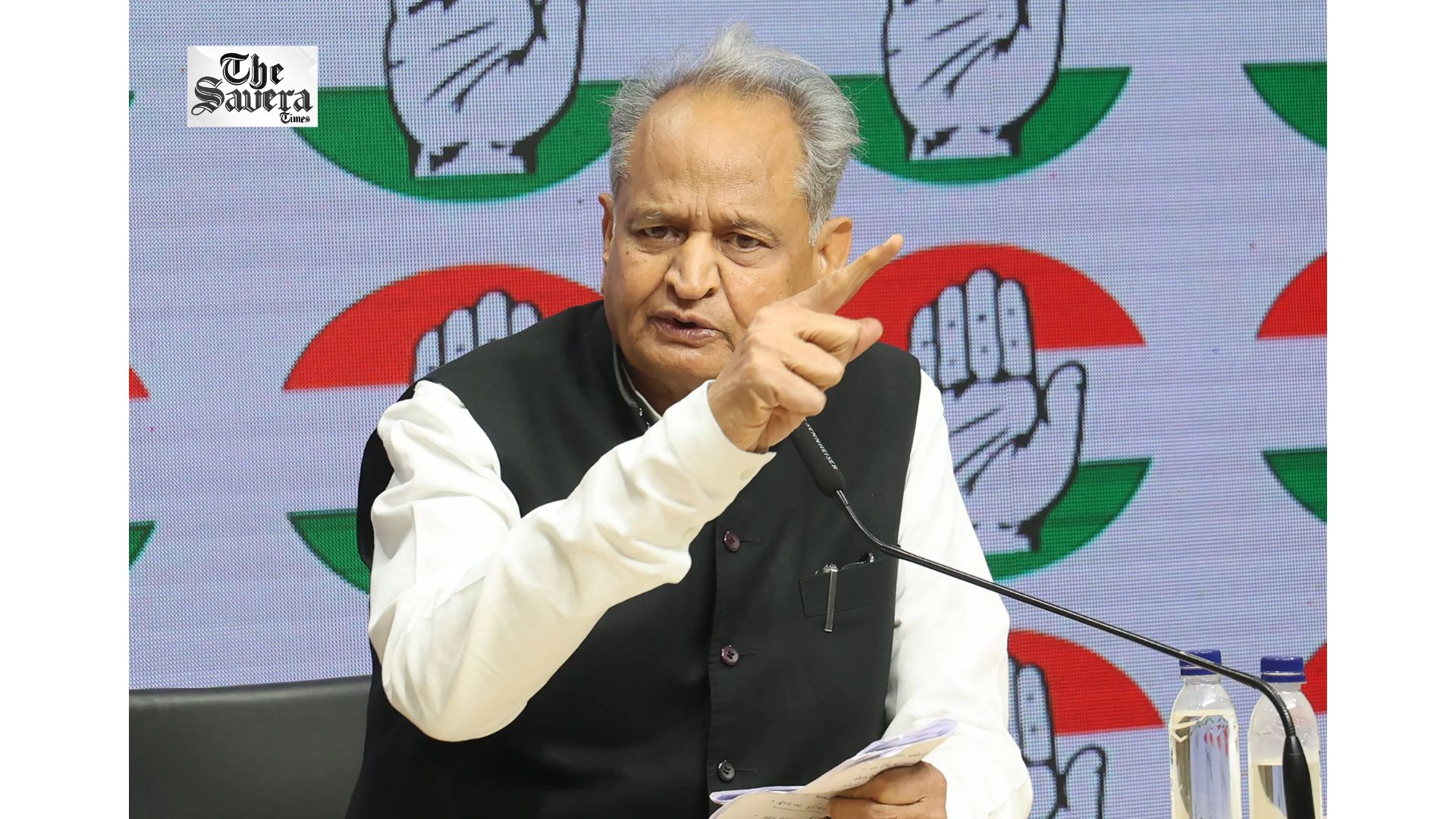
Jaipur: Former Rajasthan Chief Minister Ashok Gehlot has criticised the Narendra Modi government over the large-scale blending of ethanol with petrol, alleging that the policy was implemented without adequate preparation and that its impact was now being felt by consumers through higher sugar prices, fuel-related concerns and rising household expenses.
Gehlot said the government’s ethanol blending policy had created an imbalance between the country’s fuel and food requirements and alleged that the diversion of sugarcane towards ethanol production was affecting sugar availability.
“Another example of the Modi government’s shortsightedness and wrong decisions is the decision to blend large quantities of ethanol with petrol without adequate preparation. The people of the country are having to suffer the consequences of this decision on several fronts,” Gehlot said.
Sugar Prices Rise Amid Supply Concerns
Gehlot claimed that a significant portion of sugarcane was being diverted towards ethanol production, reducing the quantity available for sugar production.
“In just 15 days, sugar prices have increased by Rs 14 to Rs 17 per kg,” he said.
The remarks come at a time when sugar prices have risen sharply across several markets ahead of the festive season. The Centre has responded by tightening stockholding limits and allowing duty-free imports of 1 million tonnes of raw sugar to increase domestic availability.
The government, however, has rejected the claim that ethanol diversion is the main reason behind the current sugar price surge. It has pointed instead to lower-than-expected sugar production, weather-related crop damage, higher festive demand, market speculation and possible hoarding.
This makes the ethanol-sugar debate an important part of the wider discussion over food versus fuel, with political parties and market observers questioning whether the country’s ethanol targets need to be balanced against domestic sugar requirements.
E20 Fuel And Mileage Debate
Gehlot also raised concerns over complaints from vehicle owners about E20 petrol, which contains 20 per cent ethanol and 80 per cent petrol.
He alleged that the higher ethanol blend could contribute to engine-related concerns and reduced mileage, increasing the financial burden on ordinary consumers.
“This is nothing short of looting the hard-earned money of the common man,” Gehlot said.
The issue has become a subject of wider public debate. The government has maintained that mileage cannot be attributed to E20 alone, saying factors such as driving habits, traffic conditions, vehicle maintenance, tyre pressure and air-conditioning use also affect fuel efficiency.
At the same time, the Chief Economic Adviser has suggested that lower-ethanol fuel such as E10 could be made available for older vehicles, although the government has clarified that there are currently no plans to bring E10 back at fuel stations.
Why Ethanol Blending Is Being Promoted
India’s ethanol blending programme is aimed at reducing dependence on imported crude oil, improving energy security, supporting farmers and lowering the carbon intensity of petrol.
The policy has resulted in a rapid expansion of ethanol blending in petrol, with E20 becoming a major part of the country’s fuel strategy.
However, the expansion has also created a policy debate over how much sugarcane should be used for fuel when the same agricultural produce is required for domestic sugar consumption.
The government has maintained that ethanol production and sugar availability need to be viewed within the broader agricultural and energy framework. Critics, meanwhile, argue that food security should receive greater priority when domestic sugar supplies become tight.
Centre Takes Steps To Control Sugar Prices
The sharp rise in sugar prices has already prompted several government interventions.
The Centre has reduced the stockholding limit for bulk sugar consumers from 30 days to 15 days, with the measure scheduled to apply from September 1 to November 30. The move is intended to prevent excessive stock accumulation and ease pressure on prices during the festival season.
The government has also authorised duty-free imports of 10 lakh tonnes of raw sugar, with the measure intended to increase domestic supplies and moderate prices. This is India’s first major sugar import move in nearly a decade.
The timing is significant as demand for sugar typically increases during Ganesh Chaturthi, Dussehra and Diwali, putting additional pressure on supplies.
Gehlot Seeks Review Of Ethanol Policy
Gehlot said the government should have undertaken a comprehensive assessment before implementing such a major policy.
He alleged that while the government and some industrial groups were benefiting from the ethanol ecosystem, ordinary consumers were being forced to bear the consequences through higher costs.
He also raised concerns over pollution associated with ethanol production and called for a comprehensive review of the policy, taking into account its impact on sugar availability, consumers, vehicle owners, farmers and the environment.
“The central government has taken such a decision without making adequate preparations, and the people of the country are now paying the price,” Gehlot said.
The Bigger Food-Versus-Fuel Question
The current controversy goes beyond the political criticism of the Modi government. It highlights a larger policy challenge facing India: how to balance energy security with food security.
India’s sugar sector is closely linked to ethanol because sugar mills can use sugarcane juice, syrup and molasses as feedstock for ethanol. Greater diversion towards ethanol can potentially affect the quantity of sugar produced, while weather conditions, crop yields and festive demand can simultaneously influence market availability.
The current sugar-price episode shows why maintaining adequate buffers is important. The Centre’s decision to permit imports and tighten stock limits indicates that the government is trying to prevent a temporary supply squeeze from becoming a larger consumer crisis.
For consumers, however, the debate is increasingly about the direct impact on household budgets — from sugar and other food products to petrol consumption and vehicle running costs.
Gehlot alleged that the government had failed to anticipate these consequences and demanded a reassessment of the ethanol blending policy.
The government, on the other hand, has disputed the direct link between ethanol diversion and the current sugar price rise, making the issue a politically charged debate over the causes of inflation and the country’s long-term energy strategy.
A group of former bureaucrats, social activists, and civil society members has issued a 'People's Notice of Impeachment'...
Good Evening Viewers, we hope you spend your evening well with The Savera Times Evening Bulletin. Stay updated...

Delhi Police ACP Vivek Bhagat, who was facing allegations of sexual harassment of a female journalist during a...

New Delhi: Prime Minister Narendra Modi gifted some of India’s finest cheese varieties and a walnut wood wall...
Rapper and singer Hirdesh Singh, popularly known as Yo Yo Honey Singh, has sought additional time from Maharashtra...

The Supreme Court took a tough stance against actor Rajpal Yadav in a payment case. The court reprimanded...

Aries: The day will be auspicious...