Last Updated: October 11, 2026
Last Updated: October 11, 2026





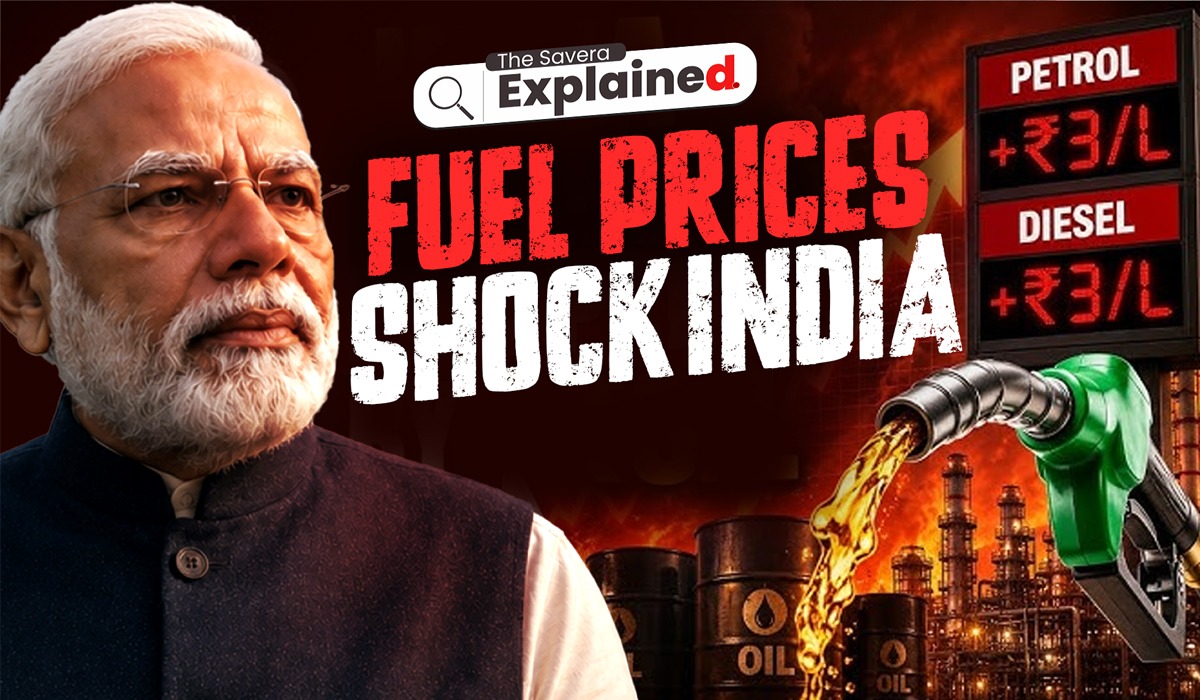
India is once again feeling the heat of a global war at the fuel station.
After more than four years of stable fuel prices, petrol, diesel and CNG rates have gone up sharply across the country. The reason is not just inflation or taxes — it is the ongoing US-Israel conflict with Iran and the disruption in the Strait of Hormuz, one of the world’s most important oil routes.
From Delhi to Mumbai, people are now paying more for every litre of fuel. And experts warn this may only be the beginning if the conflict continues.
What Has Changed?
Oil Marketing Companies, or OMCs, have increased fuel prices across India.
In Delhi:
The increase is even higher in some cities like Kolkata and Mumbai.
This is the first major fuel price hike in more than four years.
Why Have Prices Gone Up?
The biggest reason is the ongoing conflict involving the United States, Israel and Iran.
Iran is located near the Strait of Hormuz — a narrow sea route through which a large part of the world’s crude oil passes every day.
For India, this route is extremely important because a major portion of imported crude oil comes through this region.
As tensions increased, oil supply became uncertain. Insurance and transportation costs also went up. This pushed global crude oil prices sharply higher.
Before the conflict, India’s crude oil basket averaged around 69 dollars per barrel. After the war escalated, prices crossed 100 dollars per barrel and even touched around 120 dollars at one stage.
Since India imports nearly 85 per cent of its crude oil requirement, any increase in global oil prices directly affects the country.
Pressure On Oil Companies
India’s major fuel retailers — Indian Oil, Bharat Petroleum and Hindustan Petroleum — were absorbing a large part of the rising costs for months.
These companies buy crude oil, refine it and sell petrol and diesel.
Reports suggest oil companies were facing possible losses of nearly Rs 1.2 lakh crore in the first quarter of the financial year if prices were not increased.
The government had earlier reduced excise duty on petrol and diesel to reduce pressure on oil companies. But with crude prices remaining high, that relief was not enough.
Experts say the current Rs 3 per litre increase may only partly reduce the losses.
Some estimates suggest fuel prices may actually need to rise by Rs 28 to Rs 33 per litre for oil companies to fully recover costs under present global conditions. However, such a massive increase is politically difficult.
Impact On Common People
The immediate impact will be visible in transportation costs.
Auto fares, cab fares, trucking charges and delivery costs may increase in the coming days.
This can also make vegetables, milk, groceries and other daily-use items more expensive because transportation is linked to almost every sector.
Experts warn that inflation pressure may rise further if crude oil prices remain high.
Delivery workers, cab drivers, transporters and middle-class families are expected to feel the maximum burden.
India’s Energy Challenge
The current crisis has once again exposed India’s dependence on imported oil and politically unstable regions.
At the same time, experts believe this may accelerate India’s push towards electric vehicles, renewable energy and alternative fuels.
The government has already been promoting solar energy, ethanol blending and EV adoption. Rising fuel prices may further increase interest in these alternatives.
Conclusion
For Indian consumers, this fuel price hike is more than just an increase at petrol pumps.
It shows how global conflicts can directly affect everyday life — from household budgets to food prices and transport costs.
As long as tensions continue in the Middle East and uncertainty remains around oil supplies, fuel prices are expected to remain under pressure.
Imagine a foreign national standing among Indian citizens at a political protest, raising questions about the government or...

For thousands of Indian tech workers in the United States, a job offer is only the beginning of...

Three years ago, on October 7, 2023, Israel woke up to one of the deadliest attacks in its...

Imagine being seriously injured inside a flying aircraft, with blood on your clothes, passengers in panic and the...

Imagine the world’s biggest diesel exporter turning off its export taps. That is the concern after US President...
For India’s pharmaceutical industry, the latest US tariff decision brings relief — but not across the entire medicines...
Aries: The day will be auspicious...