Last Updated: November 24, 2026
Last Updated: November 24, 2026




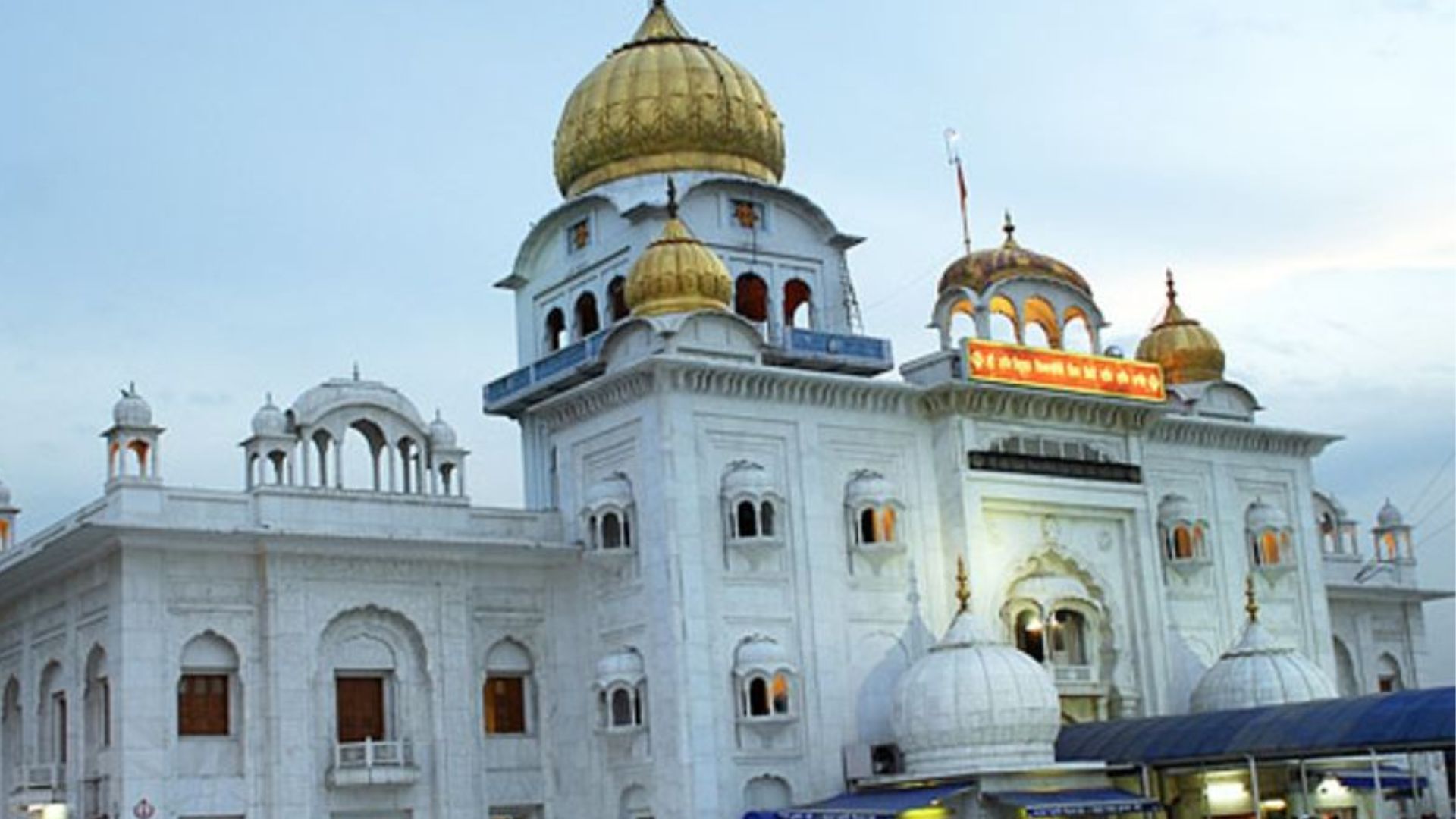
On November 22, even as the diplomatic chill between New Delhi and Islamabad remained at its deepest following Operation Sindoor— the military and strategic response to the April 2025 Pahalgam terror attack—over 2,000 Sikh pilgrims crossed the Attari-Wagah border to celebrate the Parkash Purab of Guru Nanak Dev at Gurdwara Janam Asthan in Nankana Sahib. With bilateral dialogue suspended, trade halted, and the Indus Waters Treaty held in abeyance, virtually every institutional channel between the two neighbours stands shuttered. Yet, the Union government stationed additional customs and immigration personnel at the integrated check post to ensure that the jatha moved seamlessly. In doing so, New Delhi carved out a deliberate exception to its hardline doctrine against Pakistan. This decision is not an isolated administrative concession; it reflects a consistent constitutional and political framework in which the Indian state has sought to insulate the religious sentiments of the Sikh community from geopolitical turbulence. However, as intelligence assessments have repeatedly warned, keeping this spiritual window open carries acute security vulnerabilities that cannot be managed by state policing alone. If New Delhi has demonstrated sensitivity by facilitating the pilgrimage, the onus now lies squarely on the Shiromani Gurdwara Parbandhak Committee (SGPC) and other community institutions—both for the delegation currently across the border and for those that will follow—to ensure that devotees do not become unwitting targets of cross-border radicalisation. To understand the significance of yesterday’s Gurpurab clearance, one must situate it within a broader continuum of institutional accommodations extended to the Sikh faith since Independence. The Indian constitutional architecture itself embeds this sensitivity: Explanation I to Article 25 explicitly recognises the wearing and carrying of the kirpan as integral to the profession of the Sikh religion. Over the decades, this constitutional guarantee has translated into pragmatic administrative flexibility—ranging from exemptions for turban-wearing Sikhs under state motor vehicle helmet laws to notifications by the Bureau of Civil Aviation Security (BCAS) permitting Sikh passengers and aviation staff to carry kirpans within specified dimensions on domestic flights. Beyond personal religious symbols, successive governments— and particularly the current dispensation—have institutionalised major symbolic and infrastructural gestures aimed at honouring Sikh heritage. The operationalisation of the Kartarpur Sahib Corridor in November 2019 remains a landmark example. Even amidst heightened tensions following the Pulwama attack and the Balakot airstrikes earlier that year, New Delhi invested heavily in a state-of-theart passenger terminal and highway network in Gurdaspur to fulfill a decades-old Ardas for unhindered access to Gurdwara Darbar Sahib. Similarly, India has largely upheld the framework of the 1950 NehruLiaquat Pact and the 1974 bilateral protocol on religious shrines to allow four major jathas annually. At home, the state’s outreach has taken the form of national commemoration and fiscal relief. The declaration of December 26 as Veer Baal Diwas—honouring the martyrdom of Guru Gobind Singh’s younger Sahibzadas, Baba Zorawar Singh and Baba Fateh Singh— integrated a deeply revered chapter of Sikh history into the national calendar. Equally notable were the global commemorations of Guru Nanak’s 550th and Guru Tegh Bahadur’s 400th birth anniversaries, alongside the Seva Bhoj Yojna, which effectively neutralised the Goods and Services Tax (GST) burden on raw food materials purchased for langar (community kitchens) at shrines like the Golden Temple. Taken together, these measures underscore a clear policy consensus in New Delhi: national security imperatives will not be allowed to trample upon sacred community traditions. Yet, statecraft in South Asia rarely operates in a vacuum, and gestures of goodwill are frequently exploited by adversaries. Security analysts and Indian intelligence agencies have long documented that Pakistan’s Inter-Services Intelligence (ISI) views Sikh religious tourism not as an exercise in confidence-building, but as a low-cost operational opportunity. Unlike diplomats or journalists, pilgrims travel in large numbers, often driven by deep emotional reverence, and enter an environment where Indian consular oversight is severely restricted. According to multiple security dossiers and investigations by the National Investigation Agency (NIA) and Punjab Police, the Pakistani deep state has consistently leveraged the Evacuee Trust Property Board (ETPB)—which manages Sikh shrines in Pakistan— to facilitate access for pro-Khalistan operatives. During jatha visits to Nankana Sahib, Panja Sahib, and Dera Sahib in Lahore, designated handlers and radicalised expatriates routinely mingle with visiting Indian pilgrims. Their strategy is calibrated: they avoid targeting seasoned, devout elders and instead look for impressionable youth, individuals facing financial distress, or those nursing local grievances. The modus operandi follows a familiar trajectory. Under the guise of hospitality, handlers offer special access to shrines, gift provocative literature, and curate emotionally charged narratives surrounding the events of 1984. Once a rapport is established, phone numbers and encrypted messaging handles are exchanged. What begins as an ostensibly benign spiritual interaction in Pakistan often evolves, months later, into recruitment for sleeper cells, dronebased smuggling of narcotics and weapons across the Ravi and Sutlej riverine belts, or logistical support for targeted killings in Punjab. Several terror modules busted in Punjab over the past decade have traced their initial radicalisation back to contacts forged during cross-border pilgrimages. In the post-Operation Sindoor landscape, where Pakistan’s conventional and asymmetric options have been constrained by Indian deterrence, the temptation for Rawalpindi to weaponise soft channels like jathas is higher than ever. While Indian intelligence agencies conduct background checks prior to visa clearances, surveillance cannot—and should not—turn a sacred pilgrimage into an exercise in state suspicion. This is precisely where the leadership of the SGPC, the Delhi Sikh Gurdwara Management Committee (DSGMC), and other representative bodies becomes indispensable. Historically, the SGPC has been vigorous in lobbying the Union government to maximise visa quotas and streamline border crossings. That advocacy must now be matched by an equally robust sense of institutional responsibility regarding the security and welfare of the pilgrims it leads. With the current jatha already in Pakistan, accompanying jatha leaders must enforce strict group cohesion across their itinerary, ensuring that devotees remain anchored to the spiritual purpose of their journey rather than becoming isolated targets for political indoctrination. Going forward, before passports and visas are distributed in Amritsar for future pilgrimages, the SGPC must institute a structured, mandatory pre-departure orientation. Pilgrims—particularly first-time and younger travellers—need candid briefings on how hostile agencies attempt to subvert religious gatherings, why they must avoid unscheduled interactions with unfamiliar hosts, and the risks of accepting unsolicited literature or financial inducements. The Guru’s message of Sarbat da Bhala (welfare of all) stands in stark opposition to the politics of violence and subversion. New Delhi has shown commendable maturity in keeping the doors of pilgrimage open even while shutting down every other avenue of engagement with Islamabad. For that policy of sensitivity to remain sustainable, community institutions must step up as responsible custodians— ensuring that a journey of faith is never allowed to become a conduit for terror.
Punjab’s challenge is to build a future worthy of its glorious heritage by translating its enduring values of...
What should a historic city aspire to become after completing 450 years of its existence? How can its...

The Counter Intelligence Wing of the Punjab Police has busted a cross-border drug smuggling network in Amritsar.

The Enforcement Directorate has summoned AAP MLA Ladi Dhons, Moga MLA Amandeep Kaur Arora, her husband and several...

Former Ghanaur MLA Madanlal Jalalpur has been reinstated in the Congress after Pargat Singh revoked his suspension. The...

Political discussions are underway over a possible alliance between Waris Punjab De, Akali Dal (Punar Surjit) and the...

Aries: The day will be auspicious...