Last Updated: October 20, 2026
Last Updated: October 20, 2026





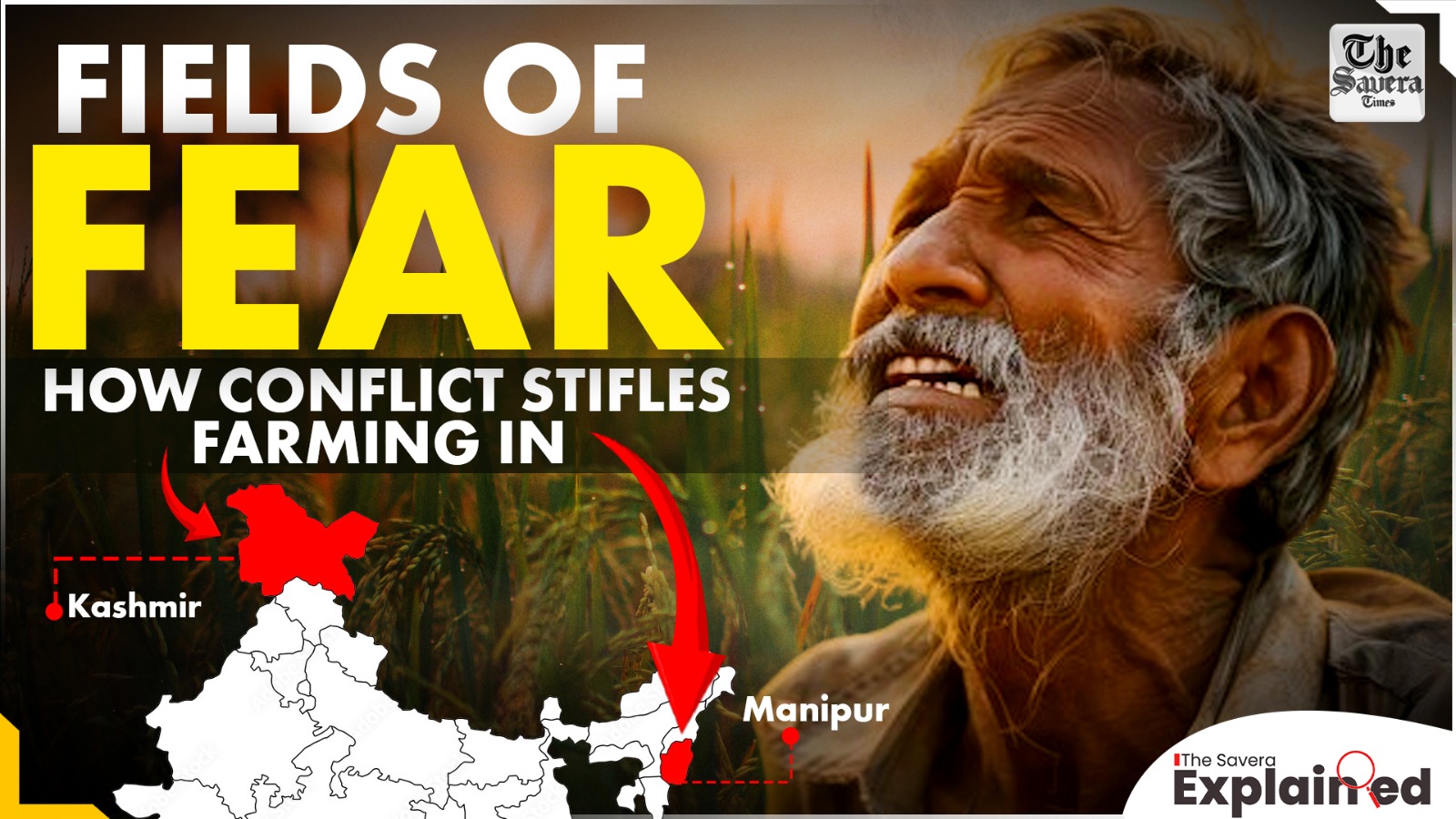
New Delhi: In Manipur’s Khoirentak Khuman, a village of about 100 Kom tribal families, an uneasy peace prevails amidst the ethnic conflict between the Meitei and Kuki-Zo communities that erupted on May 3, 2023, claiming over 250 lives.
Located 48 km south of Imphal in a ‘buffer zone’—a militarized strip separating the Meitei-dominated Imphal Valley from the Kuki-Zo-inhabited hills—this village exemplifies the challenges of farming under constant tension.
Similarly, in Kashmir’s border areas, ongoing militancy and cross-border tensions have disrupted agriculture, drawing parallels with Manipur’s plight. Both regions highlight how conflict transforms fertile farmlands into zones of fear and loss.
Permission needed to access own lands
In Manipur, the buffer zone, marked by a three-tier security setup involving the CRPF, BSF, and Assam Rifles, restricts farmers’ access to their fields. Khoirentak Khuman, geographically in Churachandpur (Kuki-Zo domain) but under Bishnupur’s (Meitei area) administration, reflects this divide. Meitei farmers, like those in Thamnapokpi, have been unable to cultivate their lands for over two years due to the risk of violence.
Two lakh farmers abandoned due to fear in Manipur
A June 19, 2025, incident, where a farmer was shot in Phubala, underscores the persistent danger. The State Agriculture Department notes that 2 lakh farmers cultivate 1.95 lakh hectares, but in 2023, 9,719 hectares on Imphal Valley’s periphery were abandoned due to fear of attacks, leading to a ₹211.41 crore loss. In 2024, 7,290 hectares remained fallow, with Bishnupur losing 54.4% of its farmland to the conflict. Kuki-Zo farmers, like Samuel from Kangpokpi, also face uncertainty, fearing the withdrawal of security forces.
The conflict has disrupted irrigation, with Kuki militants allegedly blocking channels, causing crop failures and soil erosion, affecting 45,000 farming families. Despite government efforts, including a ₹38.06 crore relief package in 2023 and President’s Rule in 2025, farmers like Ningthoujam Brojen and M. Ramesh Singh struggle with limited access, permitted to work only until 1 p.m. or not beyond 100 meters from the high canal. In Naranseina, 30 of 47 uncultivated hectares are reportedly occupied by Kuki-Zo groups, leaving Meitei farmers like Laishram Surjit heartbroken. Cattle losses and abandoned lands further deepen the crisis.
Similar crisis in Kashmir
In Kashmir, border areas like Uri, Kupwara, and Poonch face similar challenges due to militancy and recent cross-border shelling along the Line of Control (LoC) which destroyed the standing crops. Farmers in these regions, cultivating crops like paddy, maize, and apples, live under the threat of sudden violence. Shelling disrupts sowing and harvesting, while landmines and security restrictions limit access to fields.
The Jammu and Kashmir government has provided compensation, but it often falls short, much like Manipur’s relief efforts.
Despite these challenges, signs of resilience emerge. In Manipur, Meitei and Kuki-Zo farmers in Keithelmanbi cultivate side by side, sharing water under security cover. In Kashmir, initiatives like high-yield crop varieties and protected agriculture are being promoted to revive farming. Yet, the fear of violence persists, with Manipur’s farmers like Salam Jotin turning to alternative livelihoods, such as driving e-rickshaws, and Kashmir’s farmers relying on off-season jobs. The displacement of 62,000 people in Manipur, including 8,000 Meiteis, and thousands in Kashmir underscores the human toll.
Restoring normalcy requires robust security, land reclamation, and compensation. In Manipur, the CFW urges swift action to protect farmers, while in Kashmir, calls for demining and ceasefire adherence grow louder. Both regions need sustainable solutions to let farmers reclaim their lands and livelihoods, salvaging what conflict has ravaged.
Ladakh is seeing two changes at once: a new district has been announced, and the Centre has proposed...

What if a decision taken in Washington could influence India’s oil bills, export earnings and trade relations with...

What happens when the world’s richest business leaders clash over one of the world’s biggest internet markets? A...

Pakistan is heading into its wheat-growing season with a serious water problem. The country is facing a projected...
Imagine a foreign national standing among Indian citizens at a political protest, raising questions about the government or...

For thousands of Indian tech workers in the United States, a job offer is only the beginning of...

Aries: The day will be auspicious...