Last Updated: October 21, 2026
Last Updated: October 21, 2026





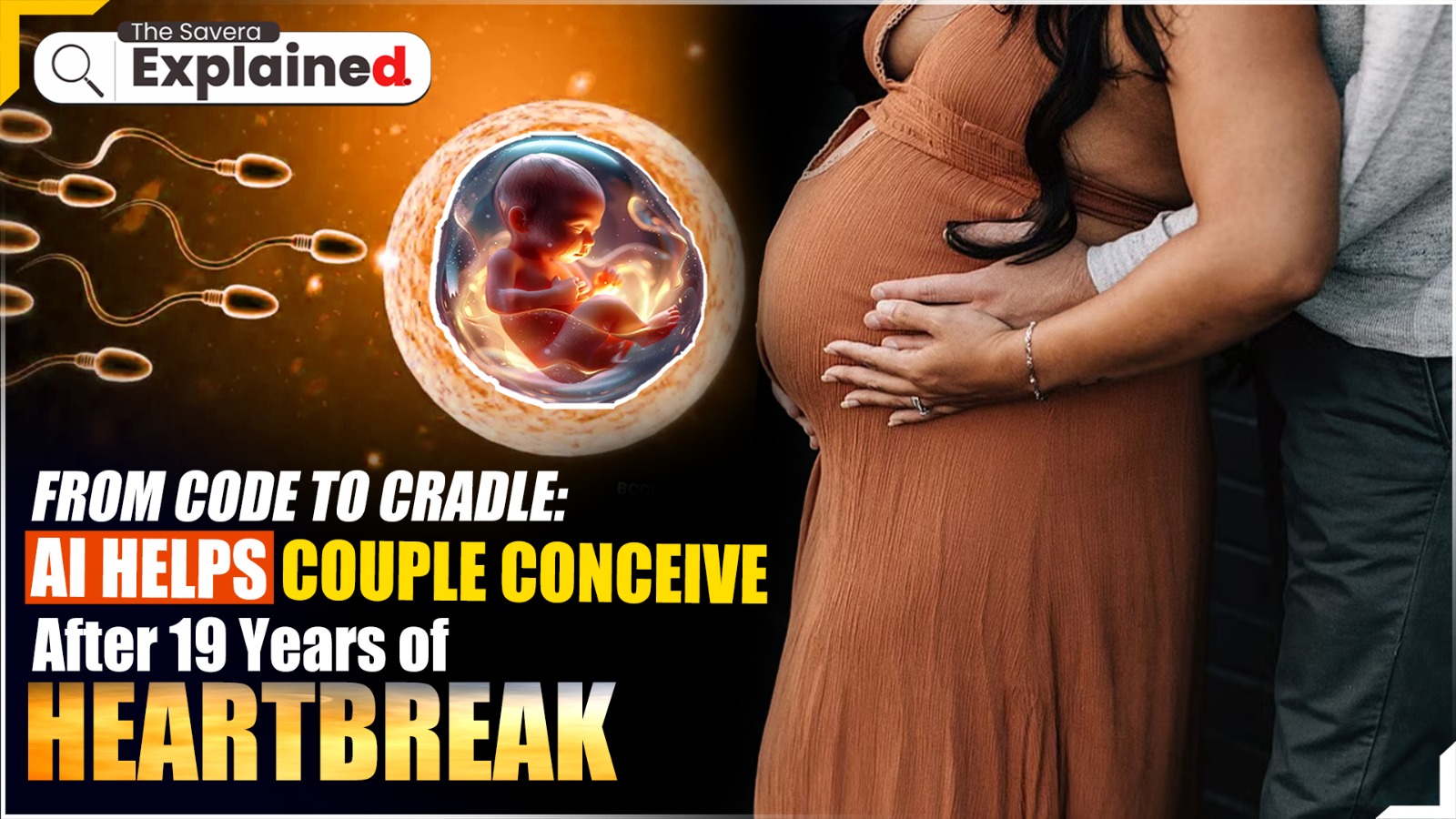
Jalandhar: Artificial Intelligence has swiftly evolved from being a high-tech assistant in data crunching to transforming how humans live, work, and now—create their lives. It’s diagnosing diseases, powering autonomous vehicles, detecting fraud, and crafting art.
But now, AI isn’t just changing lives — it’s helping to create them.
In a world-first, AI has now played a direct role in human conception — helping a couple finally get pregnant after 19 years of failed attempts and emotional turmoil.
STAR Power: The AI That Found Sperm Where None Was Seen
At the heart of this revolutionary success is the Sperm Track and Recovery (STAR) system, developed by researchers at the Columbia University Fertility Center. It’s an AI-powered tool that can detect incredibly rare sperm cells in men diagnosed with azoospermia, a condition where no sperm is typically found in the ejaculate.
“It’s like finding a needle in a thousand haystacks,”
— Dr. Zev Williams, Director, Columbia University Fertility Center.
When science meets smart tech, even the impossible becomes visible.
The process uses a fluidic chip that streams the semen sample through microchannels. As the AI scans the sample in real-time, any section that shows signs of sperm is isolated and gently collected — without lasers or harsh chemicals.
No damage. No drama. Just data-driven miracles.
A Dream Realised: Couple Conceives After 15 Failed IVF Cycles
The couple had tried 15 IVF cycles over nearly two decades, but every attempt failed due to the husband’s azoospermia. Embryologists spent days manually scanning his samples and found nothing.
They searched for years. AI found the answer in minutes.
When STAR was introduced in March this year, it took less than an hour to detect 44 sperm. A number small but powerful enough to fertilise an egg.
Just two hours after the sperm sample was collected, fertilisation was confirmed. A few days later, the embryo was transferred into the uterus.
Today, the wife is four months pregnant, and both she and the baby are doing well.
Redefining Male Infertility: From “No Hope” to New Beginnings
Azoospermia affects 1% of all men and contributes to 10% of all male fertility issues. Common causes include genetic abnormalities, hormonal imbalances, cancer treatments, environmental toxins, and lifestyle factors. Until now, these patients were told biological parenthood was impossible.
Hope was lost. Until AI brought it back.
STAR changes that. Unlike other AI tools, it can both detect and recover viable sperm — even in the most difficult cases — without damaging them in the process.
“The goal is to ensure that even those once told they have no chance of conceiving can have healthy children,”
— Dr. Zev Williams
AI, Fertility, and the Future of Parenthood
The success of STAR opens the door to new hope for millions of couples worldwide. It redefines the role of AI — not just as a machine that solves problems, but as a partner in deeply human journeys.
This isn’t science fiction. It’s science with a soul.
From diagnosing disease to creating life, artificial intelligence is no longer just advancing technology.
It’s restoring lost dreams — one miracle at a time.
Ladakh is seeing two changes at once: a new district has been announced, and the Centre has proposed...

What if a decision taken in Washington could influence India’s oil bills, export earnings and trade relations with...

What happens when the world’s richest business leaders clash over one of the world’s biggest internet markets? A...

Pakistan is heading into its wheat-growing season with a serious water problem. The country is facing a projected...

Imagine a foreign national standing among Indian citizens at a political protest, raising questions about the government or...

For thousands of Indian tech workers in the United States, a job offer is only the beginning of...

Aries: The day will be auspicious...