Last Updated: October 21, 2026
Last Updated: October 21, 2026





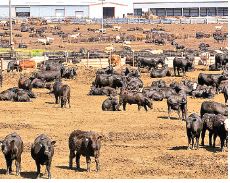
The world’s biggest meat and dairy producers are releasing more methane than leading fossil fuel companies, according to a new global report that highlights the sector’s growing role in accelerating the climate crisis.
The study, titled Roasting the Planet, was published by Foodrise, Greenpeace, Friends of the Earth and the Institute for Agriculture and Trade Policy. It found that 45 of the largest meat and dairy corporations emitted an estimated 1.02 billion tonnes of greenhouse gases in 2023—more than the total annual emissions of Saudi Arabia, the world’s second-largest oil producer. If ranked as a country, these companies together would be the ninth-largest emitter in the world.
Research led by the Dutch think-tank Profundo, using UN Food and Agriculture Organization data, revealed that methane accounted for 51 per cent of the combined emissions. Five companies—Brazil’s JBS, Marfrig and Minerva, along with US-based Tyson and Cargill—were identified as the worst polluters, responsible for about 480 million tonnes of CO2-equivalent gases. This figure exceeds the emissions of energy giants BP, Shell or Chevron.
The analysis found that methane emissions from these 45 companies alone were greater than those from all 27 European Union countries and the United Kingdom combined. JBS, the world’s largest meat processor, was responsible for nearly a quarter of total emissions, producing around 241 million tonnes in 2023—more than 158 countries. Greenpeace Nordic previously estimated that JBS’s methane output surpassed the combined levels of ExxonMobil and Shell.
The report accused the industry of relying on “false solutions” such as biogas, feed additives and carbon offsets to mask inaction. Many companies continue to expand livestock herds despite pledges to cut emissions. JBS, for instance, projects a 70 per cent rise in global animal protein consumption by 2050 and has acknowledged that its “net-zero 2040” goal is only aspirational.
Animal agriculture is estimated to contribute between 12 and 19 per cent of all human-caused greenhouse gases, mainly from cattle burps, manure and deforestation for feed production. The 45 companies studied were collectively responsible for slaughtering about 17 billion chickens, 242 million pigs and 53 million cattle in 2023—nearly one-fifth of the global total. Cattle accounted for 80 per cent of emissions, while beef and dairy production drove 41 per cent of tropical deforestation worldwide.
The report warned that reducing livestock methane could serve as a crucial “emergency brake” on climate change. Cutting methane emissions by 45 per cent by 2030 could prevent 0.3°C of warming, it said. Yet, policy efforts remain focused largely on fossil fuels, with few comprehensive plans to tackle agricultural methane.
Oxford climate scientist Paul Behrens, in the report’s foreword, urged an immediate reduction in global livestock numbers. He said, “The sector that feeds humanity has the power to become its saviour rather than its destroyer.” The authors called for binding agricultural emission targets, mandatory corporate disclosures and the redirection of subsidies away from industrial livestock towards plant-rich diets and sustainable farming systems.
Protests in Jakarta, Yogyakarta and Bandung brought students onto the streets over rising costs, forest fires and civil...

Organisations linked to Neville Roy Singham are under US congressional scrutiny over funding. Their coverage of protests in...

US President Donald Trump says Washington and New Delhi are close to a trade agreement that will differ...

Iran has ruled out transferring its enriched uranium stockpile outside the country, with security official Mohsen Rezaei reiterating...

Donald Trump has urged Volodymyr Zelensky to pursue a peace deal with Russia, warning that Ukraine could face...

Pakistan, battling insurgencies at home and tensions along multiple borders, is too overstretched to offer meaningful military support...

Aries: The day will be auspicious...