Last Updated: October 21, 2026
Last Updated: October 21, 2026





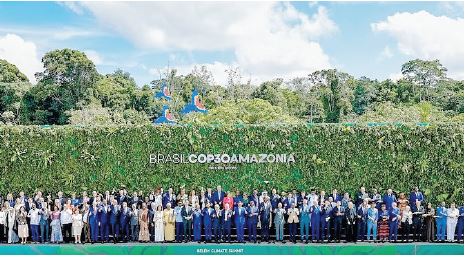
The COP30 Leaders’ Summit in Belém, the historic gateway to the Amazon rainforest, was marked by strong and urgent appeals to realign the world’s financial systems with global climate goals. Heads of state and international delegates voiced frustration that climate finance remains insufficient and uneven, undermining progress toward lowering emissions and transitioning away from fossil fuels. The summit, held ahead of formal negotiations scheduled to begin on November 10, set the tone for what is expected to be a confrontational and consequential round of climate diplomacy.
Brazilian President Luiz Inácio Lula da Silva, hosting the summit in his home country, delivered the most forceful intervention. He warned that the global community is running out of time to correct course. “The decisions we make regarding the energy sector will determine our success or failure in the fight against climate change,” he said. His message was that the world must shift decisively from fossil fuels to renewable energy and that this shift cannot be achieved without a complete overhaul of global finance structures.
Lula stressed that the development model that has dominated the world economy for two centuries is no longer viable. The heavy reliance on fossil fuels has driven temperatures to alarming levels, intensified extreme weather, and placed vulnerable populations at greater risk. He pointed out that energy use continues to be responsible for nearly 75 percent of global greenhouse gas emissions. Despite progress in scaling up renewables, global carbon emissions from the energy sector in 2024 reached their highest levels since systematic recording began in 1957.
The Brazilian president also highlighted a gap between climate goals and financial realities. While renewable power capacity has grown, the global energy mix has barely shifted. Fossil fuels accounted for 83 percent of energy supply when the Paris Agreement was signed and still represent 80 percent today. Lula attributed this slow progress to financial systems that continue to reward fossil fuel expansion. He cited data showing that the 65 largest banks worldwide financed USD 869 billion in oil and gas projects in the past year. In contrast, public climate finance from developed nations, despite repeated promises, has been relatively minimal.
United Nations Secretary-General António Guterres, speaking at the summit, supported Lula’s argument and called the situation a “moral failure.” He pointed to the imbalance between massive corporate profits in the oil and gas sector and the limited climate funding provided to developing countries. Since the signing of the Paris Agreement, oil and gas companies in the Global North earned USD 1.3 trillion in profits, while governments in the same region provided only USD 280 billion in grant-based climate finance. Guterres stressed that the world is still prioritizing military and fossil fuel spending over climate resilience and clean energy.
Developing nations have increasingly demanded that wealthier countries deliver on their climate finance commitments. For adaptation alone, estimates suggest that developing countries will require between USD 310 billion and USD 365 billion annually by 2035. Many leaders argued that, without predictable funding, countries cannot transition to cleaner economies or protect their populations from climate impacts. Lula warned that the current spending patterns, in which global defense budgets remain double those of climate action funding, would accelerate the path toward what he described as “climate apocalypse.”
To counter this trajectory, Lula called for a clear and enforceable global roadmap to phase out fossil fuels. He emphasized that the transition must be fair and equitable, ensuring that developing nations receive access to clean technologies, financing, and technical support. His proposals included implementing the Dubai Agreement to triple renewable energy capacity and double energy efficiency by 2030. He also stressed the need to integrate clean cooking solutions and electricity access for nearly two billion people who still lack modern energy systems. Lula reaffirmed the Belém Commitment to quadruple sustainable fuel use by 2035.
To fund these goals, Lula suggested innovative mechanisms, including debt-for-climate swaps and directing a portion of profits from oil extraction to energy transition programs. Brazil itself plans to establish a national climate transition fund built on these principles.
A major development at the summit was the launch of the Tropical Forests Forever Facility (TFFF). This financial mechanism, described as an environmental innovation conceived in Brazil, aims to provide stable long-term financing to protect the world’s largest tropical forests. It was announced with an initial fund of USD 5.5 billion and is expected to mobilise USD 25 billion in public contributions and USD 125 billion in blended capital. Unlike traditional environmental grants, the TFFF offers guaranteed returns to contributors. Notably, 20 percent of the funds will be directed to Indigenous forest communities, recognizing their role in safeguarding biodiversity.
Several countries pledged major contributions to the facility. Norway committed USD 3 billion over ten years. Brazil and Indonesia each pledged USD 1 billion. France committed USD 500 million. Australia’s Andrew Forrest became the first private investor with a USD 10 million contribution. Germany expressed strong support but did not disclose figures. The UK declined to join at this stage.
Brazil and Azerbaijan, the host nations for COP30 and COP29 respectively, also unveiled the Baku to Belém Roadmap. This plan outlines strategies to mobilise at least USD 1.3 trillion in climate finance by 2035. The two presidencies emphasized that their role is to propose frameworks, while approval and implementation now fall to global negotiators.
As negotiations begin, the pressure is mounting. Delegates must work on the Global Goal on Adaptation, the Just Transition framework, and consolidating the commitments announced during the summit. Lula closed with a direct appeal to world leaders: “We must decide whether the twenty-first century will be remembered for climate catastrophe or for the moment humanity chose intelligent reconstruction.”
Protests in Jakarta, Yogyakarta and Bandung brought students onto the streets over rising costs, forest fires and civil...
Organisations linked to Neville Roy Singham are under US congressional scrutiny over funding. Their coverage of protests in...

US President Donald Trump says Washington and New Delhi are close to a trade agreement that will differ...
Iran has ruled out transferring its enriched uranium stockpile outside the country, with security official Mohsen Rezaei reiterating...
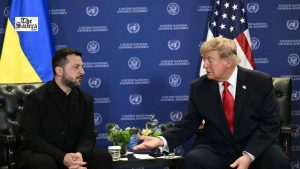
Donald Trump has urged Volodymyr Zelensky to pursue a peace deal with Russia, warning that Ukraine could face...
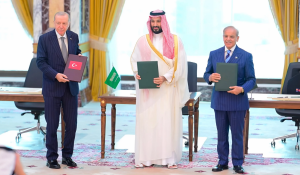
Pakistan, battling insurgencies at home and tensions along multiple borders, is too overstretched to offer meaningful military support...
Aries: The day will be auspicious...