Last Updated: October 21, 2026
Last Updated: October 21, 2026





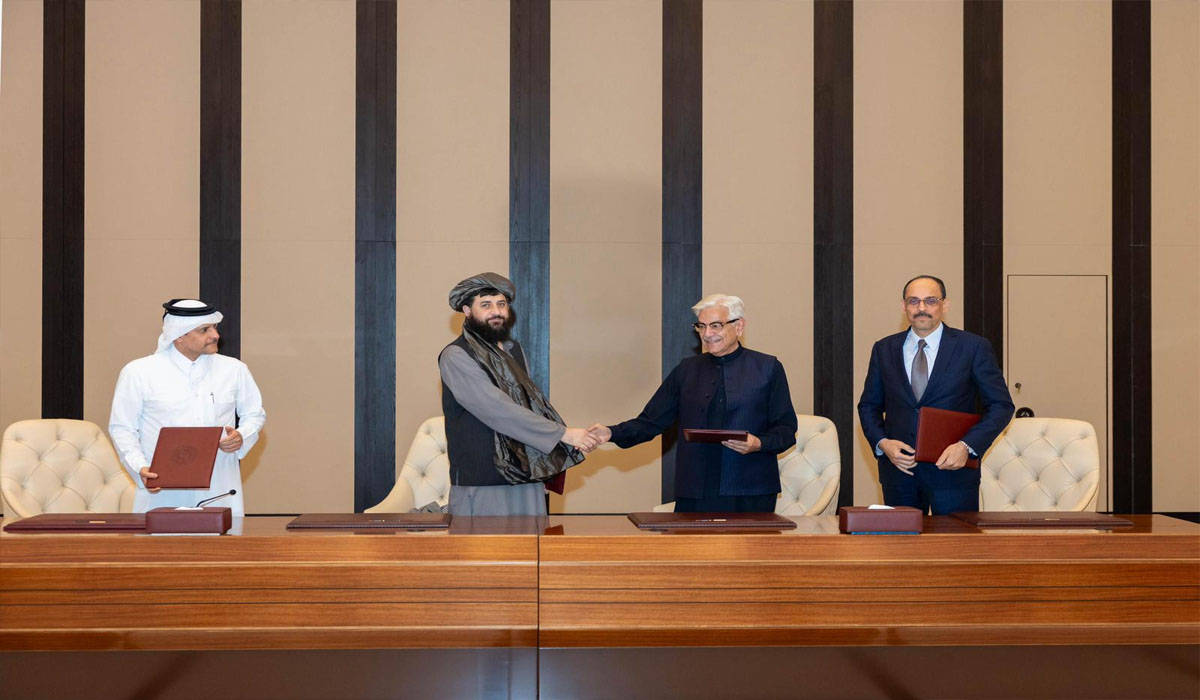
Pakistan’s Defence Minister Khawaj a Asif confirmed on Friday that peace negotiations between Pakistan and Afghanistan have been suspended indefinitely, marking a serious setback in efforts to ease rising tensions along the shared border. Speaking to Geo News, Asif said there was currently no plan for a fourth round of discussions and described the situation as a complete deadlock. His remarks signaled that the process, which had recently shown signs of tentative progress, has stalled without a clear roadmap for renewal.
The talks were being held with the Taliban-led administration in Afghanistan, which took control of Kabul in 2021. The latest round began in Istanbul on Thursday and followed earlier discussions that had taken place over five days. Those earlier talks concluded with a temporary arrangement that raised expectations of further cooperation.
However, this progress has now been overshadowed by escalating distrust, deep-rooted security concerns, and fresh border clashes that have strained relations. A s i f ac k n ow l e d ge d t h e involvement of Turkey and Qatar, both of which helped facilitate the dialogue. He credited them for what he described as sincere mediation and said both governments broadly supported Pakistan’s position throughout the negotiations.
According to him, some Afghan representatives also recognized Pakistan’s concerns. Yet, the core disagreement emerged over the nature of the agreement itself. Pakistan demanded a formal written accord, while the Afghan side preferred verbal assurances. Asif said Pakistan could not accept informal commitments in a matter involving national security, arguing that only written terms could ensure accountability and avoid ambiguity. He reiterated that Pakistan’s key demand remains consistent.
Islamabad wants Kabul to prevent its territory from being used by groups planning attacks on Pakistan. Specifically, Pakistan has voiced concern about the presence of militants linked to the Tehreek-e-Taliban Pakistan, or TTP, who are believed to operate from across the border. The Afghan Taliban has denied providing support to the TTP, but Pakistan maintains that the group continues to find refuge and logistical assistance in areas under Afghan control. This issue has long been central to the strained relationship.
Pakistan argues that the Afghan authorities must take concrete action to curb TTP activities, given the ideological and historical ties between the groups. Afghan officials, for their part, argue that Pakistan should resolve its differences with the TTP through internal dialogue instead of placing responsibility solely on Kabul. These differing approaches have prevented the development of a shared strategy against cross-border militancy.During the interview, Asif also issued a pointed warning.
He said Pakistan would respond strongly to any attack originating from Afghan soil. He added that the current ceasefire would hold only if there was no aggression. His comments reflect a hardened tone in Islamabad, where officials have shown increasing frustration over the lack of progress on security cooperation.A similar message was conveyed by Pakistan’s Information Minister Attaullah Tarar in a statement shared on X.
Tarar emphasized that Pakistan does not harbor ill will toward the Afghan population and noted the cultural and social ties between the two nations. However, he underlined that Pakistan would not endorse any decisions by the Afghan government that risked regional stability or undermined the welfare of Afghan citizens. He said Pakistan would continue to take necessary steps to safeguard its territorial integrity.The previous round of discussions had concluded on a cautiously hopeful note. Both sides had agreed to uphold a ceasefire and create a joint monitoring system to prevent violations.
The suspension of talks now casts doubt on the sustainability of those commitments. Analysts warn that without continued diplomatic engagement, the likelihood of renewed violence could increase.The collapse of the latest negotiations highlights the broader complexity of relations between the two countries. While Pakistan initially viewed the Taliban’s return to power as a means to secure cooperation on militant activity, the expectations of swift alignment have proved unrealistic. Differences in priorities, political pressures, and competing interpretations of sovereignty continue to shape the relationship.
For now, the diplomatic progress seen in recent weeks has slowed. Both countries face economic pressures and security concerns at home, making stability a critical requirement. Yet, lasting peace will depend on whether both sides can commit to enforceable agreements and sustained dialogue rather than temporary and fragile understandings.
Protests in Jakarta, Yogyakarta and Bandung brought students onto the streets over rising costs, forest fires and civil...
Organisations linked to Neville Roy Singham are under US congressional scrutiny over funding. Their coverage of protests in...

US President Donald Trump says Washington and New Delhi are close to a trade agreement that will differ...

Iran has ruled out transferring its enriched uranium stockpile outside the country, with security official Mohsen Rezaei reiterating...
Donald Trump has urged Volodymyr Zelensky to pursue a peace deal with Russia, warning that Ukraine could face...

Pakistan, battling insurgencies at home and tensions along multiple borders, is too overstretched to offer meaningful military support...
Aries: The day will be auspicious...