Last Updated: October 13, 2026
Last Updated: October 13, 2026





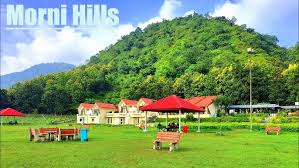
It is often lamented that neither Punjab nor Haryana possesses its own hill stations, despite the fact that any state could generate substantial revenue through scenic tourism—thereby replenishing its depleted coffers. With this objective in mind, the Haryana government has formulated a new land-use change policy.
As a first step under this policy, the Haryana government has decided to undertake the development of the Morni region as a major tourism hub. The specific areas slated for development include the Panchkula-Morni route and the Chandi Mandir-Morni (Thapli) route; the new land-use change policy has been approved to facilitate the establishment of hotels, guest houses, “dhabas”, and restaurants along these roads.
Tourism-related activities will be permitted within a 500meter radius on both sides of these thoroughfares. This provision will also extend to agricultural land situated within the Morni Controlled Area.
This initiative is expected to boost tourism activities while simultaneously generating employment opportunities for the local population. A similar policy could be formulated for Punjab as well. Areas such as Chohal, the Saleran Dam vicinity, and the Talwara route region—often referred to as “Mini Goa”—are all locations within Punjab that hold immense potential for development as scenic tourist destinations.
Punjab could look to Haryana for guidance, where the policy permits land parcels ranging from 200 to 1,000 square meters for guest houses and homestays; 500 to 1,000 square meters for *dhabas*; 1,000 to 2,000 square meters for restaurants; and anywhere from 2,000 square meters up to 5 acres for hotel projects. Furthermore, hotel projects are permitted to reach a maximum height of 15 meters. For guest houses and “dhabas”, access via a public road at least 20 feet in width is mandatory, while for restaurants and hotels, a minimum road width of 30 feet is required.
Adherence to prescribed parking standards is also a mandatory requirement. In instances where the proposed development site falls within or abuts a designated hunting ground or an ecologically sensitive wildlife zone, prior permission must be obtained for its utilization. Indeed, such dreams can be envisioned for regions spanning from Haryana all the way to Punjab. The route connecting Hoshiarpur to Chintpurni and Jwala Ji is, in fact, steadily emerging as a hub for religious tourism.
Now, stretching from the Talwara route to ‘Mini Goa,’ intermittent glimpses of the reservoir’s waters can be spotted at various points—a vast expanse bounded at one end by Madhopur and at the other by Talwara. Could this area not be developed in such a systematic and planned manner that it transforms into a premier destination for scenic tourism? This would ensure that we are no longer compelled to lament that Punjab lacks lush, picturesque locales that offer the majestic heights of the mountains alongside the serene depths of the riverine landscape.
Good Evening Viewers! Stay updated with The Savera Times Evening Bulletin for the latest news from Punjab, India...

eader of the Opposition in the Lok Sabha, Rahul Gandhi and 10 other INDIA bloc leaders have moved...

Amidst protests in central Delhi, the Delhi Metro Rail Corporation (DMRC) announced the reopening of entry and exit...
The Delhi Police has registered an FIR regarding the alleged disturbance at the Bangla Sahib Gurdwara in...

The Delhi Police on Monday removed Jantar Mantar from the list of officially designated protest sites. The police...

The Supreme Court on Monday clarified that it has not passed any judgment on the Election Commission's (ECI)...

Aries: The day will be auspicious...