Last Updated: October 26, 2026
Last Updated: October 26, 2026






India’s gig economy, driven by platforms like Zomato, Blinkit, and Swiggy, has revolutionized urban convenience, offering round-the-clock food and grocery deliveries. Yet, for delivery riders in various Indian states, this ease comes at a steep cost. Violent attacks, thefts, and harassment are now routine, especially during night shifts, leaving workers vulnerable with little support from companies.
A 2024 survey by the Center for Internet and Society found that one in three gig workers in India fears theft or assault, highlighting a crisis in a sector powering urban economies.
Rising Violence Against Delivery Riders
The dangers faced by riders are stark and escalating. In Punjab, Anoop Singh, a Zomato rider in Mohali, was stabbed multiple times and robbed during a 2023 delivery. In Ludhiana, Rajesh Kumar was killed resisting bike snatchers. Another tragic case involved Ram, a Zomato rider who suffered a severe head injury in an assault, leaving him permanently unfit to work.
In Delhi, a 27-year-old Zomato delivery agent died in a hit-and-run in Munirka in October 2024, while a Swiggy rider in 2023 jumped from a third-story window to escape a customer’s dog, resulting in fatal injuries. In Lucknow, a Flipkart delivery agent was murdered in October 2024 while delivering an iPhone, his body dumped in a canal.
Riders often describe leaving home for night shifts, asking families to pray for their safety, with some carrying weapons for self-defense. Many attribute the violence to local drug abuse and weak law enforcement, which exacerbate risks in high-crime areas.
Corporate Neglect and Denied Medical Support
Riders consistently report corporate indifference, particularly when seeking medical support after injuries. Ram, for instance, was denied medical insurance by Zomato, left to navigate recovery without aid. Many riders say companies routinely deny medical expenses, forcing workers to bear the financial burden of workplace injuries. Mohammed Adil, a 28-year-old delivery agent in Delhi told local media in Delhi.
“We don’t receive any kind of benefits or insurance. Even if we get injured, there’s no support.” This pattern of denial pushes riders to protest for basic rights, as seen in the April 2023 Blinkit strike in Delhi-NCR, where over 2,500 workers demanded better pay and conditions. Such actions often face retaliation, including account deactivations or threats of police involvement.
Companies like Zomato, Swiggy, and Blinkit typically address incidents only when public outcry or social media pressure forces accountability, leaving riders feeling abandoned in a system that classifies them as “partners” rather than employees, stripping them of benefits like insurance or paid leave.
The gig economy’s structure amplifies these risks. Heavy traffic, tight delivery deadlines, and algorithmic pressures force riders to speed through dangerous routes to avoid penalties, increasing accident risks. A 2025 Borzo survey of 10,900 riders found 57.3% experienced stress from 15-minute delivery windows, with 80.6% believing longer timelines promote safer driving.
Government efforts, like the 2020 Code on Social Security, aim to extend benefits to gig workers, but implementation remains slow. Rajasthan’s 2023 Gig and Platform Workers Act is a step forward, yet nationwide protections are lacking. Unions, such as the Gig and Platform Service Workers Union, argue that without specific laws, workers remain vulnerable to exploitation. The absence of safety measures—like weather-appropriate uniforms or shaded waiting areas—further compounds risks.
The gig economy, projected to employ 23 million by 2029, is at a critical juncture. Riders’ demands are straightforward: fair wages, medical insurance, and basic protections. Without systemic change—stronger regulations, corporate accountability, and improved law enforcement—the human cost of India’s convenience economy will continue to rise.
The 2024 Center for Internet and Society survey’s finding that one in three gig workers fears assault or theft underscores the urgency for reform. Workers like Anoop, Rajesh, and Ram keep India’s urban centers running, yet their lives hang in the balance, unsupported by the platforms profiting from their labor.
Imagine opening WhatsApp on your phone, but the SIM card linked to your account is not inside the...

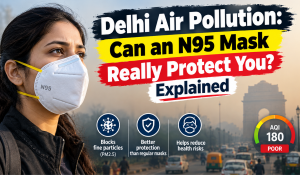
Delhi’s air pollution is once again raising health concerns, with the Air Quality Index (AQI) entering the ‘poor’...
Ladakh is seeing two changes at once: a new district has been announced, and the Centre has proposed...

What if a decision taken in Washington could influence India’s oil bills, export earnings and trade relations with...

What happens when the world’s richest business leaders clash over one of the world’s biggest internet markets? A...

Pakistan is heading into its wheat-growing season with a serious water problem. The country is facing a projected...

Aries: The day will be auspicious...