Last Updated: November 5, 2026
Last Updated: November 5, 2026





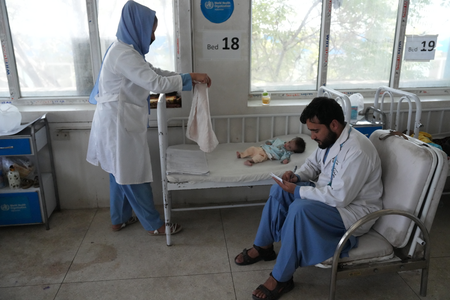
Kabul: The United Nations Office for the Coordination of Humanitarian Affairs (OCHA) said on Wednesday that hospitals and health facilities in southern Afghanistan were reporting overcrowded wards and an increasing number of people getting hospitalised for severe malnutrition, local media reported.
The OCHA said that people in southern Afghanistan were facing several problems while humanitarian organisations continued to face a reduction in resources, Afghanistan-based news agency Khaama Press reported. The OCHA’s statement comes amid concerns regarding deteriorating food security in Afghanistan.
In October, the Food and Agriculture Organisation (FAO) and the World Food Programme (WFP) said that nearly 40 per cent of Afghanistan’s population is projected to face high levels of acute food insecurity this winter, while cases of acute malnutrition are set to surge in 2027.
Citing the latest Integrated Food Security Phase Classification (IPC) analysis, the two UN agencies in October said about 19.2 million people, or 38 per cent of the population, will face high levels of acute food insecurity during the November-April lean season, up from 17.4 million projected for the same period a year earlier.
Around five million of them are expected to face emergency levels of hunger (IPC Phase 4), double the number projected for April-September 2026, with the worst conditions likely in Badakhshan, Badghis, Daykundi, Ghor, Samangan, Sar-e-Pol and rural Ghazni.
Malnutrition cases are expected to rise by nearly 10 per cent compared to 2026 to four million, a quarter of them severe and life-threatening, even as prevention and treatment services lag, leaving women and children most exposed, the agencies said.
The crisis is being driven by multiple shocks, including the forced return of more than 1.2 million Afghans from Iran and Pakistan this year, border closures and disruptions to shipping through the Strait of Hormuz that have pushed up prices of basic goods, and sharp funding shortfalls for humanitarian aid.
The agencies noted that favourable rainfall had boosted crop production in 2026, but said persistent unemployment meant many families who do not grow their own food still cannot afford a nutritious diet.
In August, the United Nations Children’s Fund (UNICEF) said that 3.7 million children in Afghanistan are acutely malnourished, including around one million with life-threatening severe acute malnutrition. It stated that several hospitals in southern Afghanistan were accommodating three or four severely malnourished children for every available bed.
Bhopal: The Congress on Wednesday announced a new state executive committee of its Seva Dal in Madhya Pradesh...

Washington: US President Donald Trump congratulated Democrats on capturing both chambers of Congress but blamed Republican losses on...

The US-Israel war against Iran is increasingly turning commercial shipping routes into dangerous zones. While military forces exchange...

Iranian Parliament Speaker Mohammad Bagher Ghalibaf has reacted to the results of the November 3 midterm elections in...

Indian-American Congressman Suhas Subramanian has won his second consecutive term in the US midterm elections.

Indian-origin Pia Dandia has won a landslide victory in the US midterm elections. The daughter of an Indian-origin...

Aries: The day will be auspicious...