Last Updated: October 20, 2026
Last Updated: October 20, 2026





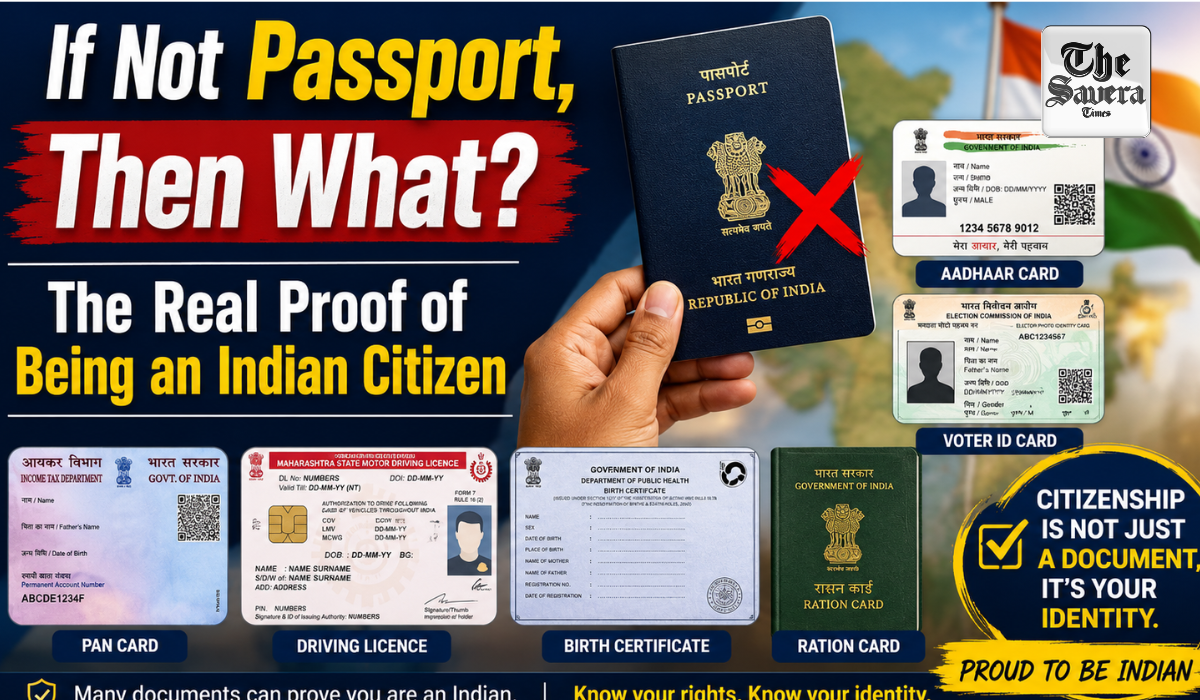
In a country where millions proudly carry their Indian passport as a symbol of identity, the government has triggered a nationwide storm: your passport is just a travel document, not ironclad proof of citizenship. This simple clarification has sparked confusion, anger, and fierce debate across India.
The Core of the Controversy
The Ministry of External Affairs (MEA) made the statement during Passport Seva Divas around June 24-25, 2026. Officials explained that a passport, issued under the Passports Act, 1967, is mainly for international travel. It attests to the holder’s nationality abroad but does not create or conclusively prove citizenship if legally challenged..
This position is not new. Indian law has long held that citizenship comes from the Constitution (Articles 5-11) and the Citizenship Act, 1955—not from any single ID. Passports are given only after checks, but the document itself isn’t final proof in court or verification drives. The remark gained attention amid voter list revisions and citizenship discussions, making many wonder what truly confirms they are Indian.
Political and Public Reaction
The clarification triggered sharp political reactions. Opposition parties criticized the government, calling it confusing and worrying for ordinary citizens. They questioned how a document issued after police verification and government approval could suddenly not count as proof. Some saw it as part of larger debates on identity and exclusion.
On social media and public forums, people expressed shock and concern. Many asked: If not the passport, then what? The government and supporters clarified it’s a longstanding legal view, not a new policy, and accused opponents of twisting facts for politics. The debate highlights fears around documentation, especially for those without perfect records.
What Actually Proves Indian Citizenship?
India does not issue a single universal citizenship card to all its people. Citizenship is a legal status acquired mainly by birth, descent, registration, or naturalization under the Citizenship Act, 1955. Proof usually comes from a combination of documents showing how citizenship was gained.
Key documents that help establish citizenship:
Citizenship Certificate: Issued by the Ministry of Home Affairs for those who acquire citizenship through registration or naturalization (Sections 5 and 6). This is the most direct proof, but only a small number of people have it.
Birth Certificate: Strong evidence, especially if it shows parents’ details. For those born between 1950 and 1987, it is often sufficient. Later births need proof that at least one parent was an Indian citizen.
Parental Documents: Passports, birth certificates, or citizenship papers of parents or grandparents, especially for citizenship by descent.
Other Supporting Records: School certificates, land documents, old ration cards, or government records linking you to Indian parents or pre-1987/1971 timelines in specific cases.
Common IDs like Aadhaar, Voter ID, PAN card, and even the passport are not conclusive proof of citizenship. They serve as identity, voting, or tax documents.
In practice, proving citizenship often involves submitting multiple papers together. There is no one “magic” document for every Indian citizen. This system relies on records rather than a national citizenship ID (except in places like Assam’s NRC exercise).
The MEA clarification reminds us that citizenship is rooted in law and history, not just one card. While it has caused short-term confusion, it underscores the need for clear, accessible records for all Indians. As debates continue, the focus remains on balancing security, rights, and simplicity in proving who belongs.
Ladakh is seeing two changes at once: a new district has been announced, and the Centre has proposed...

What if a decision taken in Washington could influence India’s oil bills, export earnings and trade relations with...

What happens when the world’s richest business leaders clash over one of the world’s biggest internet markets? A...

Pakistan is heading into its wheat-growing season with a serious water problem. The country is facing a projected...
Imagine a foreign national standing among Indian citizens at a political protest, raising questions about the government or...

For thousands of Indian tech workers in the United States, a job offer is only the beginning of...

Aries: The day will be auspicious...