Last Updated: October 12, 2026
Last Updated: October 12, 2026





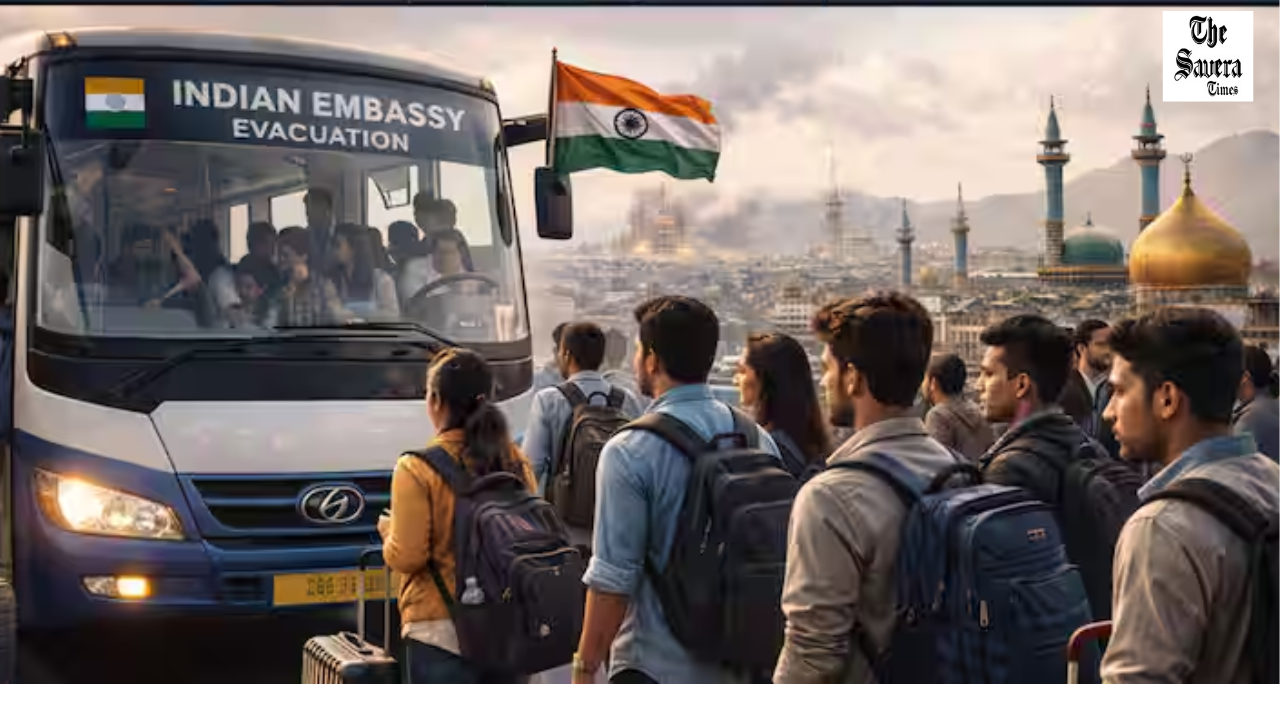
Amid intensifying tensions in the Middle East triggered by recent United States and Israel airstrikes on Iran, the Indian Embassy in Tehran has initiated precautionary measures for Indian students residing in the Iranian capital and surrounding areas. The embassy confirmed that a large number of Indian students have been shifted to safer locations outside Tehran to protect them from the deteriorating security situation and ongoing hostilities.
The relocations come as diplomatic missions worldwide respond to the volatile situation in Tehran, where repeated strikes and counterstrikes have disrupted daily life, and airspace closures have curbed normal travel and communication.
According to official sources and multiple reports, the Indian Embassy arranged transportation and relocation of students from Tehran to relatively safer cities outside the immediate conflict zone. One of the preferred destinations identified by the embassy is the city of Qom, located approximately 140–150 kilometers from Tehran, where students have been evacuated by buses organized under embassy supervision.
The embassy’s directive focuses on moving Indian nationals away from areas experiencing heavy military activity and potential spillovers of violence, with the aim of ensuring their physical safety and access to essential services as well as minimizing exposure to hostile incidents. Authorities are in continuous contact with student representatives on the ground to coordinate the movement.
In an advisory issued by the Indian Embassy, students and Indian nationals in Iran were urged to remain vigilant, follow safety protocols, and stay in contact with the mission for updated instructions. The advisory reiterated that the embassy is actively monitoring the geopolitical situation and facilitating relocation efforts where possible.
The embassy also provided emergency helpline numbers and contact details through which stranded students and families can communicate to seek help or report their status. These communication channels are being used to coordinate assistance and track the well-being of Indians across Iran.
The unrest in Tehran is part of a broader escalation unfolding in West Asia following coordinated air and sea strikes by the United States and Israel on Iranian targets. These actions have sparked retaliation, widespread instability, and severe security concerns affecting civilians and foreign nationals alike.
Multiple international advisories have urged citizens in Iran to exercise caution and avoid unnecessary travel or exposure to public areas where protests, military responses, or clashes might occur.
Indian students in Iran have faced increasing difficulties, including disruptions to academic schedules, closures of campuses and public services, and challenges in securing safe shelter. Some students, particularly those preparing for important examinations or unable to travel due to logistical constraints, have expressed anxiety and frustration over their uncertain status and evolving security situation.
Families in India have also voiced concern over their loved ones’ safety and have called on the government to expedite evacuation or relocation operations until the situation stabilizes. Student associations, including groups representing those from Jammu and Kashmir, have appealed to the Union government for additional assistance and coordination.
The Ministry of External Affairs (MEA) and the Indian government have repeatedly emphasized that the safety of Indian citizens abroad is a top priority. Officials have engaged in high-level deliberations with embassy officials and foreign counterparts to explore all feasible options for relocation and eventual evacuation.
While international flights remain disrupted due to airspace restrictions, alternative exit routes — such as crossing into neighbouring countries via land borders — have been discussed as potential options for students wishing to return home when conditions permit.
The Royal Swedish Academy of Sciences on Monday announced the 2026 Nobel Prize in Economics to American economists...

A Sudanese rights group says at least 72 gold miners were killed in an air strike near the...

US President Donald Trump is scheduled to attend the ASEAN summit in Manila on November 16 before travelling...
An Indian national injured in the October 10 attack on Riyadh’s King Khalid International Airport has died, taking...

Ukrainian President Volodymyr Zelenskyy says he was unaware of Donald Trump’s announcement of an immediate energy ceasefire between...

Colombian businessman Alvaro Pulido Vargas has been arrested in Florida over two US federal cases involving alleged bribery...
Aries: The day will be auspicious...