Last Updated: October 5, 2026
Last Updated: October 5, 2026





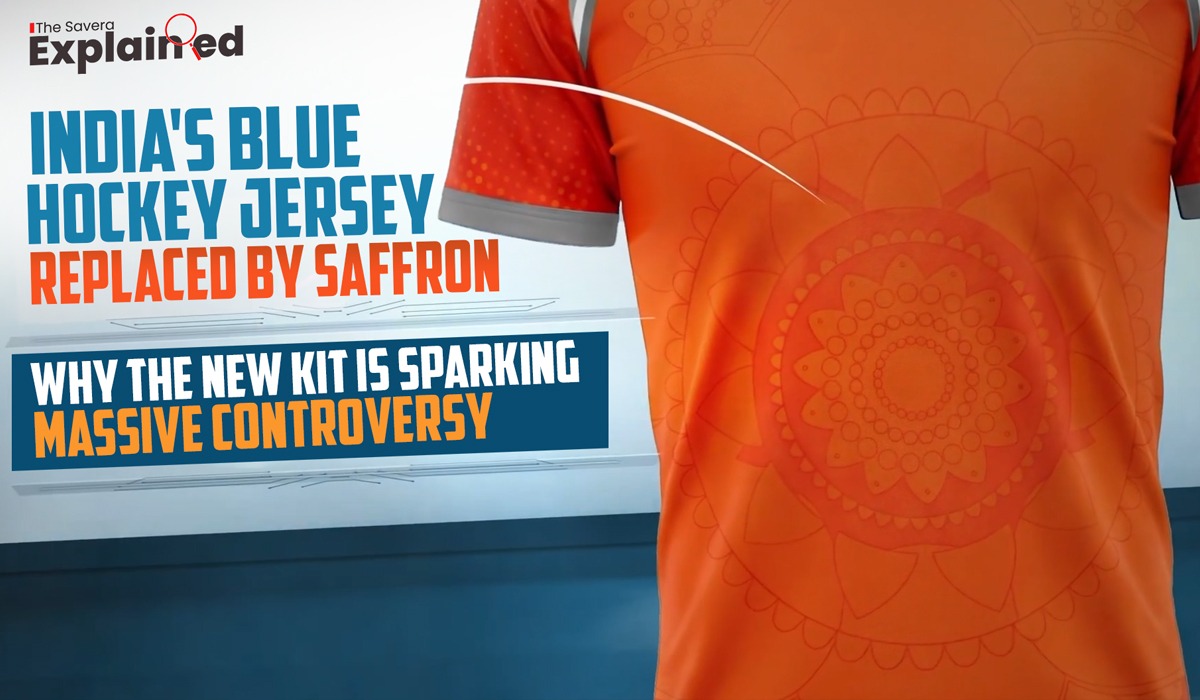
For decades, India’s hockey team has been recognised by one colour—blue. From Olympic campaigns to World Cups, the blue jersey became a symbol of Indian hockey’s identity. But ahead of the 2026 FIH Hockey World Cup, that identity has changed.
Hockey India has unveiled a new saffron primary jersey, triggering a debate that has gone far beyond sport. Former captains have questioned the move, political parties have entered the discussion, and Hockey India has defended its decision. Here’s everything you need to know.
What Changed?
Hockey India recently unveiled the new jerseys for the men’s and women’s national teams for the upcoming FIH Hockey World Cup in Belgium and the Netherlands.
The biggest change is that the traditional blue home jersey has been replaced by saffron, while the away jersey will be white. According to Hockey India, the new design is inspired by the Indian tricolour and the rising sun. The federation said saffron represents courage, sacrifice and victory, while also symbolising new beginnings.
Why Is Blue So Important?
Blue has become synonymous with Indian sport. While cricket popularised the term “Men in Blue”, India’s hockey team has also worn blue for decades, making it an important part of its sporting identity.
Fans across generations associate Indian hockey with the blue jersey. Many former players believe the colour represents continuity, legacy and emotional connection with the team’s historic achievements, including Olympic medals and World Cup campaigns.
Although India has experimented with different jersey designs in the past, blue has remained the dominant colour for many years, making this the biggest visual change in recent history.
Why Are Former Players Unhappy?
The strongest criticism came from former India captain Viren Rasquinha, who called the decision “embarrassing”. Posting on X, he said Hockey India has done many good things for the sport, but questioned the logic behind replacing blue.
Rasquinha wrote that the Indian team’s identity has always been blue and that fans want to see the national team in that colour. He later clarified that his concern was not political but about preserving the team’s pride, identity and legacy.
Former captain Pargat Singh also criticised the move, saying India’s sporting identity has always been associated with blue and there was no compelling reason to replace it.
Hockey legend Dhanraj Pillay echoed similar views, arguing that blue has represented Indian hockey for decades and changing it could disconnect the team from its long-standing legacy.
Their common argument is simple: changing a jersey is easy, but changing a sporting identity built over decades is not.
What Is Hockey India’s Response?
Hockey India has strongly rejected claims that the decision has any political motive.
According to the federation, the change was made after discussions with coaches, support staff and players. Officials said one practical reason was visibility. Since international hockey is often played on blue synthetic turfs, blue jerseys sometimes blend into the background, making it difficult for players, broadcasters and viewers to track movement.
The federation also pointed out that India has changed jersey colours for previous tournaments, including yellow in the 2014 World Cup and a different shade of blue in 2018. It added that saffron was chosen because it is one of the colours of the Indian national flag and carries values such as courage and sacrifice.
How Did Politics Enter the Debate?
The controversy quickly moved beyond hockey.
Congress leader Priyanka Gandhi Vadra questioned the decision, saying that if the national flag has three colours, why highlight only one. She remarked that no matter what people do, the Tricolour belongs to everyone and represents all Indians.
Former Odisha Chief Minister and BJD president Naveen Patnaik alleged that the move had been taken under political pressure and said it had hurt the sentiments of hockey lovers.
On the other hand, Hockey India has maintained that saffron is an integral part of the Indian flag and should not automatically be viewed through a political lens. Officials have repeatedly stated that the decision was based on technical requirements and symbolic value rather than ideology.
Has India Always Worn Blue?
No.
India’s hockey team has worn different jersey designs and shades at various points in history. However, blue has been the primary identity of the national team for several decades and is deeply associated with modern Indian hockey.
Hockey India itself notes that jersey colours have changed for specific tournaments before. For example, India wore yellow during the 2014 World Cup and a redesigned sky-blue kit in 2018. The federation argues that changing jerseys is not unprecedented, but critics say replacing blue as the primary colour is a much bigger departure from tradition.
The Bottom Line
The debate is no longer just about a jersey.
For critics, blue represents India’s sporting heritage and should remain untouched. For Hockey India, the saffron jersey reflects national symbolism, improved visibility on modern hockey turfs and a fresh identity ahead of the World Cup.
Whether the new jersey eventually becomes accepted or remains controversial will ultimately depend on one thing that matters most in sport—how Team India performs when it steps onto the field.
Imagine being seriously injured inside a flying aircraft, with blood on your clothes, passengers in panic and the...

Imagine the world’s biggest diesel exporter turning off its export taps. That is the concern after US President...

For India’s pharmaceutical industry, the latest US tariff decision brings relief — but not across the entire medicines...

One handshake, two superpowers and a long list of disagreements. US President Donald Trump and Chinese President Xi...

A river does not understand borders. But when two countries sharing that river are locked in a long-running...

A voter list revision — and now a software controversy A voter may have the right to vote,...

Aries: The day will be auspicious...