Last Updated: October 18, 2026
Last Updated: October 18, 2026





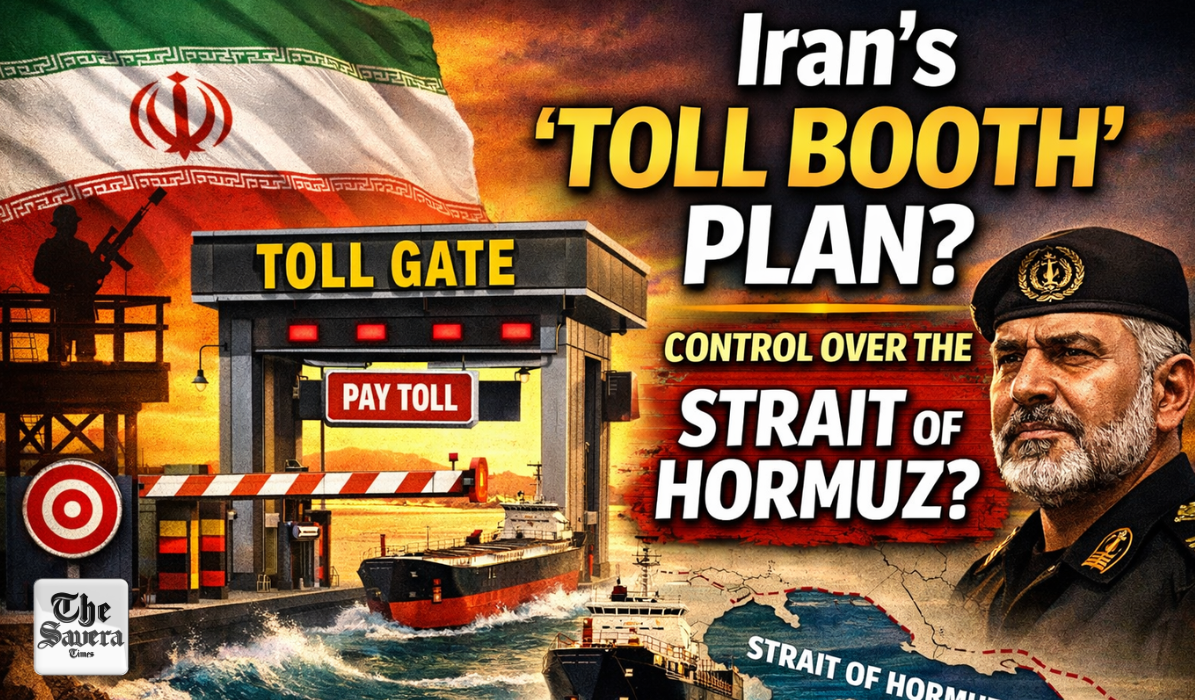
The latest escalation in West Asia has brought the Iran’s intentions into sharper focus. According to recent reports, Tehran has added a significant new demand in its negotiations involving the United States and Israel — formal international recognition of its sovereignty over the Strait of Hormuz.
This marks a shift from tactical control to a long-term strategic objective: turning influence into recognised authority over one of the world’s most vital energy corridors.
Why the Strait of Hormuz Matters
The Strait of Hormuz is among the most critical chokepoints in global trade. Roughly 20 per cent of the world’s oil and liquefied natural gas supplies pass through this narrow waterway daily.
Any disruption here has immediate global consequences — from oil price spikes to supply shortages, particularly for energy-dependent economies in Asia. That is why control over this route translates into immense geopolitical leverage.
What is the ‘Toll Booth’ Plan?
Iran’s so-called “toll booth” strategy refers to an emerging system where vessels transiting the strait are effectively brought under Iranian oversight — and potentially charged for safe passage.
Recent shipping patterns suggest that vessels are increasingly being diverted closer to Iran’s coastline, particularly around Larak Island, pushing them into Iranian territorial waters. Once there, ships are reportedly subject to checks by the Islamic Revolutionary Guard Corps (IRGC).
Reports indicate that at least two vessels have already paid for secure transit, signalling the early stages of a quasi-formalised system resembling transit fees or “tolls.”
How Iran is Formalising Control
Iran is not just acting operationally but also institutionally. It has communicated to the International Maritime Organization (IMO) that its measures are “precautionary” and aligned with international law, framing them as safety protocols rather than coercion.
Simultaneously, Iran’s parliament is reportedly working on legislation to formalise this framework. Lawmakers, including Mohammadreza Rezaei Kouchi, have indicated that the law would codify Iran’s sovereignty, regulatory control, and introduce an official revenue mechanism tied to maritime transit.
Impact on Global Shipping and Energy Markets
The consequences are already visible. Shipping traffic through the strait has reportedly dropped by nearly 90 per cent amid the ongoing conflict. This sharp decline has triggered volatility in global oil markets, with prices rising due to fears of supply disruption.
Shipping companies are now forced to weigh higher costs, longer routes, and increased risks. Insurance premiums for vessels operating in the region have also surged, further complicating global trade flows.
Geopolitical Implications
Iran’s strategy represents a calibrated use of geography as power. By converting a natural chokepoint into a controlled economic gateway, Tehran is attempting to secure long-term leverage over both regional adversaries and global markets.
However, this approach also raises serious concerns. Any attempt to unilaterally control an international waterway could face pushback from global powers and maritime coalitions, potentially escalating military tensions further.
The Bigger Picture
Iran’s “toll booth” plan is not just about revenue — it is about redefining control. By combining military presence, legal framing, and economic strategy, Tehran is moving to transform the Strait of Hormuz from a shared global route into a controlled strategic asset.
If fully implemented, this could reshape global energy logistics and mark a significant shift in maritime power dynamics.
What if a decision taken in Washington could influence India’s oil bills, export earnings and trade relations with...
What happens when the world’s richest business leaders clash over one of the world’s biggest internet markets? A...

Pakistan is heading into its wheat-growing season with a serious water problem. The country is facing a projected...
Imagine a foreign national standing among Indian citizens at a political protest, raising questions about the government or...

For thousands of Indian tech workers in the United States, a job offer is only the beginning of...
Three years ago, on October 7, 2023, Israel woke up to one of the deadliest attacks in its...