Last Updated: October 21, 2026
Last Updated: October 21, 2026





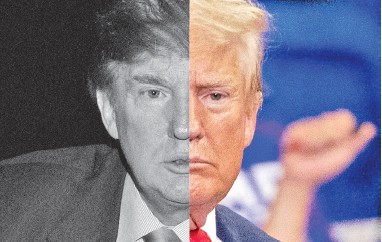
President Donald Trump has long projected an image of relentless stamina, presenting himself as a leader who thrives on constant action and long hours. His allies frequently highlight this narrative, pointing to his frequent public appearances, confrontational exchanges with reporters, and active presence on social media. Yet nearly a year into his second term, new scrutiny has emerged over the 79-year-old president’s schedule, workload, and visible signs of fatigue. A closer examination of his daily routine suggests that the administration’s portrayal of unflagging energy may not fully align with the pace and structure of his official duties.
The discussion gained momentum after Trump completed a demanding week-long visit to Japan and South Korea in late October. The overseas trip involved extensive travel, bilateral meetings, public engagements, and security briefings, leaving little room for rest. When he returned to Washington just before Halloween, he made a direct stop at the White House to hand out candy to children, a moment his supporters seized upon to emphasize his endurance. Comments online celebrated his performance, with one supporter writing that he had been “nonstop for days,” describing him as tireless even after long-haul travel.
However, the narrative took a different turn just a week later. On November 6, during an Oval Office briefing on weight-loss drugs, the president appeared drowsy. Reporters noted that his eyes drooped and he seemed to momentarily doze off for several seconds. Although brief, the incident reignited longstanding questions about Trump’s routine, schedule, and overall health, especially given the pressures of the presidency at his age.
Despite his reputation for spontaneity and frequent public statements, newly examined records tell a more structured story. According to an analysis by The New York Times, Trump’s official public appearances have dropped by 39 percent compared to the same period during his first term in 2017. His routine has also shifted to later in the day. His first daily event now begins at approximately 12:08 pm on average, compared to 10:31 am eight years earlier. While the presidency allows room for private meetings, briefings, and calls that may not appear in public schedules, the reduction in official events indicates a recalibration of his workload.
The White House has attempted to counter this line of criticism by highlighting Trump’s pattern of making himself available to reporters and speaking extensively at public events. His team argues that his off-the-cuff exchanges and late-night social media activity show a president deeply engaged in the job. Yet critics and observers point out that the modern presidency relies heavily on structured work, including policy meetings, national security briefings, and consultations with advisers, many of which are now less visible.
Trump himself continues to deflect concerns about his age by drawing comparisons to his predecessor, Joe Biden, who is 82. Throughout his presidency, Trump has frequently cast Biden as frail or disengaged. Last week, the president remarked that Biden “sleeps all the time” and insisted that he, by contrast, is not a heavy sleeper. These comments echo Trump’s longstanding strategy of presenting himself as more energetic, more resilient, and more capable than his political rivals.
Yet questions about Trump’s health have persisted since early October, when it was revealed that he underwent a magnetic resonance imaging scan. When reporters asked him about the results onboard Air Force One, the president offered a vague answer, saying he had “no idea what they analysed” but was told he received an excellent report. The comment left room for interpretation, as he provided no details about why the test was conducted or what it evaluated.
White House Press Secretary Karoline Leavitt defended the administration’s handling of the matter, insisting the president remains in exceptional health and accusing the previous administration of concealing Biden’s cognitive challenges. She described Trump’s team as transparent and responsive, though critics argue that key medical information has been selectively disclosed.
While no single incident has raised substantial alarm, the broader pattern has prompted fresh debate. Trump continues to describe himself as the “Energizer Bunny,” a phrase often used during his campaigns and rallies. But his reduced schedule, later start times, and the recent moment of drowsiness have encouraged observers to question how closely the public image aligns with the reality of a second-term presidency that demands constant attention.
Supporters argue that Trump’s schedule is strategic rather than scaled back, saying he prefers meetings later in the day and maintains a high rate of informal engagement unseen on formal calendars. They often note that he remains more publicly accessible than many leaders, pointing to his spontaneous press interactions and unfiltered communication style. Critics, however, interpret the data differently, suggesting that the demanding nature of the office may be showing its strain on the president.
Nearly a year into his term, Trump faces the dual challenge of leading the country through domestic and international complexities while fending off political attacks related to age and stamina. His administration continues to push back against suggestions of fatigue, but the contrast between his energetic public persona and the structure of his daily duties has sharpened public interest in how he manages the pressures of the job. As the debate continues, the president’s health, schedule, and daily rhythms are likely to remain at the centre of political scrutiny, shaping perceptions of his leadership in the months ahead.
Protests in Jakarta, Yogyakarta and Bandung brought students onto the streets over rising costs, forest fires and civil...
Organisations linked to Neville Roy Singham are under US congressional scrutiny over funding. Their coverage of protests in...
US President Donald Trump says Washington and New Delhi are close to a trade agreement that will differ...
Iran has ruled out transferring its enriched uranium stockpile outside the country, with security official Mohsen Rezaei reiterating...
Donald Trump has urged Volodymyr Zelensky to pursue a peace deal with Russia, warning that Ukraine could face...
Pakistan, battling insurgencies at home and tensions along multiple borders, is too overstretched to offer meaningful military support...
Aries: The day will be auspicious...