Last Updated: October 21, 2026
Last Updated: October 21, 2026





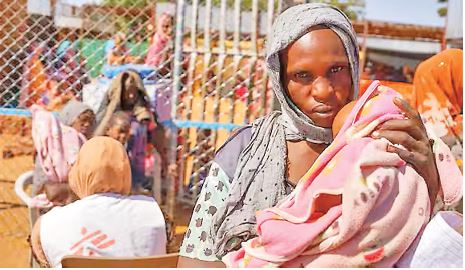
Is a genocide unfolding in Sudan? The question has moved from allegation to urgent international scrutiny after satellite analysis by Yale’s Humanitarian Research Lab, reports from aid groups, and local accounts pointed to widespread killings and the fall of a major Darfur city to the Rapid Support Forces. The most immediate focus is El-Fasher, North Darfur’s largest city, where researchers say imagery shows clusters of objects consistent with bodies and large areas of red discolouration on the ground.
The Rapid Support Forces, or RSF, seized El-Fasher after an extended siege that left many neighbourhoods isolated and residents facing famine conditions. The Sudanese Armed Forces acknowledged withdrawing from the city as the RSF entered. Local military allies and activist groups have accused the RSF of executing more than 2,000 unarmed civilians in the days after the fall, including women, children and older people. Video and photographic material circulating online and through humanitarian networks have amplified those claims, though not all of the material has been independently verified. Yale’s Humanitarian Research Lab said its finding combined satellite imagery with open source and remote sensing data. The lab described evidence that suggests summary executions, door-to-door operations and patterns consistent with mass killings in parts of the city soon after RSF fighters took control. The HRL report framed the events as a human security emergency and warned that what appears on imagery is consistent with mass casualties. The lab has published its analysis as part of a wider record of the conflict, which researchers say is intended to inform humanitarian response and future accountability processes.
The RSF has a long and controversial history in Darfur. Emerging from militias that were active during the early 2000s, the group’s leaders have been linked to campaigns of violence that drew international condemnation and charges at the International Criminal Court. Over the years the RSF evolved into a powerful paramilitary organisation with political ambitions that at times aligned it against the regular armed forces. The group’s origins in the Janjaweed militias and its later formalisation as a state-supported force explain both its local footprint and the deep fears among Darfur’s non-Arab communities.
Those fears are rooted in the history of Darfur, where ethnic targeting and mass violence have scarred communities for decades. Human rights organisations and survivors point to repeated patterns: forced displacement, targeted killings, the destruction of homes and civilian infrastructure, and sexual violence used as a weapon of war. In El-Fasher, witnesses and displaced residents report widespread looting, abductions and attacks on clinics and other civilian facilities. Aid agencies say the city remains largely cut off from relief, with many of the displaced unable to leave because routes are insecure or blocked.
Determining whether the events in El-Fasher meet the legal definition of genocide hinges on intent. Genocide requires proof that perpetrators sought to destroy, in whole or in part, a national, ethnic, racial or religious group. Analysts and human rights investigators will therefore seek evidence of intent, such as orders, patterns of targeting specific groups, and systematic planning. Several monitoring bodies have already flagged behaviour consistent with ethnic cleansing of communities in parts of Darfur, citing forced displacement and targeted killings against Fur, Zaghawa and Berti populations. Such findings heighten concern among legal scholars and humanitarian actors about potential crimes against humanity or genocide. International reaction has been swift. The United Nations and regional bodies have expressed alarm and called for immediate access for humanitarian assistance. Governments in the region and beyond have condemned reports of atrocities and urged restraint. Human rights organisations have demanded independent investigations and called for steps to protect civilians and ensure safe passage for those fleeing. At the same time, the fragmented security environment in Sudan makes on-the-ground verification hazardous for investigators and relief workers.
For now, the public record combines satellite evidence, social media material and eyewitness testimony. Each source has limits. Satellite imagery can indicate clusters and disturbances consistent with killings but cannot by itself provide conclusive proof of intent or identify the victims. Video and photographic material can be powerful corroboration but may be manipulated or lack clear provenance. Eyewitness accounts are essential, yet they are often collected under conditions of extreme duress. Together, these streams form the basis for urgent calls for independent, well-resourced investigations and immediate measures to protect civilians. The situation in El-Fasher is not an isolated event but part of a broader pattern since the conflict between the RSF and Sudan’s regular army began in 2023. The war has displaced millions, degraded health services, and pushed parts of Sudan toward famine. If allegations of mass killings and ethnic targeting in El-Fasher are confirmed, the consequences for accountability, regional stability and humanitarian response will be profound. International legal and diplomatic mechanisms will be tested, and the scale of displacement and suffering will increase the urgency of humanitarian access and protection.
Careful, independent inquiry is the next necessary step. The evidence assembled so far warrants immediate investigation by credible international actors able to operate under security constraints. For victims and displaced families the priority is clear: safe corridors for those fleeing, unimpeded humanitarian aid and accountability for actions that breach the laws of war. For the international community, the test will be whether it can provide protection and pursue justice in a conflict where civilians have already paid a heavy price.
Protests in Jakarta, Yogyakarta and Bandung brought students onto the streets over rising costs, forest fires and civil...
Organisations linked to Neville Roy Singham are under US congressional scrutiny over funding. Their coverage of protests in...
US President Donald Trump says Washington and New Delhi are close to a trade agreement that will differ...
Iran has ruled out transferring its enriched uranium stockpile outside the country, with security official Mohsen Rezaei reiterating...
Donald Trump has urged Volodymyr Zelensky to pursue a peace deal with Russia, warning that Ukraine could face...
Pakistan, battling insurgencies at home and tensions along multiple borders, is too overstretched to offer meaningful military support...

Aries: The day will be auspicious...