Last Updated: October 21, 2026
Last Updated: October 21, 2026





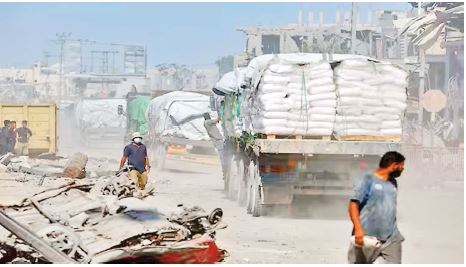
Amid growing uncertainty over the fragile ceasefire in West Asia, tensions flared once again after the Gaza media office accused Israel of violating the truce 47 times since it came into effect earlier this month. The ceasefire, agreed upon between Israel and Hamas in early October, was expected to bring temporary relief after months of devastating conflict, but the situation remains volatile with fresh allegations and counterclaims emerging daily.
According to the Gaza media office, Israeli forces have carried out repeated attacks across the Gaza Strip since the agreement was announced. The statement claimed that at least 38 Palestinians had been killed and 143 injured in what it described as “crimes of direct gunfire against civilians, deliberate shelling and targeting, and the arrest of several civilians.” The media office accused Israel of continuing its “policy of aggression” despite the formal end of active hostilities.
Gaza authorities called on the United Nations and the countries that brokered the truce to intervene immediately to prevent further violations and to protect civilians. “The international community must compel the occupation to halt its ongoing aggression,” the statement said, urging guarantor states to ensure that Israel adheres to the terms of the ceasefire.
While Palestinian officials alleged persistent Israeli attacks, Israel has rejected the accusations, maintaining that it continues to act within the framework of security protocols established under the agreement. The Israeli Defence Forces (IDF) said their troops responded only when confronted with immediate threats.
One of the deadliest incidents since the truce began occurred on Friday, when 11 members of a Palestinian family were killed in what Gaza’s civil defence described as a “targeted attack” on a bus in Gaza City’s Zeitoun neighbourhood. The victims were reportedly trying to return home when their vehicle came under fire.
“They had crossed the so-called ‘yellow line’, an imaginary boundary mentioned by the Israeli army,” said Mahmoud Basal, spokesperson for the Gaza civil defence agency. “I am certain the family couldn’t distinguish between the yellow and red lines because there are no actual physical markers on the ground.”
The IDF, however, offered a different account. In a statement, it said that troops identified “a suspicious vehicle crossing the yellow line and approaching IDF forces operating in the northern Gaza Strip.” According to the Israeli military, warning shots were fired, but the vehicle continued advancing, prompting troops to “open fire to remove the threat, in accordance with the agreement.” The IDF maintained that its actions were defensive and necessary to protect soldiers stationed near restricted zones.
The incident has reignited debates about the clarity of the ceasefire’s terms and the difficulty of maintaining restraint in densely populated conflict zones like Gaza. Human rights observers have noted that the ceasefire, while welcomed internationally, was always fragile given the lack of robust monitoring mechanisms and the mistrust between the warring sides.
Adding to the tension, Israeli Prime Minister Benjamin Netanyahu announced that the Rafah crossing on the southern border would remain closed until Hamas returns the bodies of all deceased hostages still held in Gaza. “Prime Minister Netanyahu has directed that the Rafah crossing remain closed until further notice,” his office said in a statement on Saturday. “Its reopening will be considered based on how Hamas fulfils its obligations to return the hostages and the bodies of the deceased, and to implement the agreed-upon terms.”
The closure of the Rafah crossing, a critical gateway for humanitarian aid and medical supplies, has deepened Gaza’s humanitarian crisis. Relief agencies have warned that the continued blockade is worsening shortages of food, fuel, and medical equipment. The United Nations and aid groups have appealed for the crossing to reopen, emphasizing that civilians must not be made to bear the cost of political disputes.
Meanwhile, the Israeli military confirmed that the Red Cross had received the bodies of two hostages held in Gaza as part of the ceasefire deal. Israeli authorities said Hamas had so far returned 12 of the 28 deceased captives and released all 20 surviving hostages earlier in the week. However, Israel accused Hamas of stalling the process and violating the agreement by withholding the remaining bodies.
Hamas, for its part, said the retrieval of some remains required “specialised recovery equipment” to reach areas still buried under rubble. The group denied intentionally delaying the return of hostages’ remains and accused Israel of breaching the truce first by conducting raids and maintaining its blockade.
The continuing exchange of blame has raised fears that the fragile ceasefire could collapse entirely. Analysts say both sides appear unwilling to concede ground, while international mediators face an uphill task in preserving the deal. Egypt, Qatar, and the United States—key facilitators of the truce—have reportedly urged restraint and stressed the need to prevent renewed large-scale violence.
As the conflict drags on, Gaza’s population remains trapped in worsening humanitarian conditions. Thousands of displaced families continue to live in overcrowded shelters, while basic infrastructure remains crippled by months of bombardment. Power shortages and limited access to clean water have compounded the suffering of civilians, many of whom say the ceasefire has offered little real relief.
Observers warn that the success of any truce depends on the ability of both sides to implement confidence-building measures and to respect humanitarian norms. Without that, they say, the cycle of violence and retaliation may resume at any moment.
For now, the ceasefire remains technically in place, but its future is uncertain. With 38 Palestinians reported dead since the agreement took effect and ongoing disputes over hostages, territorial boundaries, and humanitarian access, the situation in Gaza remains tense. The coming days are likely to determine whether the truce can hold or whether the region will once again descend into another round of violence.
Protests in Jakarta, Yogyakarta and Bandung brought students onto the streets over rising costs, forest fires and civil...
Organisations linked to Neville Roy Singham are under US congressional scrutiny over funding. Their coverage of protests in...

US President Donald Trump says Washington and New Delhi are close to a trade agreement that will differ...

Iran has ruled out transferring its enriched uranium stockpile outside the country, with security official Mohsen Rezaei reiterating...

Donald Trump has urged Volodymyr Zelensky to pursue a peace deal with Russia, warning that Ukraine could face...

Pakistan, battling insurgencies at home and tensions along multiple borders, is too overstretched to offer meaningful military support...

Aries: The day will be auspicious...