Last Updated: October 16, 2026
Last Updated: October 16, 2026





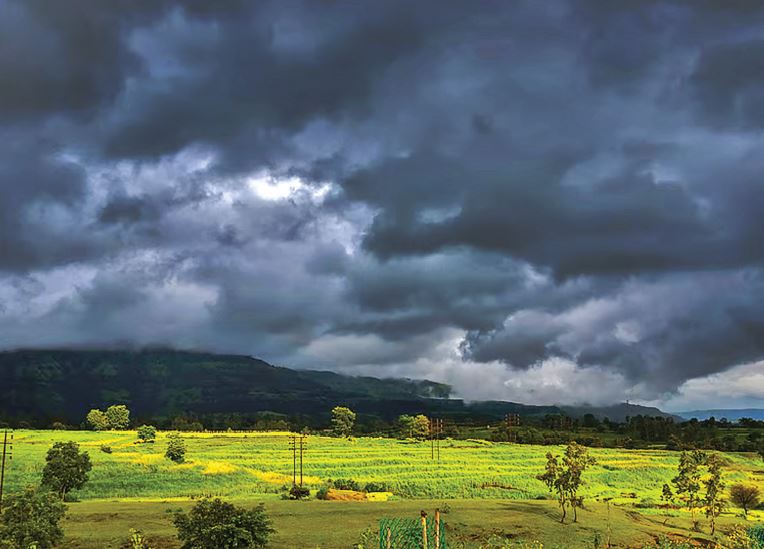
The southwest monsoon of 2025 officially ended on September 30 with India recording above normal rainfall overall. Yet beneath the broad national picture lies a story of sharp contrasts, with one in five districts of the country still facing rainfall deficits despite the surplus.
According to the India Meteorological Department (IMD), the season spanning June 1 to September 30 ended with an eight per cent excess above the Long Period Average (LPA). While this suggests a healthy monsoon on paper, the distribution of rain across the country was far from uniform.
Only four states — Arunachal Pradesh, Assam, Meghalaya and Bihar — ended the season with deficient rainfall. But at the district level, the gaps became more glaring. Out of 727 districts for which IMD data was available, as many as 146 ended up with either deficient or large deficient rainfall.
How IMD classifies rainfall
The IMD uses percentage departures from normal rainfall to classify seasonal rain. Rainfall is considered “deficient” when it falls between 20 and 59 per cent below the LPA, while “large deficient” applies when the deficit ranges from 60 to 99 per cent. In this year’s monsoon, 135 districts were marked as “deficient” and another 11 as “large deficient.”
On the other end of the spectrum, several regions recorded rainfall far above normal, tilting the national average upward and masking the distress in deficit-hit pockets.
District-level extremes
Deoria in Uttar Pradesh stood out as the driest district, ending the monsoon with an 87 per cent deficit, the sharpest shortfall in the country. Yet paradoxically, Uttar Pradesh as a whole recorded “normal” rainfall, showing how district-level figures can diverge sharply from state averages.
In the Northeast, a region synonymous with heavy rains, certain districts faced severe deficits. West Jaintia Hills in Meghalaya recorded a 75 per cent deficit, while South West Garo Hills posted a 73 per cent shortfall. For the state of Meghalaya, the seasonal deficit was as high as 42 per cent, the steepest among all states this year. Arunachal Pradesh, another state usually associated with lush rainfall, ended the season with a 41 per cent deficit. Eleven of its 16 districts were classified in the deficient or large deficient categories.
The rain-rich and the rain-starved
While these regions struggled with shortfall, other parts of India were inundated with rainfall far beyond the norm. Ladakh, India’s cold desert, witnessed an extraordinary 342 per cent excess rainfall. The semi-arid state of Rajasthan also experienced 63 per cent more rainfall than average, putting both regions in the “large excess” category. Urban centres too experienced intense rains. Cities such as Delhi, Mumbai, Kolkata and Dehradun received excess rainfall ranging from 20 to 40 per cent above normal. This uneven pattern highlighted the skewed nature of the monsoon, where pockets of deluge coexisted with regions of drought-like conditions.
The big picture of 2025
When the numbers are taken together, the story of the 2025 monsoon is one of contrasts. Nationally, the country benefited from surplus rainfall, but at the cost of regional imbalances. For many parts of peninsular and western India, the season brought heavy downpours and flooding concerns. Meanwhile, large swathes of the Northeast and eastern India struggled with deficits that could impact agriculture and water availability. The IMD’s final seasonal report reinforces a long-observed reality of India’s monsoons: that national averages rarely capture the real ground situation. With agriculture heavily dependent on rainfall in vast parts of the country, these district-level variations matter as much, if not more, than the overall surplus.
What lies ahead
A monsoon surplus of eight per cent would typically be considered a boon. But for farmers in deficit-hit districts such as Deoria in Uttar Pradesh or the hill districts of Meghalaya, the headline number offers little comfort. For states like Arunachal Pradesh, where nearly three-fourths of districts struggled with insufficient rainfall, the impact could be significant on agriculture, forests, and hydropower.
At the same time, the excessive rainfall in places like Rajasthan and Ladakh has raised questions about shifting climate patterns. The cold desert of Ladakh receiving over three times its normal rainfall points to unusual weather dynamics that scientists are likely to study closely.
Urban India’s experience of “excess rainfall” also brings challenges. Cities like Delhi and Mumbai recorded well above normal showers, exacerbating concerns about drainage, waterlogging, and infrastructure stress.
The 2025 season may officially be classified as “above normal,” but the ground realities underline a fragmented monsoon. For India, which depends on the rains to feed its people, replenish rivers, and recharge groundwater, the uneven spread is as critical as the final number.
As climate variability continues to reshape rainfall patterns, the coming years may see more such contrasting outcomes, where the overall picture of abundance masks islands of scarcity. For policymakers, the challenge is to ensure that adaptation strategies address not just floods in excess-hit areas but also drought preparedness in deficit zones.
The monsoon has always been more than just weather for India. It is a lifeline, a risk, and increasingly, a reflection of the climate shifts that will shape the country’s future. The 2025 season has ended, but its lessons — of unevenness, vulnerability, and resilience — will linger well into the coming months.
Varanasi: A massive explosion triggered the collapse of a two-storey building in Uttar Pradesh’s Varanasi on Thursday, leaving...

Sofia: A vessel sailing under the flag of San Marino caught fire in the Black Sea near Romania...

New Delhi: Accusing the Congress of double-speak on women dignity, the Bharatiya Janata Party (BJP) Mahila Morcha on...

New Delhi: NITI Aayog’s Frontier Tech Hub released a Data Centre Evaluation Framework to help states plan for...
New Delhi: The Supreme Court on Thursday referred the cheque dishonour cases against actor and comedian Rajpal Yadav...

Mirzapur: Uttar Pradesh Chief Minister Yogi Adityanath on Thursday accused the Samajwadi Party (SP) and the Congress of...
Aries: The day will be auspicious...