Last Updated: October 19, 2026
Last Updated: October 19, 2026





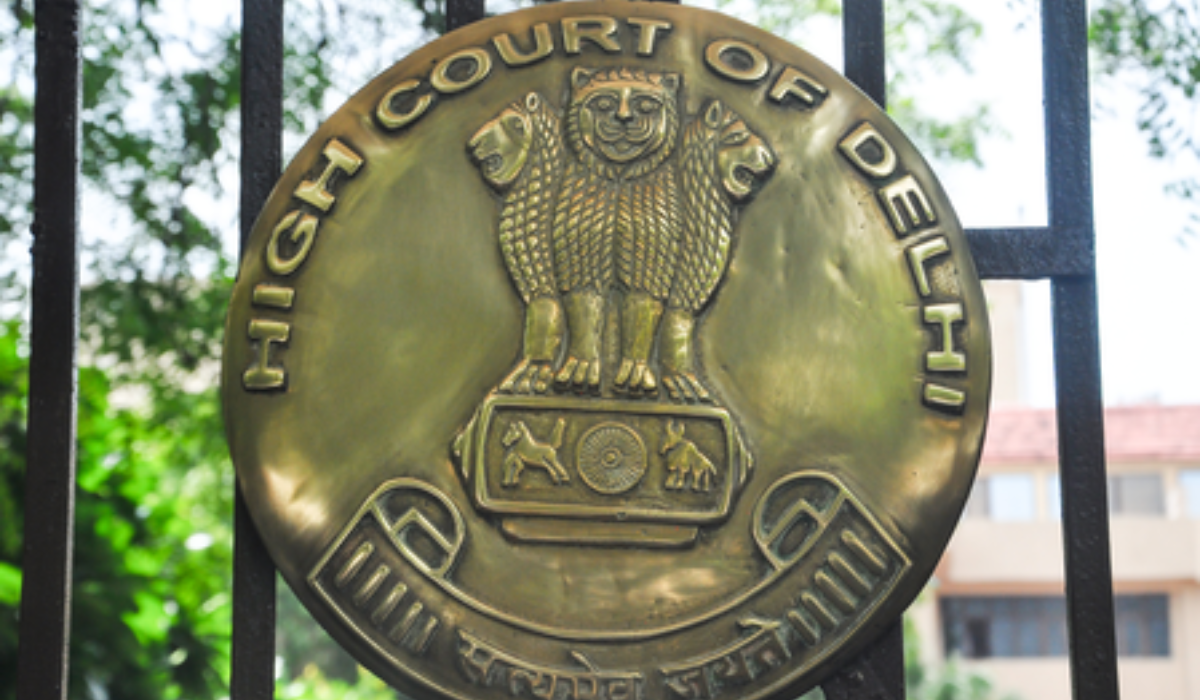
New Delhi: The Delhi High Court has quashed the Central Information Commission’s (CIC) order to make public the records of Prime Minister Narendra Modi and former Prime Minister Manmohan Singh’s foreign tours undertaken by Indian Air Force (IAF) aircraft under the Right to Information (RTI). The court stated that disclosing such information could jeopardize national security and pose a risk to the Prime Minister’s life and physical safety.
A single bench of Justice Amit Mahajan, while allowing the petition filed by the Central Public Information Officer (CPIO) of the Directorate of Personnel Services at Air Headquarters, held that the Indian Air Force was right in refusing to provide information under Sections 8(1)(a) and 8(1)(g) of the RTI Act, 2005.
Danger even after de-identification of security personnel
The High Court stated that even after de-identifying the security personnel, making the remaining records public could be risky. By combining these details with other publicly available information, sensitive aspects of the Prime Minister’s security arrangements can be identified.
In an order passed on October 15, Justice Mahajan stated that the court or the Central Information Commission cannot appeal the assessment of competent security agencies as to whether the disclosure of any information could jeopardize national security or the Prime Minister’s personal safety.
What information was sought in the RTI application?
This case relates to an RTI application filed by retired Commodore Lokesh K. Batra. He filed the application in June 2018 seeking information regarding all foreign trips undertaken by the Prime Minister on Indian Air Force aircraft since April 1, 2013.
The Indian Air Force provided some information related to the travel, but refused to provide copies of Special Flight Returns (SFR-Part II). The Air Force stated that these records contained sensitive details related to the aircraft, crew, passengers, and Special Protection Group (SPG) personnel deployed with the Prime Minister.
The Air Force argued that analyzing these records along with publicly available information could provide strategic and tactical advantages to forces threatening national security.
Batra subsequently appealed to the Central Information Commission. He argued that the Prime Minister’s foreign visits are funded by the government, and therefore, this information is of public importance. He also clarified that he was seeking information not on the identities of security personnel, but on private individuals traveling with the Prime Minister at government expense.
On July 8, 2020, the CIC accepted his appeal and directed the Indian Air Force to provide certified copies of available and relevant SFR-Part II records. The Air Force challenged this order in the Delhi High Court.
RTI not absolute, security also important
The High Court held that the Right to Information is not an absolute right. It is essential to maintain a balance between transparency and accountability, while protecting national security and other public interests.
Citing Supreme Court judgments, the court stated that while the RTI Act aims to promote transparency and accountability, it is also necessary to protect confidentiality where disclosure of information may affect other public interests.
According to the court, the prescribed format of SFR-Part II includes not only the names of passengers, but also their designations, appointments, identification numbers, flight references, number of passengers, and details of relevant agencies. This information is interconnected and can be used to determine the identity of security personnel, the composition of people traveling with the Prime Minister, and the pattern of security deployment.
The High Court stated that if the relevant authority believes that disclosure of any information may endanger national security or the Prime Minister’s security, it can invoke the exemptions under Sections 8(1)(a) and 8(1)(g) of the RTI Act.
Security records cannot be sought citing government expenditure
The court clarified that the fact that government funds are spent on the Prime Minister’s foreign visits cannot, in itself, be a basis for disclosing information that could potentially compromise security.
The High Court acknowledged that the Central Information Commission erred in directing the release of records despite removing the names and identifying details of security personnel. Subsequently, the court set aside the CIC’s order.
On December 11, 2020, the Delhi High Court had issued notice on the Indian Air Force’s petition in this matter, staying the Central Information Commission’s order.
Good Evening Viewers! Catch up on the day’s top headlines with The Savera Times Evening Bulletin, bringing you...

The judicial custody of Cockroach Janata Party (CJP) leaders Ashutosh Ranka and Saurav Das was extended by two...

Three people were killed and several others injured in separate incidents in Imphal East and Thoubal districts of...

A controversy erupted during Punjabi singer Daler Mehndi's live performance in Uttarakhand's Tehri Garhwal district. Daler Mehndi, who...

Jamia Millia Islamia (JMI) has formed a seven-member committee to negotiate with students protesting for the reinstatement of...

The Directorate of Revenue Intelligence (DRI) has seized over 10 kg of narcotics and arrested three people in...