Last Updated: October 21, 2026
Last Updated: October 21, 2026





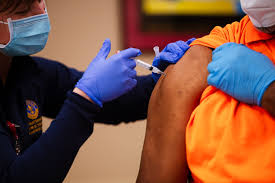
Health experts have warned that personal bias and blind belief continue to fuel unfounded claims linking childhood vaccines to autism, despite decades of scientific evidence disproving such connections.
The renewed controversy follows a self-published report by the US-based McCullough Foundation, which claimed that vaccination is “the most significant preventable driver” of autism. The report, not peer-reviewed, has drawn attention from anti-vaccine groups and individuals, including Zoho founder Sridhar Vembu.
“There are always people who take an anti-vaccine stand. We saw how dangerous their propaganda was during the pandemic, when thousands died of Covid-19 because they feared vaccination,” said Dr Rajeev Jayadevan of the Indian Medical Association, Kochi. “Unfortunately, anti-science views are often fashionable in certain circles, driven by bias, blind belief, and a fascination with conspiracy theories,” he added.
The McCullough Foundation report was published on Zenodo, a public repository, but not in any recognised scientific journal. It questioned childhood immunisation programmes that have long been proven to prevent serious illnesses and deaths.
Dr Shefali Gulati, paediatric neurologist at the All India Institute of Medical Sciences (AIIMS), said that vaccine hesitancy remains a major concern even after the Covid-19 pandemic. In an editorial for the journal Autism, she highlighted the resurgence of vaccine-preventable diseases such as measles in parts of the US and Europe.
“A key driver of this hesitancy is the persistent myth that vaccines cause autism. This theory has been repeatedly debunked but refuses to disappear from public discussion,” she said.
The myth originated in 1998 when British doctor Andrew Wakefield published a fraudulent paper in The Lancet linking vaccines to autism. The paper was later retracted, and Wakefield lost his medical license, but the misinformation spread globally.
“It is concerning that Wakefield is listed as an author in the new McCullough Foundation report. It is not peer-reviewed and mixes opinions with unverified or low-quality data. That is not valid science,” said Dr Jayadevan.
Experts warn that such misinformation could reverse decades of public health progress. Vaccine refusal, they said, risks the return of deadly diseases once eliminated through global immunisation efforts.
According to the World Health Organization, vaccines have saved about 154 million lives over the past 50 years, most of them infants.
Gulati urged healthcare workers to address vaccine hesitancy through empathy, transparent communication, and factual education.
Protests in Jakarta, Yogyakarta and Bandung brought students onto the streets over rising costs, forest fires and civil...

Organisations linked to Neville Roy Singham are under US congressional scrutiny over funding. Their coverage of protests in...

US President Donald Trump says Washington and New Delhi are close to a trade agreement that will differ...

Iran has ruled out transferring its enriched uranium stockpile outside the country, with security official Mohsen Rezaei reiterating...

Donald Trump has urged Volodymyr Zelensky to pursue a peace deal with Russia, warning that Ukraine could face...
Pakistan, battling insurgencies at home and tensions along multiple borders, is too overstretched to offer meaningful military support...

Aries: The day will be auspicious...