Last Updated: October 15, 2026
Last Updated: October 15, 2026





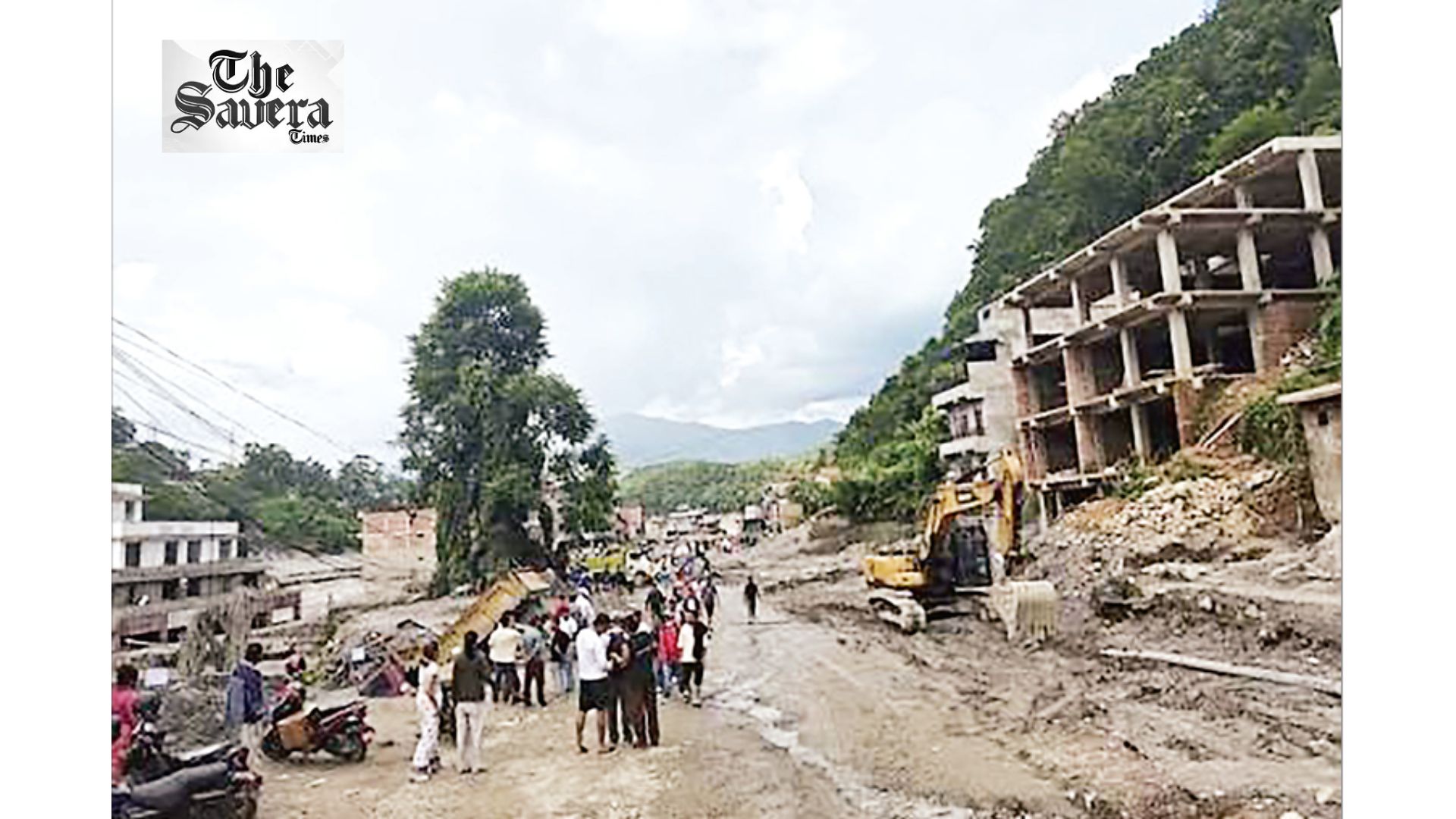
The devastating floods that struck Nepal last month and left a trail of destruction across the Himalayan nation have reignited a broader debate over climate change, ecological vulnerability, and the environmental footprint of artificial intelligence (AI).
The Bhotekoshi and Trishuli river floods, reportedly triggered by a glacial collapse, left more than 1,000 people dead and nearly 5,000 missing in Nepal, highlighting the fragility of Himalayan ecosystems under mounting climate stress. In the aftermath, discussions have expanded beyond climate change to examine the growing energy and water demands of AI infrastructure, particularly large-scale data centres. While some social media posts circulated claims linking glacier instability to alleged underground server farms in the Himalayas, experts have largely dismissed such assertions due to a lack of evidence
. Reports have noted China’s significant investments in AI, cloud computing and datacentre infrastructure, alongside major hydropower projects in the Himalayan region. While environmentalists have long raised concerns about the ecological impact of large dams and hydropower projects, the direct role of AI infrastructure in Himalayan degradation remains a subject of debate.
Development experts have pointed out that AI played little role in real-time rescue operations during the disaster, arguing that discussions around the technology in Nepal often remain confined to policy and academic forums rather than practical applications.
Addressing online claims that Chinese server farms may have contributed to glacier melt, strategists say there is currently no evidence establishing that connection”, while noting that obtaining reliable data from Beijing would be difficult. They, however, stressed that data centres consume vast amounts of electricity and, when powered by fossil fuels, contribute to greenhousegas emissions that accelerate global warming.
Those emissions join the accumulated global emissions driving climate change. The resulting warming does not respect borders,” Kloosterman noted. Several reports have highlighted a dual reality surrounding AI. While AI-powered monitoring systems could help prevent disasters and save lives, the rapid expansion of energyintensive data centres could indirectly exacerbate the climate vulnerabilities that contribute to extreme events.
Environmentalists warn that the enormous electricity and water requirements of AI infrastructure may place additional pressure on environmentally sensitive regions. In countries such as Nepal, where hydropower projects already affect fragile river systems, growing resource demands could further strain ecological balances. A Nepal Minister was seeking compensation from China, India, and the United States, arguing that greenhouse-gas emissions linked to climate change had contributed to the disaster.
Nepali diplomacy expert Mahesh Kushwaha shared an AI-generated infographic illustrating a cycle in which rising global demand for AI drives energy consumption, increases carbon emissions, accelerates glacier melt and destabilises mountain terrain, ultimately raising the risk of disasters such as the Bhotekoshi floods. At the same time, proponents argue that AI can become a key tool in disaster prevention. Satellite imagery can be used to train AI models to detect glacial movement and identify risky patterns, potentially enabling earlier warnings for vulnerable communities.
It is further contend that AI-driven early warning systems integrating sensors, satellites and predictive algorithms could help bridge the critical gap between the formation and collapse of glacial dams, giving downstream populations precious time to evacuate. As the Himalayas continue to warm at a faster-than-average rate, the debate over AI’s role in the region is becoming increasingly complex.
While the technology offers unprecedented opportunities for climate monitoring and disaster mitigation, its environmental costs are prompting difficult questions about the balance between technological advancement and ecological sustainability.
The Nepali government has informed the foreign diplomatic community in Nepal that the Himalayan nation would seek further international assistance for the recovery and reconstruction of infrastructure damaged by the recent Bhote Koshi floods. The death toll from the Rasuwa flood disaster had reached 1,252, with 4,216 people remaining out of contact.
The deadly floods also caused massive damage to infrastructure, including roads, bridges, public and private buildings, and hydropower projects along the Bhote Koshi and Trishuli river corridors. The Nepali government is currently seeking domestic and international support for the rescue and relief of people affected by the floods, including those who remain out of contact, many of whom are believed to be inside tunnels of hydropower projects. However, the extensive damage to infrastructure caused by the floods will require significant additional resources for reconstruction.
It is the second major incident to cause significant loss of life and infrastructure damage since the Gen-Z movement last year, during which 77 people were killed and property worth more than NPR 84 billion was destroyed. The Nepali government will seek international assistance for the recovery and reconstruction of infrastructure damaged by the Bhote Koshi flood after completing a PostDisaster Needs Assessment (PDNA).
Ambassadors, heads and representatives of diplomatic missions, and representatives of international organisations, including the World Bank, Asian Development Bank and the United Nations, attended the diplomatic briefing held at the Ministry of Foreign Affairs. Nepal had earlier organised an international conference to seek international support following the devastating earthquake in 2015. The donor community pledged as much as US$ 4.1 billion at the conference.
London: Ukrainian President Volodymyr Zelensky told British media that Ukraine would restart strikes on Russia’s oil refineries and...

New Delhi: The Supreme Court on Thursday referred the cheque dishonour cases against actor and comedian Rajpal Yadav...

India has expressed concern over the alleged plot to carry out a mass shooting at a Hindu temple...
Islamabad: At least 31 children and two female teachers were killed, and more than 50 other people were...
A roof collapse at Al-Khair School in Peshawar, Pakistan, killed at least 28 children and a female teacher...

Kabul: The series of road accidents in Afghanistan continues unabated. A truck and a passenger bus collided head-on...