Last Updated: October 21, 2026
Last Updated: October 21, 2026





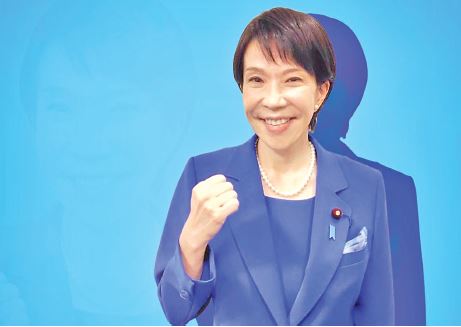
Japan entered a new chapter in its political history as Parliament elected Sanae Takaichi the country’s first female prime minister, breaking a gender barrier that had stood for generations. The 63-year-old conservative leader, long viewed as an outsider within her own party, now leads a nation confronting a complex mix of economic strain, demographic decline, and shifting geopolitical dynamics.
Her election immediately lifted market sentiment. The Tokyo Stock Price Index (TOPIX) surged to record highs, reflecting investor optimism about policy stability and hopes of renewed economic momentum. Yet the market’s enthusiasm contrasts with the daunting reality Takaichi faces. Beneath the optimism lie deep structural challenges that have frustrated successive Japanese governments.
At the top of her domestic agenda is the growing cost-of-living crisis. Inflation has climbed well beyond the Bank of Japan’s (BoJ) target of 2 percent, with consumer prices rising 3.6 percent year-on-year in March 2025—the highest level in more than a decade. Real wages have failed to keep pace, leaving households struggling with declining purchasing power and fueling public dissatisfaction.
In an effort to contain inflation, the BoJ raised interest rates to 0.5 percent, its highest since 2008. But the central bank remains caught between competing pressures: tightening policy to control rising prices risks further slowing Japan’s already fragile growth. Economists describe the situation as a “tightrope moment,” with both excessive caution and overreaction carrying economic costs.
Takaichi has outlined plans for targeted tax relief and energy subsidies to ease the burden on households, while pledging to continue structural reforms. Critics, however, argue that her proposals lack the depth needed to address Japan’s chronic economic weaknesses. Without reforms to boost productivity, attract investment, and revitalize the labour market, many analysts warn that inflation will remain a lingering threat rather than a short-term concern.
Beyond inflation, Japan’s broader economy remains sluggish. The International Monetary Fund (IMF) reported real GDP growth of just 0.1 percent in 2024, with forecasts for 2025 barely improving to 1.2 percent. Weak consumer spending, global trade tensions, and lingering supply chain disruptions have all weighed heavily on the economy.
A key external challenge is Japan’s trade relationship with the United States. President Donald Trump, now in his second non-consecutive term, has revived threats of steep tariffs on Japanese automobiles and electronics, two sectors central to Japan’s export economy. The prospect of renewed trade friction has rattled business confidence and underscored Japan’s vulnerability to policy shifts in Washington.
Takaichi has promised to strengthen Japan’s economic resilience through deregulation, corporate tax reform, and investment in digital and green infrastructure. However, the success of these initiatives will depend on her ability to navigate political constraints at home. Her government’s grip on power is tenuous following the collapse of the long-standing coalition between her Liberal Democratic Party (LDP) and the centrist Komeito party. The alliance ended amid a funding scandal and disagreements over Takaichi’s hawkish positions on defence and constitutional reform.
To secure a majority, Takaichi negotiated a fragile partnership with the Japan Innovation Party (JIP), a smaller reformist bloc. The arrangement has provided short-term stability but remains vulnerable to ideological divisions. Analysts warn that maintaining unity among coalition partners will test Takaichi’s political skills as she attempts to push through contentious reforms. The risk of legislative gridlock or early elections remains a persistent concern.
Beyond economics and politics, Japan’s demographic decline looms as one of the greatest challenges to Takaichi’s leadership. The country’s population shrank by nearly 900,000 in 2024—the sharpest annual drop on record—bringing the total to about 120.3 million. The working-age population has fallen from 87.3 million in 1995 to just 73.7 million, while the elderly population now exceeds 36 million.
This imbalance has created mounting pressure on Japan’s pension and healthcare systems, as fewer workers are left to support an expanding elderly population. Takaichi has voiced support for pro-natalist policies such as expanding childcare access and improving parental leave, aimed at encouraging higher birth rates. Yet she remains cautious about large-scale immigration, an issue that divides her conservative base. Economists and social policy experts have warned that without an infusion of foreign labour, Japan’s economic and social systems may struggle to remain sustainable.
The new prime minister also faces a complicated foreign policy environment. Her approach to Japan’s alliance with the United States will be watched closely, particularly given Trump’s unpredictable style and protectionist trade stance. While Trump publicly welcomed her election, calling it “tremendous news for the incredible people of Japan,” his administration’s revival of tariff threats on Japanese goods poses a serious diplomatic test.
The upcoming Tokyo summit between Takaichi and Trump will serve as an early measure of her diplomatic ability. Observers expect her to prioritize maintaining the security partnership that underpins Japan’s defence strategy while attempting to protect its export-driven industries from U.S. trade pressure. Balancing national interests against Washington’s demands will be a delicate task requiring political finesse.
Takaichi’s ascent to power carries symbolic weight far beyond the immediate policy challenges. Her election breaks through a deeply entrenched gender barrier in Japanese politics, where women hold less than 10 percent of seats in the lower house of Parliament. Advocates for gender equality have hailed her rise as a milestone, though many note that her conservative ideology and limited focus on women’s rights temper expectations for broader social change.
For now, public attention remains fixed on whether Takaichi can convert her historic election into effective governance. Her tenure begins amid a rare convergence of economic, political, and demographic challenges that will test even the most seasoned leadership.
The optimism in financial markets following her victory suggests a reservoir of hope for stability and reform. But Japan’s long-term trajectory will depend on whether Takaichi can navigate the competing pressures of domestic reform, coalition politics, and international diplomacy. Her leadership, observers say, will ultimately be judged not by the symbolism of her election, but by her ability to deliver results in one of the most challenging periods in modern Japanese history.
Protests in Jakarta, Yogyakarta and Bandung brought students onto the streets over rising costs, forest fires and civil...
Organisations linked to Neville Roy Singham are under US congressional scrutiny over funding. Their coverage of protests in...

US President Donald Trump says Washington and New Delhi are close to a trade agreement that will differ...

Iran has ruled out transferring its enriched uranium stockpile outside the country, with security official Mohsen Rezaei reiterating...

Donald Trump has urged Volodymyr Zelensky to pursue a peace deal with Russia, warning that Ukraine could face...

Pakistan, battling insurgencies at home and tensions along multiple borders, is too overstretched to offer meaningful military support...

Aries: The day will be auspicious...