Last Updated: September 25, 2026
Last Updated: September 25, 2026





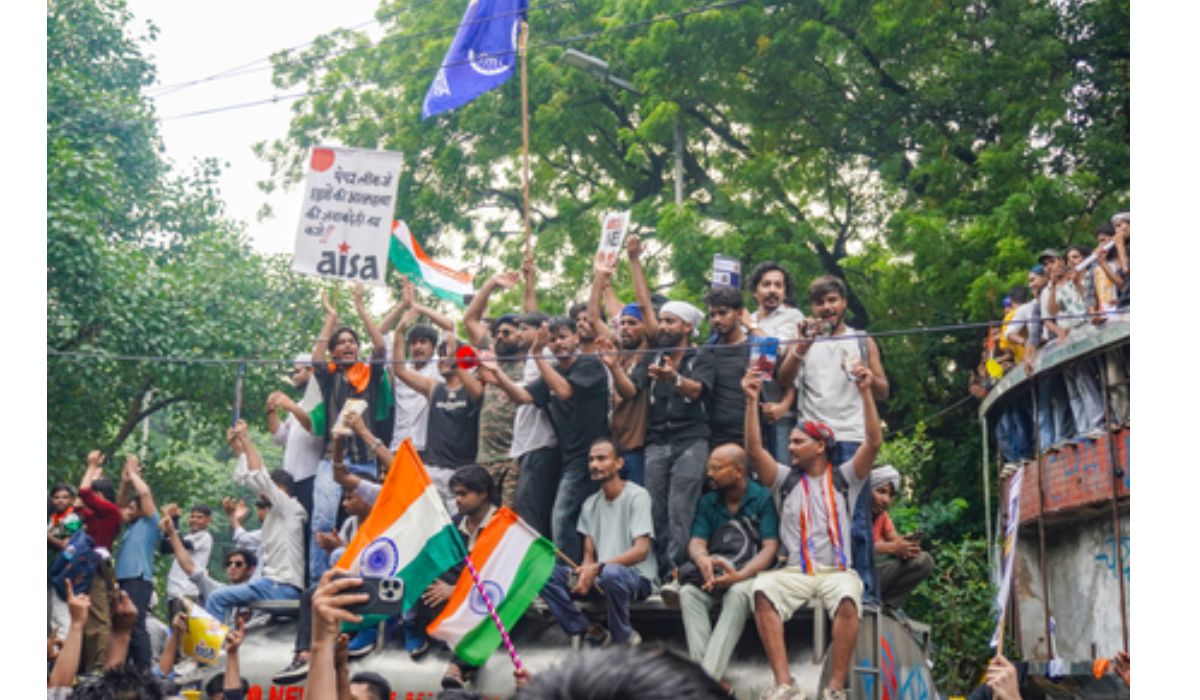
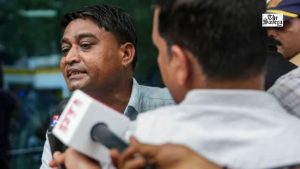
Thousands of students marched from Jantar Mantar in New Delhi towards Parliament on July 20, demanding action over the alleged NEET paper leak. After being dispersed by police, many protesters regrouped at Connaught Place. The day witnessed clashes in the evening, with stone-pelting incidents reportedly injuring over 100 police personnel and around 60 students.
Amid the unrest, a positive development emerged as a delegation of students met Union Health Minister JP Nadda. The meeting indicated the government’s willingness to engage in dialogue with students over their concerns.
The issue continued to dominate political discussions on July 21, when opposition leaders raised the matter during Question Hour in Parliament. The protests led to repeated disruptions, resulting in the adjournment of Parliament for the second consecutive day.
Later, Leader of Opposition Rahul Gandhi, MP Priyanka Gandhi, Samajwadi Party chief Akhilesh Yadav, and several other opposition leaders staged a sit-in protest near the Prime Minister’s residence. After they reportedly refused police requests to vacate the area, security personnel removed them using mild force.
The controversy also drew attention to Prime Minister Narendra Modi’s response. While critics had earlier questioned his silence, the BJP later stated that the Prime Minister remains committed to the welfare and safety of the country’s youth. Modi also condemned the alleged paper leak, stating that those responsible had committed a serious wrongdoing and would face strict punishment.
The alleged examination irregularities have deeply affected students and their families. For many aspirants, years of preparation culminate in a single examination that determines their future. Allegations of paper leaks undermine confidence in the examination system and force candidates to endure uncertainty and, in some cases, the possibility of reappearing for the test.
The article argues that concerns over examination integrity have extended beyond student groups and social activists to become a matter of national importance. It stresses that uninterrupted education and fair examinations are essential for the country’s progress and that repeated incidents of paper leaks create insecurity among students.
According to the article, the government’s decision to initiate dialogue reflects an acknowledgment that students’ concerns cannot be ignored and that trust in the examination system must be restored.
The piece also raises broader questions about India’s examination framework. Education experts cited in the article argue that conducting large-scale entrance examinations is not inherently difficult, but the outsourcing of examination management to external agencies under a centralised system has increased opportunities for malpractice. It suggests that instead of relying on contractors, a permanent institutional mechanism comprising experienced administrators and academic experts could strengthen transparency and accountability.
Another issue highlighted is the government’s proposal to conduct NEET entirely in the online mode in the future. While digital examinations may improve monitoring, the article notes that many students from rural areas continue to face limited access to computers and digital resources, potentially creating new challenges and inequalities.
The article concludes that any future examination reforms should prioritise students’ convenience, fairness and accessibility. It welcomes the government’s decision to keep communication channels open and expresses hope that continued dialogue, along with assurances of strict action against those responsible for examination malpractice, will help restore students’ confidence in the system.
Stay updated with The Savera Times Evening Wrap, featuring the top news, breaking headlines and latest developments from...

Veteran actor Mushtaq Khan, best known for his memorable roles in Welcome, Gadar and other Hindi films, has...

The Supreme Court has prescribed safeguards for POCSO cases involving matrimonial and custody disputes, including arrest procedures, expert...
BJP spokesperson Sudhanshu Trivedi criticised Rahul Gandhi over his remarks on the Election Commission and SIR, while questioning...
Six people have been arrested in Indore after police seized more than 55 grams of MD drugs, with...
Sahil Wakode’s parents were detained in Bhandup while travelling to IIT Bombay for a planned protest. Their lawyer...
Aries: The day will be auspicious...