Last Updated: October 21, 2026
Last Updated: October 21, 2026






The recently concluded 30th Conference of the Parties (COP30) to the United Nations Framework Convention on Climate Change, held in Belém, Brazil, has reinforced the effectiveness of the Paris Agreement, according to Inger Andersen, Executive Director of the United Nations Environment Programme (UNEP) and UN Under-Secretary-General. Speaking on the outcomes, she emphasized that even amid escalating geopolitical tensions, meaningful progress in tackling climate change is achievable.
COP30, set against the backdrop of the Amazon, showcased a series of concrete steps to strengthen global climate action. Andersen highlighted key decisions, including the commitment to triple adaptation finance by 2035, the establishment of a Just Transition Mechanism to ensure equitable benefits from the emerging green economy, and the launch of dialogues on integrating trade with climate-resilient economic transformation. Efforts to incorporate mountain protection into climate policies were also underscored as part of the broader adaptation and resilience agenda.
While progress was evident, Andersen stressed that the world must accelerate its efforts. She called on countries to view their national climate plans as a starting point rather than a limit, underlining that keeping the 1.5°C target within reach requires rapid implementation on an unprecedented scale. “The benefits are clear: affordable clean energy, good jobs, cleaner air, and a safer, more resilient future for all,” she said.
The conference also reinforced momentum on transitioning away from fossil fuels, a critical and contentious issue in climate negotiations. Andersen praised the steps taken since COP28 in Dubai, including halting deforestation and launching the Tropical Forest Forever Facility, now valued at $6.7 billion. High-impact measures, such as reducing methane emissions, were highlighted as essential to immediate climate mitigation.
A notable feature of COP30 was the inclusion and leadership of Indigenous Peoples from the Amazon and around the globe. Andersen lauded the Brazil Presidency for organizing such an inclusive event that amplified voices often underrepresented in climate discussions.
Looking ahead, UNEP remains committed to supporting governments, organizations, and communities in delivering the promises of the Paris Agreement. Andersen concluded that continued collaboration and implementation are critical, emphasizing that the fight against climate change is not only a scientific or political challenge but a social imperative to secure a sustainable, equitable future for people and planet.
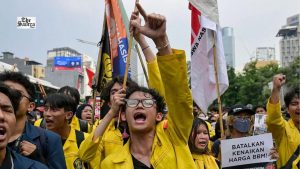
Protests in Jakarta, Yogyakarta and Bandung brought students onto the streets over rising costs, forest fires and civil...
Organisations linked to Neville Roy Singham are under US congressional scrutiny over funding. Their coverage of protests in...

US President Donald Trump says Washington and New Delhi are close to a trade agreement that will differ...

Iran has ruled out transferring its enriched uranium stockpile outside the country, with security official Mohsen Rezaei reiterating...

Donald Trump has urged Volodymyr Zelensky to pursue a peace deal with Russia, warning that Ukraine could face...

Pakistan, battling insurgencies at home and tensions along multiple borders, is too overstretched to offer meaningful military support...
Aries: The day will be auspicious...