Last Updated: October 20, 2026
Last Updated: October 20, 2026





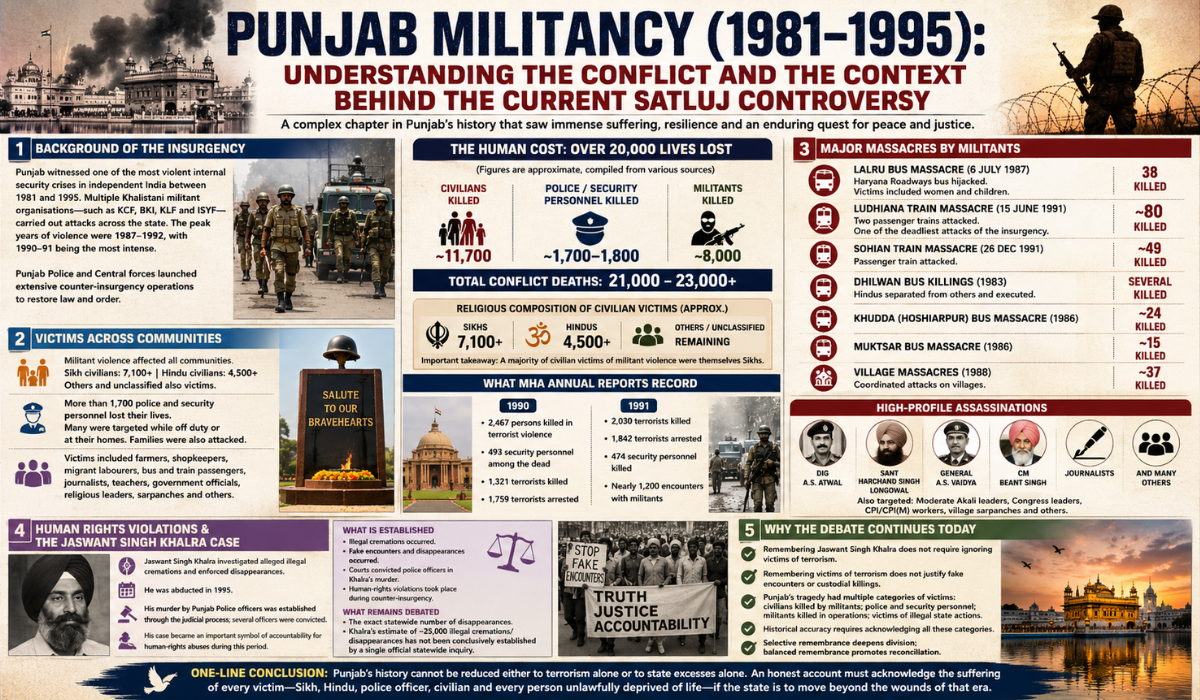
Punjab witnessed one of the most violent internal security crises in independent India between 1981 and 1995. The insurgency, driven by multiple Khalistani militant groups, reached its peak between 1987 and 1992, with 1990 and 1991 recording the highest levels of violence.
1. Background of the Insurgency
Groups such as the Khalistan Commando Force (KCF), Babbar Khalsa International (BKI), Khalistan Liberation Force (KLF), and International Sikh Youth Federation (ISYF) carried out attacks across the state, while Punjab Police and Central security forces launched extensive counter-insurgency operations. The conflict claimed more than 20,000 lives, including civilians, security personnel, and militants, making it one of independent India’s deadliest internal security challenges.
2.Victims Across Communities
One of the lesser-known aspects of the insurgency is that militant violence affected multiple communities. Various conflict datasets indicate that more than 7,100 Sikh civilians and around 4,500 Hindu civilians lost their lives, while victims also included members of other communities. More than 1,700 police and security personnel were also killed, with many targeted while off duty or at their homes. The violence spared few sections of society, affecting farmers, traders, migrant workers, teachers, journalists, and ordinary commuters alike.
3.Major Attacks That Shook Punjab
Several attacks became defining moments of the insurgency. The Lalru Bus Massacre (1987), Ludhiana Train Massacre (1991), Sohian Train Massacre (1991), Dhilwan Bus Killings (1983), Khudda Bus Massacre (1986), and Muktsar Bus Massacre (1986) remain among the most tragic incidents. Militants also assassinated prominent figures including DIG A.S. Atwal, Sant Harchand Singh Longowal, former Army Chief General A.S. Vaidya, and Punjab Chief Minister Beant Singh. These attacks highlighted the widespread impact of militancy on civilians, political leaders, and security personnel.
4.Human Rights Violations and Jaswant Singh Khalra
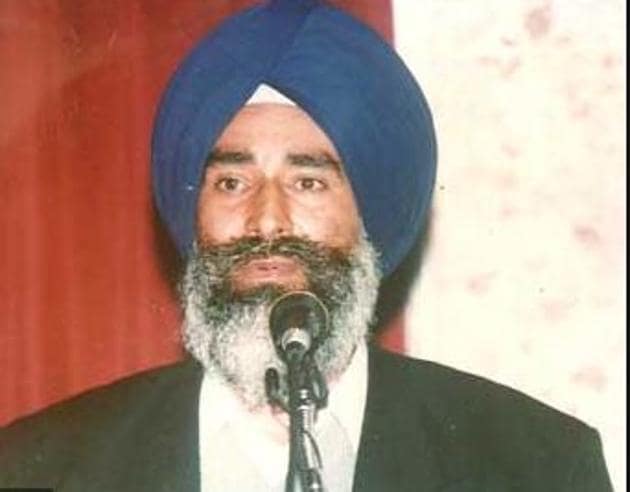
The counter-insurgency period also witnessed allegations of serious human rights violations. Human rights activist Jaswant Singh Khalra investigated alleged illegal cremations and enforced disappearances before being abducted in 1995. Courts later convicted Punjab Police personnel for his murder, making the case a landmark in the fight for accountability. While illegal cremations, fake encounters, and custodial killings have been established through judicial proceedings, the broader estimate of around 25,000 disappearances or illegal cremations remains debated, as no single statewide official inquiry has conclusively verified that figure.
5.Why the Debate Continues Today
The legacy of Punjab’s militancy continues to shape public debate. Historians and rights groups stress that acknowledging Jaswant Singh Khalra’s work and recognising human rights abuses should not diminish the suffering of those killed by militant violence. Likewise, remembering victims of terrorism does not justify unlawful actions by the state. A balanced understanding of Punjab’s past requires recognising every category of victim—civilians, police personnel, militants killed in operations, and those who suffered human rights violations. Such an approach provides a more complete picture of one of India’s most painful chapters and supports informed dialogue and reconciliation.
Punjab Chief Minister Bhagwant Mann was allegedly detained for three hours at Delhi airport upon his return from...

The Punjab Vigilance Bureau (VB) during its ongoing drive against corruption in the state, has apprehended Inspector Gulshan...
Chief Minister Bhagwant Mann may soon hold a press conference or release a video message amid Union Home...
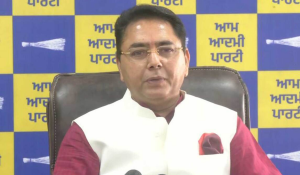
Punjab Cabinet Minister Aman Arora welcomed Union Home Minister Amit Shah's visit to Punjab on Tuesday. However, he...
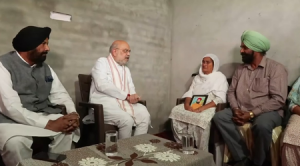
Gurdaspur: Union Home Minister Amit Shah on Tuesday met with the families of those who spoke out against...
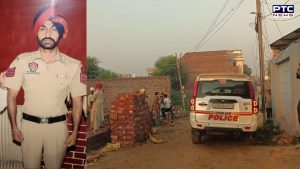
Mansa: A shocking incident was reported from Mansa in Punjab on Tuesday morning, where a Punjab Police head constable...
Aries: The day will be auspicious...