Last Updated: October 16, 2026
Last Updated: October 16, 2026





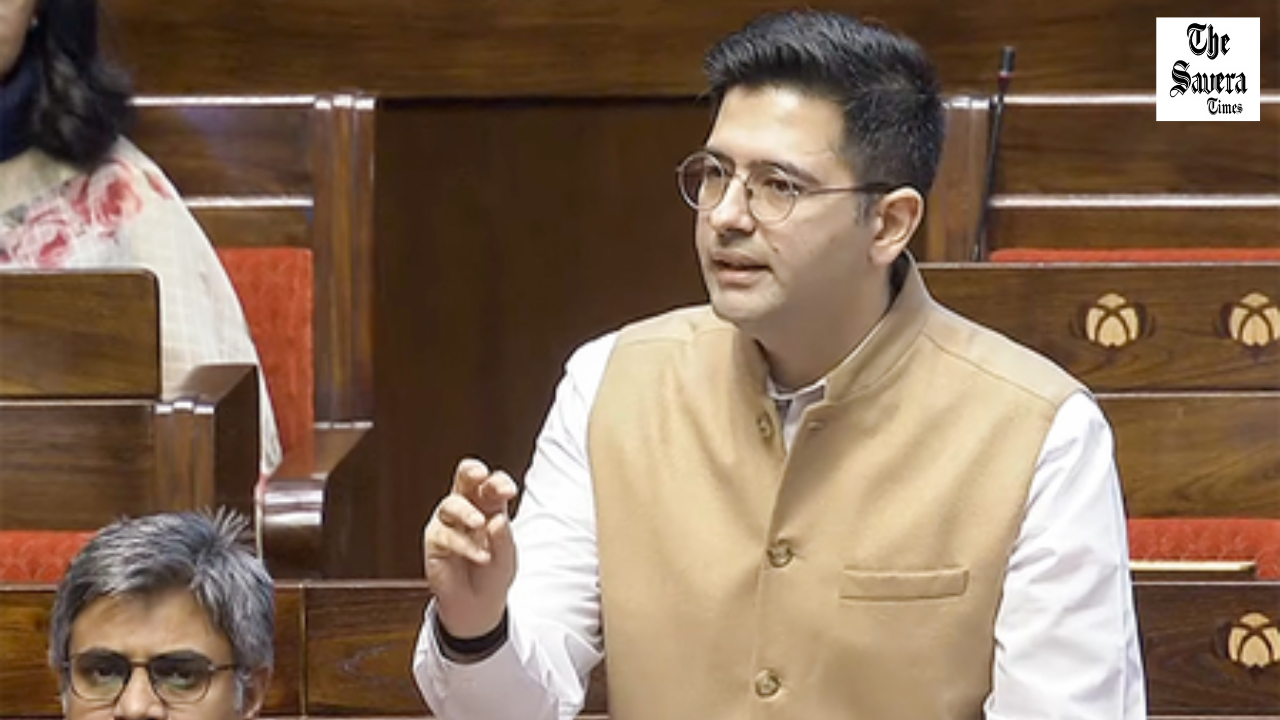
Aam Aadmi Party (AAP) MP Raghav Chadha has raised serious concerns in Parliament over the growing economic cost of traffic congestion in Indian cities, calling for urgent national-level intervention.
AAP MP Raghav Chadha tweets, “Traffic has turned our metro cities into giant parking lots with people trapped inside them. In Bengaluru, Pune, Mumbai, Kolkata, Delhi and Chennai, on average a commuter spends 100 to 168 hours a year stuck in traffic . Not commuting. Just sitting.… pic.twitter.com/OSUFwpxicv
— IANS (@ians_india) March 27, 2026
Speaking during a discussion, Chadha highlighted how traffic jams in metro cities are not just an inconvenience but a major economic burden, affecting productivity, fuel consumption, and overall quality of life.
He stressed that congestion is silently draining the country’s economy and requires structured policy attention.
Chadha pointed out that millions of working hours are lost daily due to traffic congestion in cities like Delhi, Mumbai, and Bengaluru.
He noted that:
This, he said, results in massive economic losses, impacting businesses as well as individual productivity.
The MP warned that if left unaddressed, congestion could become a major obstacle to India’s growth ambitions.
To tackle the issue, Chadha proposed the creation of a National Urban Decongestion Mission, aimed at systematically reducing traffic in major cities.
He urged the government to adopt a mission-mode approach, similar to flagship schemes, to address urban mobility challenges.
Key suggestions under the proposed mission include:
He emphasised that a coordinated national strategy is essential to deal with the scale of the problem.
Chadha also stressed the need for modern urban planning practices to prevent congestion in the future.
He pointed out that rapid urbanisation without adequate infrastructure has worsened traffic conditions. Cities are expanding, but road networks and transport systems have not kept pace.
He called for:
These measures, he said, can help create efficient and sustainable urban mobility systems.
Apart from economic losses, Chadha highlighted the environmental and health impact of traffic congestion.
He noted that prolonged traffic jams contribute to:
Reducing congestion, therefore, is not just an economic necessity but also crucial for improving public health and environmental sustainability.
Traffic congestion has become a major issue across India’s urban centres, with increasing vehicle ownership and limited infrastructure capacity.
Experts believe that without immediate intervention, congestion levels could worsen significantly in the coming years, affecting both urban living standards and economic efficiency.
Chadha concluded by urging the government to take urgent and concrete steps to address the crisis.
He emphasised that tackling traffic congestion requires a multi-pronged approach involving policy reforms, infrastructure investment, and behavioural change.
The proposal for a National Urban Decongestion Mission is being seen as a significant push toward addressing one of India’s most pressing urban challenges.
Amid the ongoing protests, investigators have found that certain elements backed by Pakistan launched a multi-layered digital warfare...
~Dr M L Jat India has moved from food scarcity to record harvests. The next leap is from...

Smartness is the key to getting ahead in life. Whether it is the mastery of job skills or...

Varanasi: A massive explosion triggered the collapse of a two-storey building in Uttar Pradesh’s Varanasi on Thursday, leaving...
Sofia: A vessel sailing under the flag of San Marino caught fire in the Black Sea near Romania...

New Delhi: Accusing the Congress of double-speak on women dignity, the Bharatiya Janata Party (BJP) Mahila Morcha on...

Aries: The day will be auspicious...